
The Cosmic Data Deluge
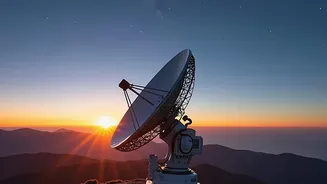
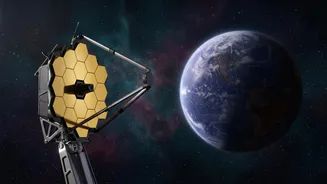
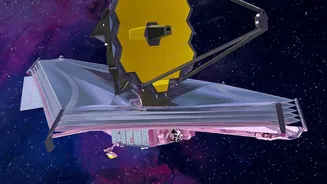
Modern astronomy is facing a wonderful but overwhelming problem: a flood of data. Telescopes like the James Webb Space Telescope (JWST) and ground-based observatories such as the Vera C. Rubin Observatory in Chile are technological marvels. The Rubin Observatory,
for instance, is expected to generate a staggering 20 terabytes of data every single night. To put that in perspective, a full-resolution image from its camera would require nearly 400 4K televisions to display. This torrent of information contains clues about the universe's greatest mysteries, from dark energy to the formation of our own galaxy. But the sheer volume makes it impossible for human astronomers to sift through it all manually. We are being inundated with so much data that traditional methods of analysis are no longer sufficient.
Enter the AI Assistant
This is where artificial intelligence, particularly machine learning, becomes a game-changer. AI algorithms can be trained to perform tasks that are repetitive, time-consuming, or simply too complex for the human eye. By feeding these systems vast archives of known astronomical data, they learn to recognize patterns, classify objects, and spot anomalies with incredible speed and accuracy. For example, a neural network—a type of AI inspired by the human brain—can learn to distinguish the light signature of a planet passing in front of its star from instrumental noise or other stellar activity. This allows scientists to automate the initial stages of data analysis, freeing them up to focus on the more interesting and unusual findings that the AI flags for review.
Hunting for Hidden Worlds
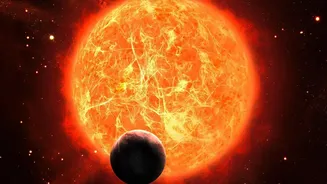
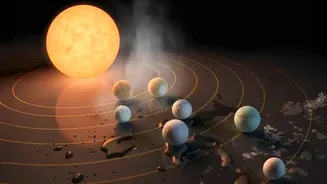
One of the most exciting applications of AI is in the search for exoplanets—planets orbiting stars outside our solar system. Missions like Kepler and TESS have provided light curves, which are graphs of a star's brightness over time, for millions of stars. A tiny, periodic dip in brightness can signal a transiting planet. However, these signals are often faint and buried in noisy data. AI models have proven exceptionally good at this task. In one famous instance, a Google AI algorithm applied to old Kepler data discovered two new exoplanets, Kepler-90i and Kepler-80g, that had been previously missed by human analysis. AI doesn't just find candidates; it also helps confirm them by calculating the probability that a signal is a real planet and not a false positive.
Mapping the Universe, One Galaxy at a Time
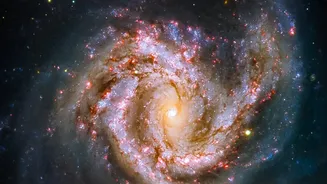
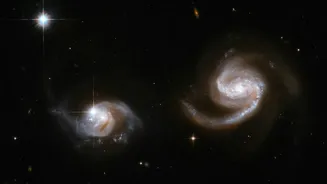
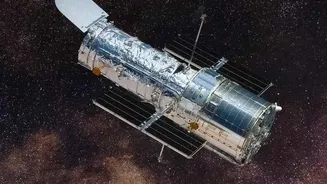
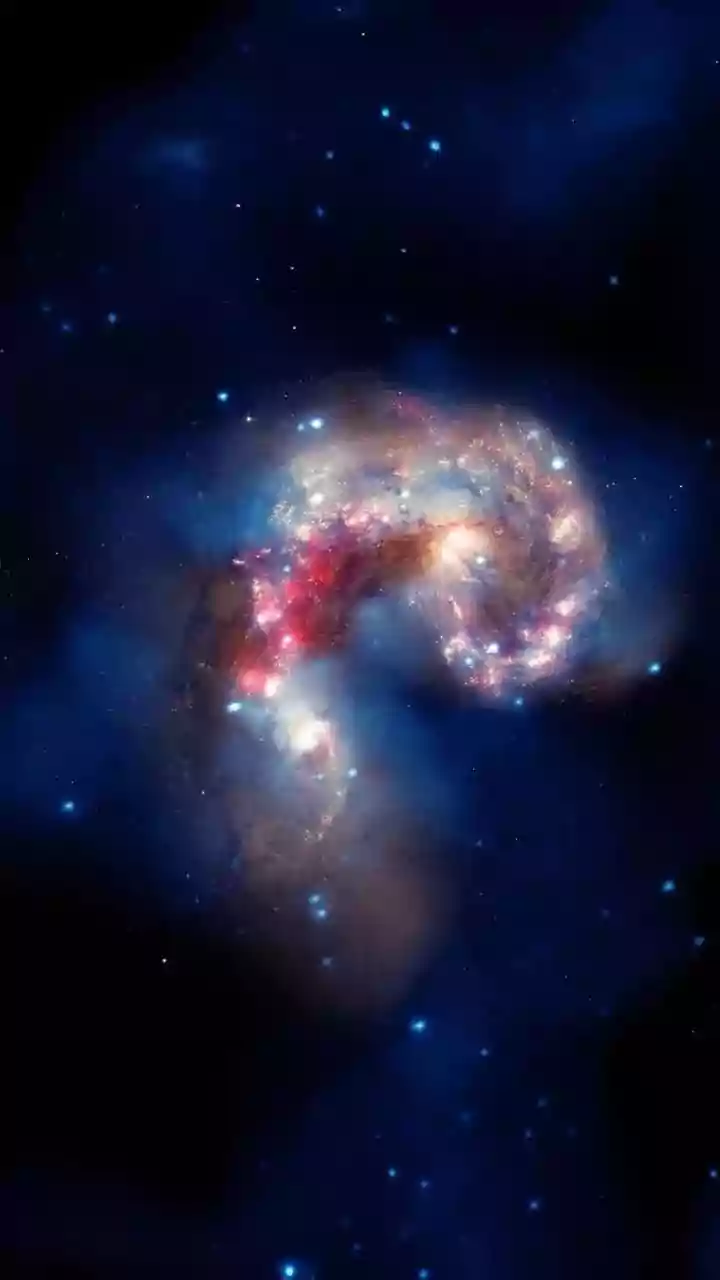
Beyond finding planets, AI is crucial for classifying the billions of galaxies captured in sky surveys. Determining a galaxy's morphology—whether it's a spiral, elliptical, or irregular—provides vital clues about its formation and evolution. Manually classifying them is an impossible task. AI models, like one called Morpheus, have been trained to classify galaxies from raw telescope data on a pixel-by-pixel basis, a task it honed on images from the Hubble Space Telescope and now applies to data from the JWST. In early 2026, researchers announced that an AI tool named AnomalyMatch had sifted through the Hubble archives and found nearly 1,400 anomalous objects, over 800 of which had never been documented before. These included rare sights like colliding galaxies, gravitational lenses, and so-called "jellyfish" galaxies.
A New Partnership in Discovery
AI is not replacing astronomers. Instead, it’s becoming an indispensable partner, a 'copilot' in the scientific process. The final verification of AI-flagged discoveries still relies on human expertise. But by handling the heavy lifting of data processing, AI allows scientists to work more efficiently and ask bigger questions. Some AI tools can even enhance images, removing atmospheric blur from ground-based telescopes or reducing background noise in space images to reveal faint objects that were previously invisible. This powerful collaboration between human intellect and machine intelligence is accelerating the pace of discovery, unlocking secrets that have been hidden in the data all along. It marks a fundamental shift in how we explore the cosmos, pushing the boundaries of what we can learn about our universe.