


The Fermented Fizz Phenomenon
Kombucha is a fermented beverage made from sweetened black or green tea. The magic happens when a specific culture of bacteria and yeast is added to the mix. This culture, known as a SCOBY, consumes the sugar and transforms the sweet tea into a slightly
sour, carbonated drink. The final product is low in sugar and contains probiotics, antioxidants, and B vitamins. This trend aligns with a broader shift in urban India towards health-conscious living and an interest in foods that support gut health. While it competes with traditional Indian fermented drinks like kanji and buttermilk, kombucha is finding a loyal following among those looking for new wellness options.
Meet Your Brewing Buddy: The SCOBY
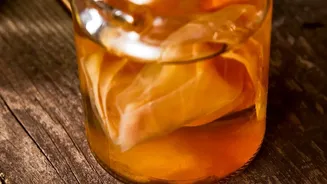
The heart of any kombucha brew is the SCOBY, an acronym for Symbiotic Culture Of Bacteria and Yeast. It's a rubbery, pancake-shaped disc that floats on top of the tea during fermentation. Though sometimes called a "kombucha mushroom," it isn't a fungus. Instead, it's a living biofilm, a cooperative colony of beneficial bacteria and yeasts that work together to create the drink. The yeasts break down sugar into alcohol, and the bacteria then convert that alcohol into healthy organic acids, which give kombucha its signature tangy flavour. Each time you brew a batch, the SCOBY grows and can even produce a 'baby' SCOBY, which can be shared or used to start another brew.
A Simple Guide to Your First Brew
Brewing kombucha at home is surprisingly simple. You'll need a large glass jar, black or green tea, plain white sugar, a SCOBY, and some strong starter tea from a previous batch. First, you brew a strong, sweet tea and let it cool completely to room temperature. Once cooled, pour it into your glass jar and gently add your SCOBY and the starter liquid. Cover the jar with a breathable cloth (like a clean tea towel) and secure it with a rubber band to keep out dust and insects. Let this mixture ferment in a warm spot away from direct sunlight for about 7 to 12 days. You can start tasting it after a week; the longer it ferments, the less sweet and more vinegary it will become.
Brewing Safely: What to Watch Out For
While DIY brewing is rewarding, safety is paramount. The biggest risk with homemade kombucha is contamination from harmful bacteria or mould. Always start with clean hands and sterilised equipment. A healthy brew should have a slightly vinegary, clean smell. If you see any fuzzy, colourful mould (usually green, black, or blue) on your SCOBY or in your brew, you must discard the entire batch and the SCOBY and start over. Using enough starter tea from a previous batch is crucial, as its acidity helps protect the new brew from contaminants. It's also important to avoid using ceramic containers for brewing, as the acidic nature of kombucha can cause lead to leach from certain glazes.
Finding Your SCOBY in India
The rise of home brewing has made it easier than ever to find a SCOBY in India. Several online retailers now sell and ship starter kits, which typically include a healthy SCOBY and enough starter tea for your first batch, directly to your doorstep. These kits often come with detailed instructions, making them a great option for beginners. You can also find them on platforms like IndiaMART and even international stores that ship to India. Beyond retailers, a strong community of homebrewers exists online. Many experienced brewers are happy to share their extra SCOBYs, often for free or a small shipping fee, which is a great way to get started and connect with fellow enthusiasts.