



The Invisible Ingredient on Your Plate
Every food item, from a single grain of rice to a piece of chicken, has what is known as a “water footprint.” This isn't the water you use for boiling or washing, but the total volume of freshwater consumed during its production. Coined in 1993, this
concept of 'virtual water' reveals the hidden flow of water in the products we consume daily. Agriculture is by far the biggest consumer of water, accounting for roughly 90% of India's freshwater use. This 'embodied water' includes the rain that falls on fields (green water) and the water drawn from rivers, lakes, and groundwater for irrigation (blue water). When you eat, you are indirectly consuming all the water that sustained that food from farm to table.
Just How Thirsty Is Your Food?
The numbers are often mind-boggling. Producing just one kilogram of rice, a staple for a majority of Indians, can require between 1,500 and 2,800 litres of water on average, though some farming methods can push this much higher. Wheat, the foundation of our rotis, needs around 1,654 litres per kilogram. Animal products are even more water-intensive, primarily because of the water needed to grow their feed. A kilogram of chicken has a water footprint of about 4,325 litres. Even our beloved cup of chai has a story to tell, with the milk and sugar contributing significantly to its overall water footprint. These figures vary based on climate and farming practices, but they consistently show that our plates are far thirstier than we imagine.
The Monsoon's High-Stakes Gamble
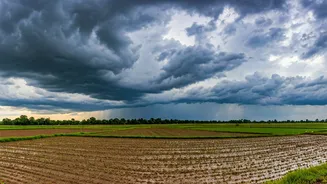
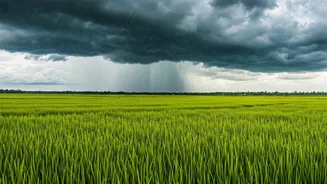
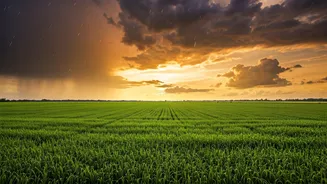
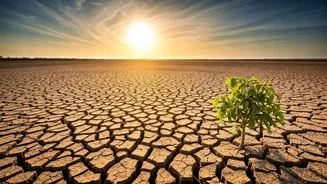
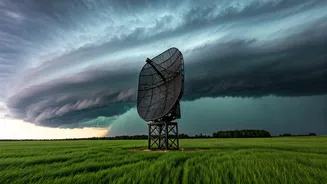
In India, this hidden water story is inextricably linked to the monsoon. With more than half of the country's agricultural land being rain-fed, the annual rains are the lifeblood of our food system. However, climate change is making the monsoon increasingly erratic. Instead of steady, predictable showers, we are witnessing long dry spells broken by short, intense downpours, or a significant deficit in rainfall altogether. This volatility is a direct threat to the livelihoods of millions of farmers and to the nation's food security. A failed or delayed monsoon can lead to widespread crop failure, driving up food prices for staples like pulses and vegetables and putting immense pressure on our groundwater resources as farmers turn to irrigation to save their crops.
From Cloud to Kitchen: A Water Story
The journey of this virtual water is a long one. It begins as rain, which is either absorbed by the soil to be taken up by plant roots (green water) or collected in rivers and aquifers to be used for irrigation (blue water). A plant like wheat or rice transpires hundreds of litres of water throughout its life, a process essential for its growth. This water becomes part of the plant's very structure. Once harvested, more water is used for processing, cleaning, and transportation. For animal products, this cycle includes the water consumed by the animal directly, as well as the enormous water footprint of the fodder it eats. By the time the food reaches your kitchen, it carries the history of every drop of water that nourished it.
Towards a More Water-Wise Plate
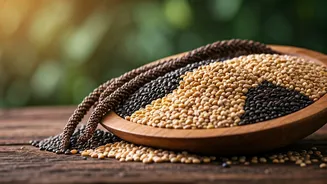
Understanding our food's water footprint isn't about feeling guilty; it's about awareness. This knowledge empowers us to recognise the true value of both our food and our water resources. There is a growing conversation around cultivating less thirsty crops. For instance, traditional millets like ragi and jowar are significantly more water-efficient than rice and wheat and are well-suited to India's climate. Similarly, supporting efficient irrigation techniques and reducing food waste are crucial steps. Wasting food is not just a loss of the food itself, but also of all the hidden water and energy resources that went into producing it. As consumers, being mindful of these connections is the first step toward a more sustainable food future.