


The Global Encryption Arms Race
Virtually all secure data today, from your bank transfers to classified government secrets, is protected by mathematical encryption. The problem is, even the most complex math problems can eventually be solved. Governments and corporations are engaged
in a constant cat-and-mouse game, developing tougher encryption while adversaries build more powerful computers to crack it. The ultimate threat on the horizon is the quantum computer. These next-generation machines, once mature, could theoretically break most of the encryption we rely on today in a matter of hours or minutes. This has sparked a global rush to find a new, “quantum-proof” way to secure our data, particularly for critical infrastructure, defense, and financial systems.
Enter Quantum: A Truly Uncrackable Code?
This is where quantum communication comes in. Instead of relying on math, it uses the fundamental laws of physics to secure information. The most promising method is called Quantum Key Distribution (QKD). Imagine you’re sending a secret key to a friend to unlock a message. In the quantum world, this key is encoded onto individual particles of light (photons). According to quantum mechanics, the very act of a third party observing or intercepting these photons will disturb their state. This disturbance is immediately detectable, alerting both the sender and the intended receiver that their key has been compromised. The key is then discarded, and a new one is sent. Essentially, it makes eavesdropping impossible without getting caught, providing a level of security that classical methods can't match.
India's Two-Pronged National Strategy
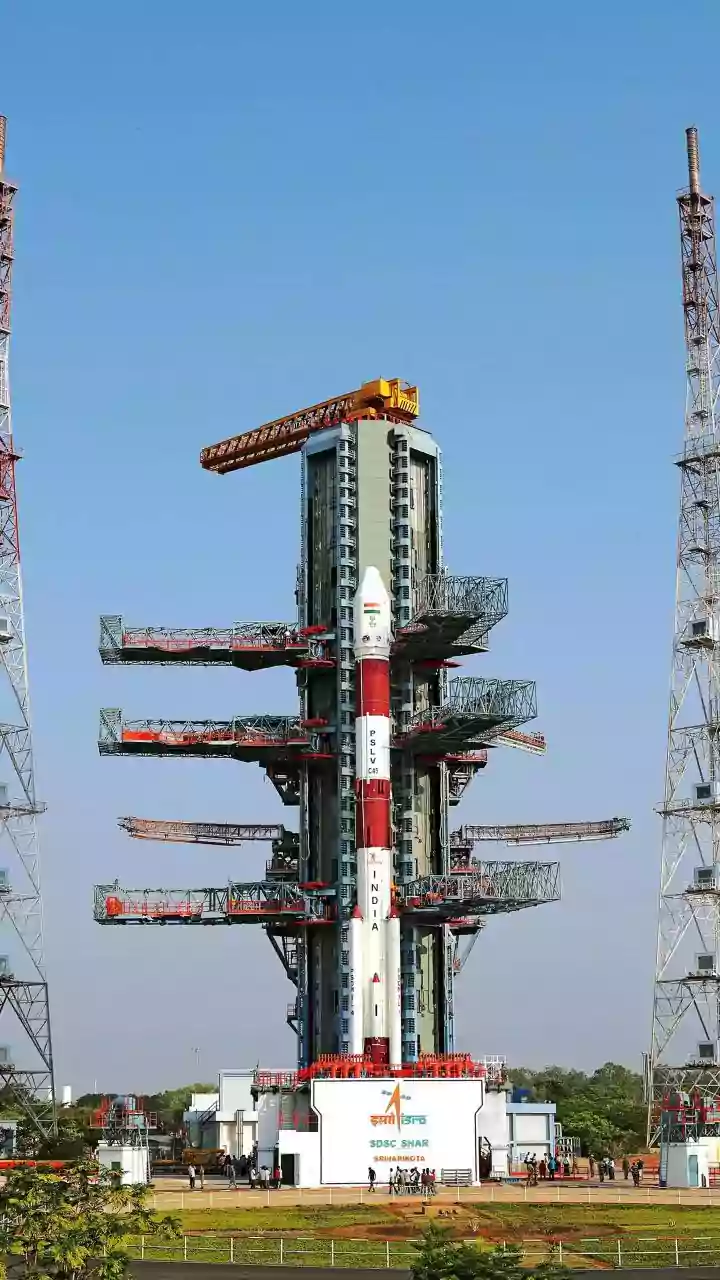
Recognizing the stakes, the Indian government launched its National Quantum Mission (NQM) in 2023. It’s an ambitious, eight-year initiative with a budget of over $700 million to make India a global leader in quantum technology. A key objective of the mission is to develop secure quantum communication networks. One of the explicit goals is creating satellite-based secure quantum communications between ground stations up to 2,000 kilometers apart. This is where the country’s other major technological powerhouse comes in: the Indian Space Research Organisation (ISRO). ISRO has already been conducting successful ground-based QKD experiments, demonstrating free-space quantum communication and even holding a videoconference using quantum-encrypted signals. The NQM officially tasks ISRO with developing the satellites needed for this next leap.
Why Take Quantum to Space?
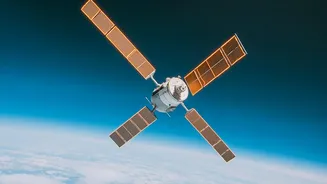
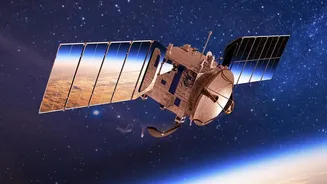
While fiber optic cables can be used for QKD, they are limited by distance and physical barriers. Satellites offer a way to create a secure communication network across vast geographical areas, connecting distant cities, military assets at sea, and embassies abroad without the need for vulnerable terrestrial links. By placing quantum communication hardware on a satellite, India could establish a secure key exchange between any two points in the country, or even with other countries. ISRO has already laid the groundwork, demonstrating its ability to perform crucial QKD experiments and developing key indigenous technologies needed for the task, setting the stage for planned satellite-based demonstrations. This convergence of the NQM's quantum expertise and ISRO's proven space capabilities is the core of India's strategy.
A New Front in the Tech Cold War
India isn't operating in a vacuum. China has already made significant strides, having launched its "Micius" quantum satellite years ago and demonstrated intercontinental quantum communication. The United States and European nations are also investing heavily in the field. For India, developing this capability is not just a scientific achievement; it's a matter of strategic autonomy. Owning a sovereign, unhackable communication network reduces dependence on foreign technology and protects critical defense, economic, and governance infrastructure from espionage. By fast-tracking its quantum mission and leveraging its world-class space program, India aims to secure its place as a major power in the 21st-century technological landscape.