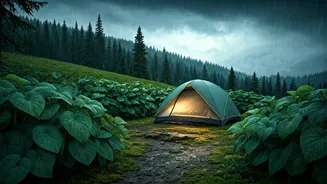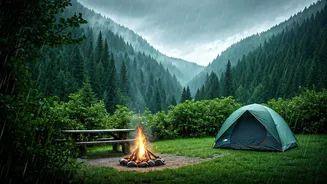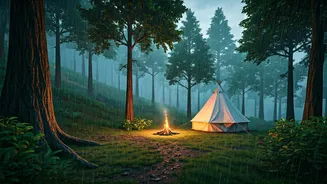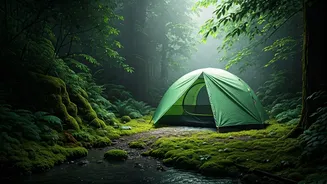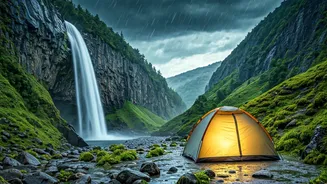




Why Embrace a Rainy Tent?
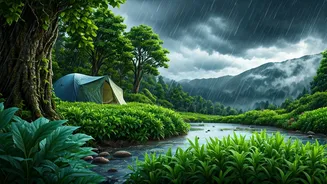
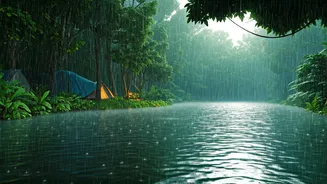
There's a certain magic to the Indian monsoon that can only be truly experienced outdoors. It’s an immersion of the senses: the earthy scent of petrichor rising from the soil, the rhythmic drumming of rain on your tent, and the sight of a landscape washed
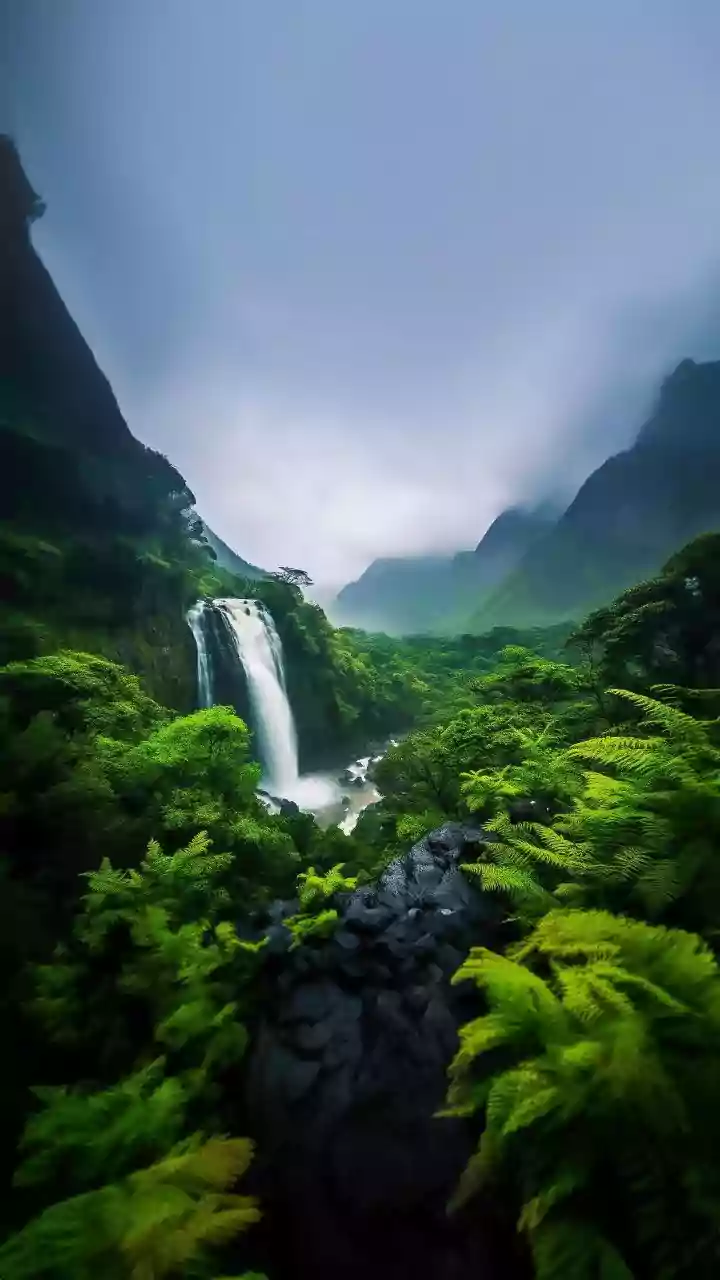
clean and bursting with life. The crowds of the peak season vanish, replaced by a serene, quiet atmosphere. Rivers swell, waterfalls cascade with newfound power, and the entire forest ecosystem sings a different tune. Monsoon camping isn't about avoiding the rain; it's about surrendering to it and discovering the profound beauty that comes with the downpour. It’s a chance to see familiar landscapes in a completely new light, vibrant and intensely alive.
Bhandardara, Maharashtra
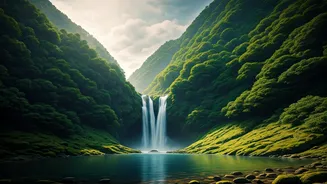
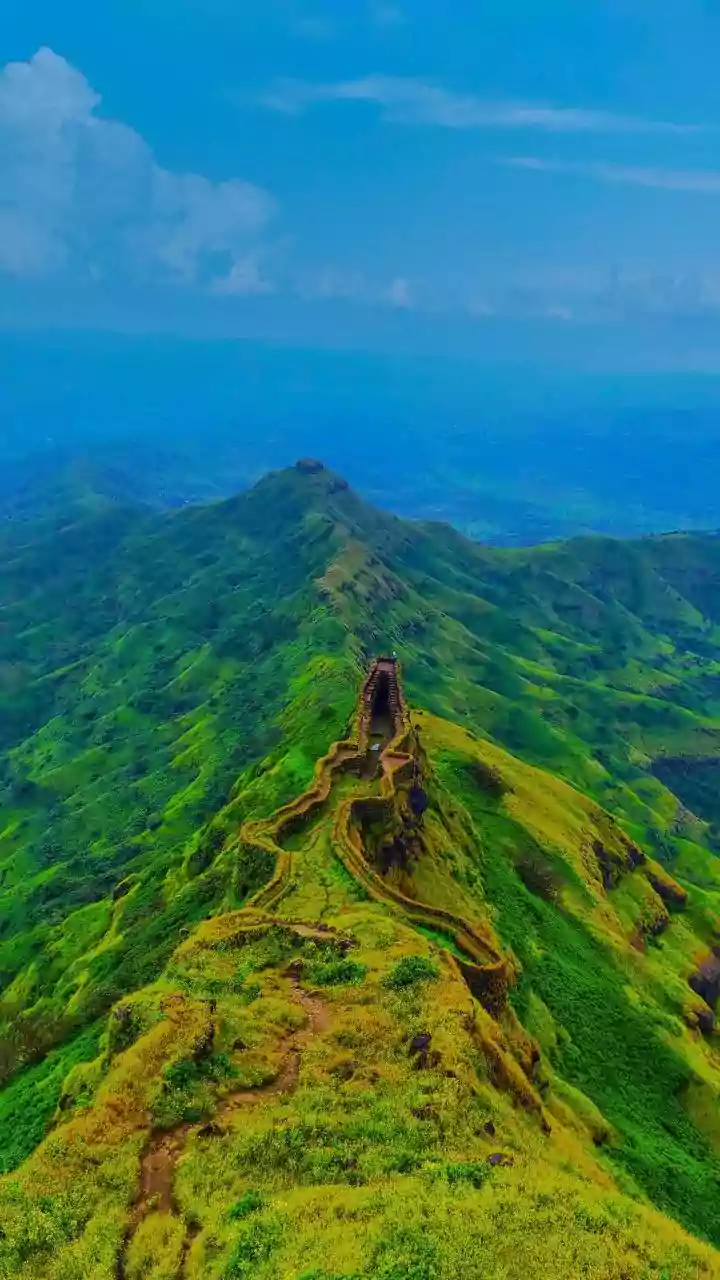
Nestled in the Sahyadri ranges of the Western Ghats, Bhandardara is a monsoon paradise. During the rains, this quiet hamlet transforms into a spectacle of nature's power and beauty. The main draw is the Wilson Dam, which overflows dramatically, creating the spectacular Umbrella Falls. Campsites near the shores of Arthur Lake offer breathtaking views of the water against a backdrop of misty, green-carpeted hills. Treks to the historic Ratangad fort become more challenging but infinitely more rewarding, with dozens of small, seasonal waterfalls en route. The air is cool and misty, and the experience of sipping hot chai while watching the clouds roll in over the lake is something you won't forget.
Coorg, Karnataka
Known as the 'Scotland of India', Coorg's rolling hills and coffee plantations are stunning year-round, but they take on a mystical quality during the monsoon. The rain amplifies the region's lushness, turning it into a sea of fifty shades of green. Camping here means waking up to the sound of raindrops on coffee leaves and the sight of mist weaving through the valleys. It’s the perfect time for 'waterfall hopping' — Abbey Falls and Iruppu Falls are in their full, thunderous glory. Many campsites are situated within coffee estates, offering a unique agro-tourism experience. Just be prepared for leeches on treks; a little salt or repellent is a small price to pay for the verdant splendour.
Kodaikanal, Tamil Nadu
While many head to the hills to escape the summer heat, Kodaikanal offers a different charm during the monsoon. The 'Princess of Hill Stations' becomes a quiet, contemplative retreat. The tourist rush subsides, allowing for a more intimate experience with nature. Campsites around the periphery of the town, near areas like Poombarai village, provide stunning views of terraced farms vanishing into the fog. The lakes, including the iconic Kodaikanal Lake and Berijam Lake, are full and serene. It's the ideal setting for those who prefer a gentler monsoon experience—think peaceful walks through misty pine forests and evenings spent around a crackling (and well-covered) campfire.
Malshej Ghat, Maharashtra
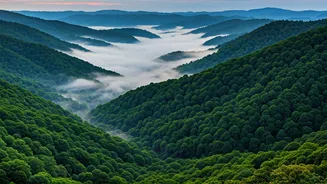
A magnet for weekend warriors from Mumbai and Pune, Malshej Ghat is famous for its dramatic monsoon scenery. This mountain pass is renowned for its countless waterfalls that cascade directly onto the roads, creating a drive-through shower experience for motorists. For campers, the real magic lies in the surrounding plateaus. Setting up camp here offers panoramic views of the rugged valleys below, often filled with a sea of clouds. It’s a prime spot for birdwatchers, as the area attracts flamingos during this season. The combination of easy accessibility, dramatic landscapes, and the sheer thrill of being enveloped by clouds and waterfalls makes it a top choice for a quick and refreshing monsoon escape.
Tips for a Safe Monsoon Camp
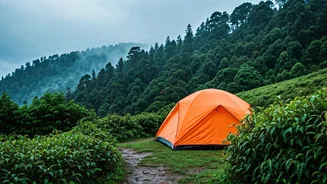
Monsoon camping requires extra preparation. Choose a high-quality, waterproof tent with a good rainfly. Pitch your tent on higher ground, away from streams or areas prone to waterlogging. Pack quick-drying synthetic clothes instead of cotton, and bring multiple pairs of socks. Waterproofing is key: use dry bags for electronics, clothes, and your sleeping bag. A large tarpaulin can create a life-saving covered common area for cooking and relaxing. Most importantly, always check local weather forecasts and road conditions before you leave, and inform someone of your itinerary. Respect the power of nature and don't take unnecessary risks, especially near swollen rivers or landslide-prone areas.