





An Icon Nears Retirement
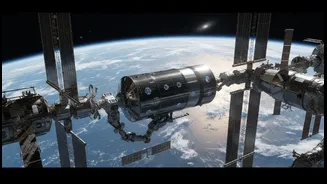
The International Space Station stands as one of history's greatest engineering and diplomatic achievements, continuously hosting astronauts since November 2000. But after three decades of service, the aging outpost is scheduled for a controlled deorbit
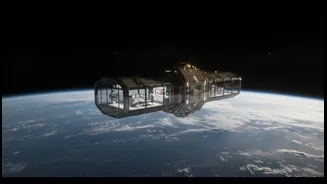
into a remote part of the Pacific Ocean around 2030. The station’s retirement is not a surprise; it's a planned conclusion for an aging facility. However, its end raises a critical question: what comes next for humanity in low-Earth orbit (LEO)? For years, the answer was uncertain. Today, a new reality is taking shape, driven not just by national space agencies, but by private enterprise.
From Landlord to Tenant
Instead of building a direct, government-owned successor to the ISS, NASA is orchestrating a fundamental shift in strategy. Through its Commercial Low-Earth Orbit Destinations (CLD) program, the agency plans to transition from being the owner and operator of a space station to becoming just one of many customers on commercially owned and operated platforms. This model follows the success of NASA’s programs for commercial cargo and crew transport, which used private companies like SpaceX to service the ISS, driving down costs and stimulating a new market. By providing seed funding and technical support, NASA is nurturing a competitive marketplace of private space stations, with a recent draft request for proposals issued in July 2026 to formalize the next phase of this partnership. In June 2026, after a brief period of uncertainty about its strategy, NASA reaffirmed its commitment to this commercial-first approach.
The New Contenders
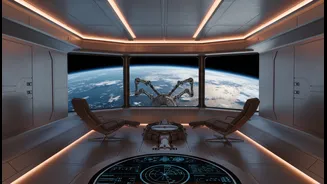
A diverse field of companies has stepped up, each with its own vision for the future of orbital real estate. Axiom Space is perhaps the furthest along, constructing modules that will first attach to the ISS before detaching to form a free-flying commercial station. Their first module launch is planned for 2027. Another major player is Blue Origin, which has partnered with Sierra Space to develop Orbital Reef, envisioned as a "mixed-use business park" in space. Sierra Space is contributing its innovative Large Integrated Flexible Environment (LIFE) inflatable habitat technology. Meanwhile, companies like Vast are pursuing a different model, aiming to launch a smaller, standalone station called Haven-1 as early as 2027, with plans for a larger, modular Haven-2 to follow. Starlab, a joint venture including Voyager Space and Airbus, is also developing a station intended to be launched in a single flight.
What's the Business Model?
These new commercial stations won't just be for NASA astronauts. Their business plans are built on serving a wide range of customers. Potential markets include in-space manufacturing of high-value products like specialized fiber optics and pharmaceuticals, which can be produced with higher quality in microgravity. Other revenue streams include hosting astronauts and research projects from other countries' space agencies, accommodating private space tourists, and providing platforms for media and entertainment projects. The core idea is to create a vibrant LEO economy where access to space is more flexible and affordable than ever before, attracting a mix of government, scientific, and commercial clients.
Challenges on the Road to Orbit
The path forward is not without significant hurdles. A major concern is the timeline. The ISS is set to be decommissioned by 2030, and there is a real risk of a "space station gap" if the commercial replacements are not fully operational in time. NASA is pushing for initial capabilities to be ready by 2029 to mitigate this. Funding is another major challenge. While NASA is providing initial capital through the CLD program, these companies must secure substantial private investment to see their ambitious projects through to completion. The business case for many of these ventures is still unproven, and success will depend on generating enough demand from non-NASA customers to create a sustainable market.