







The Enemy of Freshness: Moisture
Coriander, or dhaniya as it's known in countless Indian households, is the fragrant green flourish on everything from dal and sabzi to chaat and chutney. But its delicate nature means it has a frustratingly short lifespan. The main culprit behind its quick
demise into a sad, yellowed, and slimy mess is excess moisture. When coriander leaves are stored wet, they trap humidity, which creates the perfect breeding ground for the bacteria and fungi that cause rot. The leaves' thin cell walls break down quickly, leading to that familiar 'radioactive goo' at the bottom of your vegetable drawer. Understanding this is the first step to conquering the problem.
Your Super-Crisp Toolkit
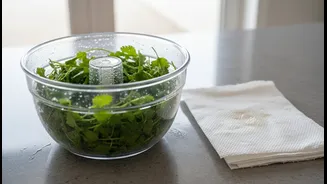
You don't need fancy gadgets to win the war against wilted coriander. The solution requires just two humble heroes of the kitchen: a centrifugal salad spinner and paper towels. The salad spinner is a genius device for this task. It uses centrifugal force to fling water away from the leaves without crushing them, something that aggressive patting or shaking can't achieve. It’s much faster and gentler than any other drying method. The paper towels then come in for the final, crucial step, acting as a moisture regulator during storage, absorbing any condensation that forms in the fridge and keeping the leaves in a perfectly balanced, not-too-wet, not-too-dry environment.
The Ultimate Prep Method: A Step-by-Step Guide
Ready for coriander that stays fresh and vibrant for a week or even longer? Follow these simple steps. First, prepare your coriander bunch. If the roots are attached, you can trim them off. Go through the bunch and discard any leaves that are already yellow or wilted. Next, it's time to wash. Place the coriander in the salad spinner's basket and fill the outer bowl with cold water, fully submerging the leaves. Gently swish them around with your hand to dislodge any dirt or grit. Lift the basket, discard the dirty water, and repeat if necessary until the water runs clear. Once clean, place the basket back in the empty spinner bowl, secure the lid, and spin. Give it a good 15-20 seconds. You’ll be amazed at the amount of water that collects in the bottom. Pour out the water and give it one more short spin for good measure.
Storing for Lasting Freshness
Now that your coriander is clean and almost completely dry, it's time for the final step that ensures longevity. Take a clean, airtight container and line the bottom with a layer of paper towels. Gently place the spun-dry coriander on top, spreading it out loosely rather than packing it down. Don’t overcrowd the container. Place another layer of paper towel on top of the coriander before sealing the lid. The paper towels will absorb any remaining excess moisture and prevent condensation from making the leaves soggy. Store the container in your refrigerator's crisper drawer. Every few days, you can check the paper towels; if they feel damp, replace them with fresh, dry ones to extend the life of your herbs even further.
Beyond Coriander: Other Greens Love This Too
This brilliant technique isn't just for dhaniya. It works wonders for a whole host of other delicate leafy greens and herbs that are staples in Indian cooking. You can use the exact same process for mint (pudina), fenugreek leaves (methi), and even curry leaves (kadi patta). Giving these herbs the salad spinner and paper towel treatment before storing them will dramatically increase their shelf life, reduce food waste, and save you money. It ensures you always have fresh, vibrant herbs on hand, ready to elevate your cooking without the disappointment of finding them spoiled just when you need them most.