








The Challenge of the Modern Desk Job
The daily grind for many Indian professionals involves long hours spent sitting at a desk. While great for productivity, this sedentary lifestyle can take a silent toll on our health. Prolonged sitting is linked to a range of concerns, including poor
blood circulation, a slower metabolism, and increased risk of cardiovascular issues. Many people report feeling persistent fatigue and low energy, creating a cycle that makes finding the motivation to exercise even harder. The goal isn't just to counteract these effects, but to build a foundation of health that supports both a demanding career and a vibrant personal life.
What Is Zone 2 Training?
Forget the 'no pain, no gain' mantra. Zone 2 training is all about low-intensity, steady-state cardio. Think of it as the 'conversational pace'. You should be exercising at an effort level where you can comfortably hold a conversation without gasping for breath. If you can chat with a friend or hum a song, you are likely in the right zone. Scientifically, it corresponds to working at about 60-70% of your maximum heart rate. This is the sweet spot where your body becomes highly efficient at using fat for fuel and builds endurance with minimal physical stress.
The Science-Backed Health Benefits
The magic of Zone 2 lies in what it does at a cellular level. This type of training improves the function and density of your mitochondria, the tiny powerhouses in your cells that convert food into energy. This leads to better energy levels throughout the day. It also trains your body to become incredibly efficient at burning fat for fuel, which is beneficial for metabolic health and weight management. Over time, consistent Zone 2 workouts strengthen your heart, making it more efficient at pumping blood, which can lead to a lower resting heart rate and better overall cardiovascular fitness. Best of all, because it's less strenuous, recovery is quick and the risk of overtraining or injury is significantly lower.
Why Cycling Is a Perfect Match
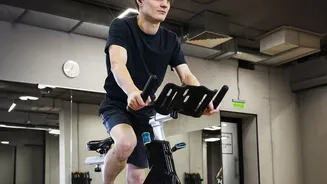
For office workers, cycling is an ideal way to practice Zone 2 training. It's a low-impact activity, meaning it’s gentle on your knees, hips, and back—joints that are already under stress from sitting. Whether you use a stationary bike at a gym or at home, or cycle outdoors in your neighbourhood, it's an accessible option. A stationary bike, in particular, makes it incredibly easy to control your effort and maintain a steady heart rate, which is the key to staying in Zone 2. You can put on a podcast or a show and pedal away, making the time pass quickly and enjoyably.
How to Find Your Zone 2
Finding your personal Zone 2 is simple. The easiest method is the 'talk test': just maintain an intensity where you can speak in full sentences. For a more structured approach, you can estimate your maximum heart rate (MHR) by subtracting your age from 220. Your Zone 2 range will be between 60% and 70% of that number. For example, a 35-year-old has an estimated MHR of 185 (220 - 35). Their Zone 2 would be between 111 and 130 beats per minute. A simple fitness watch or heart rate monitor can help you track this, but don't let the technology intimidate you. The feeling of being able to sustain a conversation is your most reliable guide.
A Simple Starter Plan
Consistency is more important than intensity. Aim for two to three Zone 2 sessions per week to start. Each session should be around 30 to 45 minutes long. As you get fitter, you can gradually increase the duration of your sessions, working towards the recommended 150 minutes of moderate-intensity cardio per week. The goal is to make this a sustainable habit. Don't worry about speed. Focus on keeping your heart rate steady and your effort conversational. Remember, this is about long-term health, not winning a race.