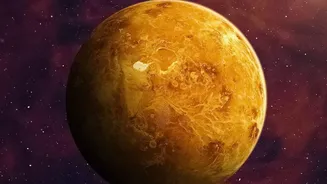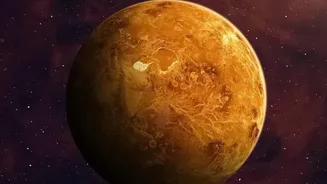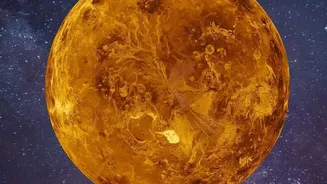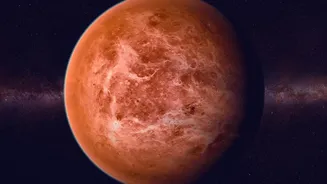




Why Venus is a Scientific Enigma
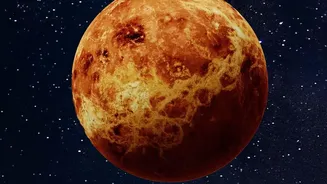
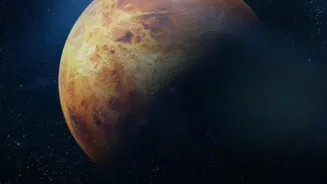
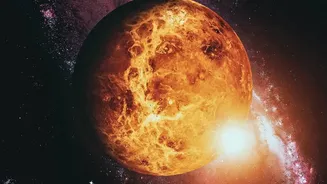
Often called Earth's twin due to its similar size and mass, Venus couldn't be more different in reality. Its surface is a scorching hellscape with temperatures hot enough to melt lead, and the atmospheric pressure is over 90 times that of Earth at sea
level. The planet is shrouded in thick, toxic clouds of sulfuric acid, making its surface impossible to observe with conventional telescopes. This extreme environment is the result of a runaway greenhouse effect, a scenario that scientists study to better understand climate change dynamics on our own planet. Despite decades of exploration by various space agencies, fundamental questions about Venus remain, particularly regarding its geological activity.
The Sulfur Dioxide Smoking Gun
To find active volcanoes, you don't necessarily look for lava first—you can sniff the air. On Venus, the target is sulfur dioxide (SO2). This pungent gas is a common byproduct of volcanic eruptions on Earth. In the upper atmosphere of Venus, sunlight breaks down SO2 molecules relatively quickly. Therefore, if scientists detect high concentrations or sudden spikes of sulfur dioxide in the upper cloud layers, it strongly suggests that the gas has been recently replenished from a source below—most likely an erupting volcano. Previous missions, like ESA's Venus Express, have observed significant fluctuations in SO2 levels, fueling the debate about whether Venusian volcanoes are active today. ISRO's mission aims to gather more definitive evidence.
ISRO’s Volcanic Detective: Shukrayaan-1
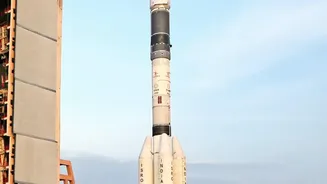
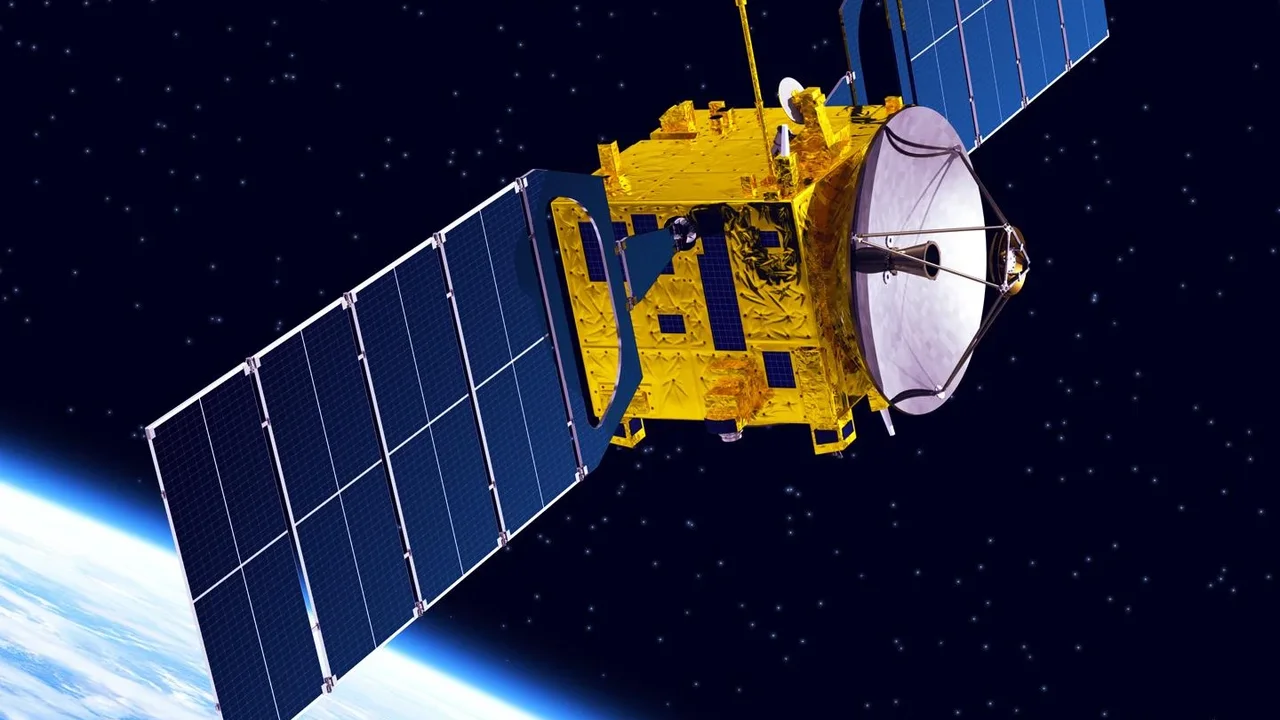
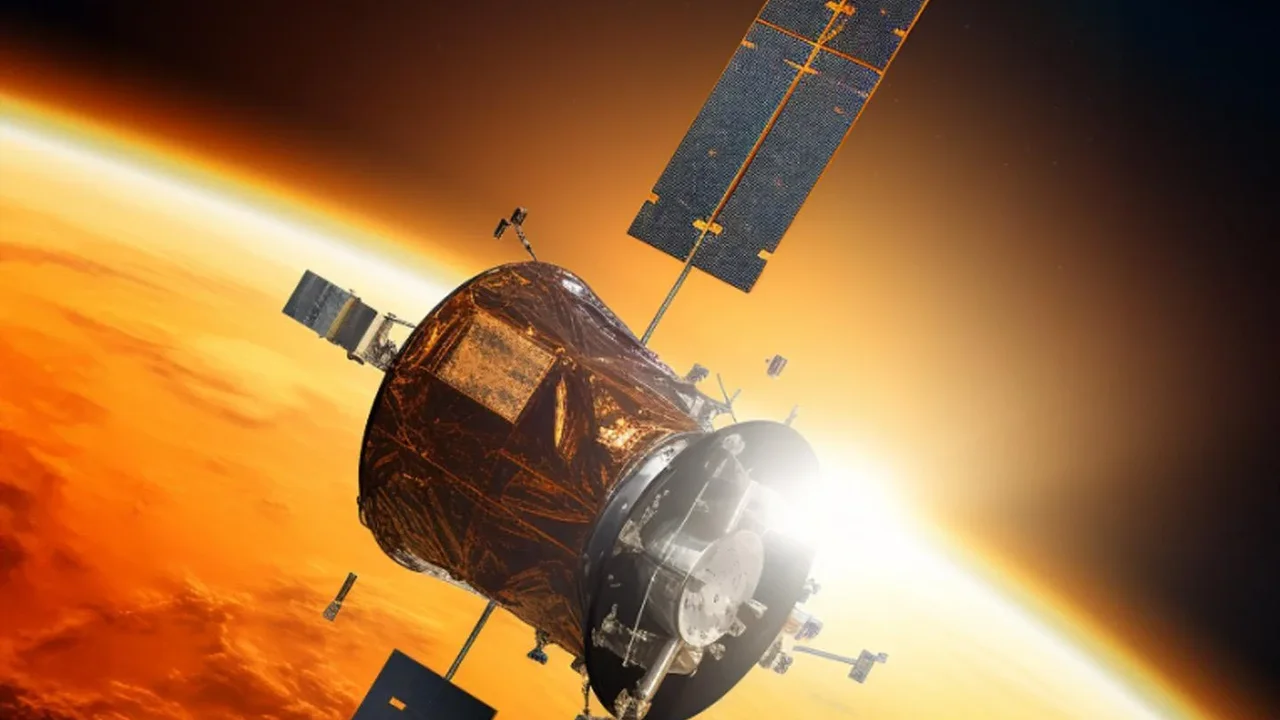
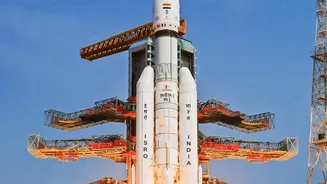
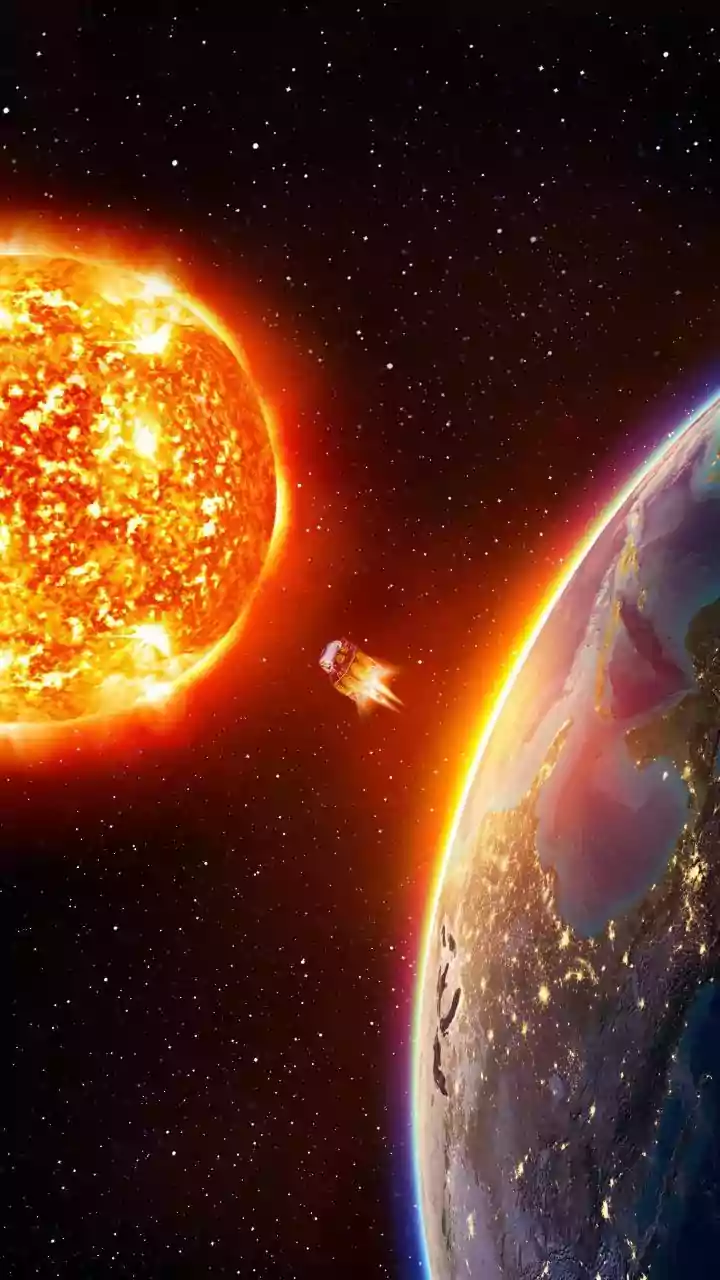
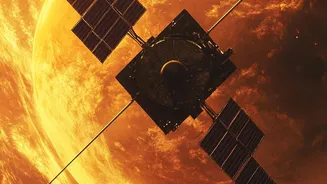
The Venus Orbiter Mission, unofficially named Shukrayaan-1, is India’s first mission to our planetary neighbour and its second interplanetary venture after the successful Mars Orbiter Mission (Mangalyaan). Formally approved by the Indian government, the mission is currently planned for a March 2028 launch aboard the powerful LVM3 rocket. The spacecraft, with an estimated cost of ₹1,236 crore, will carry a suite of scientific instruments weighing around 100 kg. It will enter a highly elliptical orbit around Venus to study its atmosphere and surface in unprecedented detail over a planned four-year mission.
A Toolkit for an Alien World
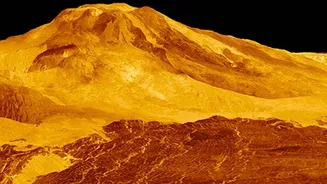
To peer beneath the thick clouds, Shukrayaan-1 will be equipped with cutting-edge instruments. A key payload is the high-resolution Synthetic Aperture Radar (VSAR), designed to map the planet's surface with a resolution far greater than NASA's Magellan mission in the 1990s. This radar will search for geological signs of recent volcanic activity, like lava flows and hotspots. Other instruments, such as the Venus Surface Emissivity and Atmospheric Mapper (VSEAM) and a thermal camera, will specifically hunt for thermal anomalies on the surface that could indicate active volcanic vents. The mission will also carry payloads developed in collaboration with international partners, including from Russia and Sweden, to study the interaction between the solar wind and the Venusian ionosphere.
Why Finding Volcanoes Matters
Confirming active volcanism on Venus would be a monumental discovery. It would prove that Earth is not the only geologically active planet in our inner solar system. Understanding how and why Venus, a planet so similar to Earth in its infancy, evolved into such a hostile world is a primary goal of planetary science. Active volcanoes would provide a crucial piece of that puzzle, helping scientists understand the processes happening inside the planet and how they influence its thick, toxic atmosphere. For India, a successful Shukrayaan-1 mission would solidify its position as a major player in interplanetary exploration, demonstrating advanced technological capabilities and contributing vital knowledge to the global scientific community.