




See and Be Seen: Master Monsoon Visibility
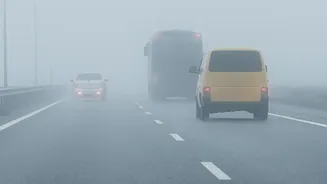
Heavy rain drastically reduces visibility for everyone on the road. Your first priority is to see clearly and ensure others can see you. Before you ride, check that your headlights, tail lights, and indicators are all working and clean. It is a good practice
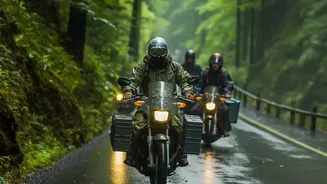
to keep your headlight on even during the day in overcast conditions to make yourself more visible to other motorists. For riders, a clean, scratch-free visor is non-negotiable. A foggy or rain-splattered visor can be dangerously blinding. Consider using an anti-fog insert or a hydrophobic coating to help water bead and roll off. Equally important is wearing the right gear. Brightly coloured or high-visibility waterproof jackets and reflective stickers on your helmet and bike can make a life-or-death difference, especially in gloomy weather or at night.
Beware Hidden Dangers on the Road Surface
Monsoon showers transform familiar roads into obstacle courses. Standing water can conceal dangerous potholes, open manholes, or debris that can easily unbalance a two-wheeler. It is always safest to avoid riding through puddles if you can, as you never know what lies beneath. The first rains are particularly treacherous as they lift oil and grime from the asphalt, creating an exceptionally slippery film that significantly reduces tyre grip. Be extra cautious on painted road markings like zebra crossings and lane dividers, as these surfaces become incredibly slick when wet. Always scan the road far ahead, slow down, and choose your path carefully, staying in the tyre tracks of vehicles ahead where the road is likely to be drier.
Rethink Your Braking and Tyre Grip
Wet roads mean your stopping distance increases significantly, sometimes by up to 30% or more. Sudden, hard braking is a primary cause of skids and falls. Instead, you must adapt your technique. Apply both brakes smoothly and progressively, starting gently and gradually increasing pressure. This helps transfer weight correctly and prevents your wheels from locking up. Maintaining a greater following distance from the vehicle in front is crucial; it gives you the extra time and space needed to slow down safely. Your tyres are your only connection to the road. Ensure they have adequate tread depth (at least 2-3mm) to effectively channel water away and prevent aquaplaning, a dangerous situation where your tyre loses contact with the road. Regularly check your tyre pressure, as it affects grip and stability.
Give Your Vehicle Some Monsoon Care
The monsoon is harsh on your motorcycle or bicycle. The constant exposure to water, mud, and humidity can lead to rust and mechanical failures. One of the most critical maintenance tasks is cleaning and lubricating the chain regularly. Rainwater washes away lubricant, leaving the chain vulnerable to rust, which can cause it to perform poorly or even snap. It's also wise to give your bike a quick rinse with plain water after a wet ride to wash away corrosive mud and grime, then wipe it dry. Pay attention to your electrical systems; ensure battery terminals are clean and electrical connectors are protected from water to prevent short circuits. A pre-monsoon service check for brakes, tyres, and lights can prevent a potential breakdown or accident.
Navigate Waterlogged Roads with Extreme Caution
Indian cities are notorious for waterlogged streets during heavy downpours. For a two-wheeler, these can be especially dangerous. The low position of a motorcycle's engine and exhaust makes it vulnerable to water entering and causing severe damage, a condition known as hydrolock. If you are faced with a waterlogged stretch, the best advice is often to find an alternative route. It's impossible to judge the depth of the water or see hidden obstacles beneath the surface. If you have no choice but to proceed, do so with extreme caution. Maintain a steady, low speed in a low gear, and avoid braking or sudden acceleration. Do not drag your feet in the water; keep them on the footpegs to maintain balance. If the water seems too deep or the current too strong, it is always safer to turn back.