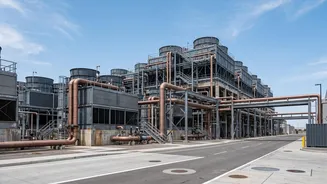








An Unprecedented Surge in Energy Demand
Recent studies paint a stark picture of the energy appetite of the digital economy. A new study from Harvard University, published in Nature Sustainability, found that US 'hyperscale' data centres—the largest facilities that power AI and cloud computing—consumed
as much as 99 terawatt-hours (TWh) of electricity over a one-year period. This is comparable to the annual electricity usage of entire states like Michigan or Tennessee. The associated carbon dioxide emissions were estimated at 25.7 million metric tons, an amount similar to the yearly emissions of Denmark. This surge is primarily powered by fossil fuels; the Harvard study found that natural gas and coal supplied over half of the electricity consumed.
The AI Boom Is Fuelling the Fire
The primary driver behind this sharp increase is the explosive growth of artificial intelligence. Training and running large-scale AI models requires immense computational power, which translates directly into higher energy consumption. According to the International Energy Agency (IEA), global electricity use by data centres is set to double by 2030, with AI expected to account for a huge portion of that growth. In the US, AI servers could account for 84% of all server electricity consumption by 2030. This insatiable demand is leading to a construction boom, with the IEA tracking the development of 120 gigawatts of new data centre capacity to be built by the end of the decade, three-quarters of which will be for AI.
The Green Pledges of Big Tech Under Pressure
Major technology companies like Google, Amazon, and Microsoft have become the world's largest corporate buyers of renewable energy. However, the sheer speed and scale of the AI-driven expansion are outpacing these green investments. The IEA projects that by 2030, natural gas will be needed to supply about 60% of the electricity for US data centres. In some cases, to avoid delays in connecting to strained power grids, developers are even proposing to build on-site gas-fired power plants. This creates a difficult dilemma, pitting technological advancement against climate goals and putting pressure on companies to reconcile their sustainability commitments with their operational needs.
A Global Issue with Local Consequences in India
While the latest research focuses on the US, the implications are global. The services and platforms used by millions in India are often hosted in these same energy-intensive data centres. Furthermore, India is experiencing its own data centre boom. One report projects that data centre electricity demand in India will rise from 11 TWh in 2025 to 91 TWh in 2035. This rapid growth puts a spotlight on the urgent need for sustainable planning. The challenges faced in the US—strained grids, reliance on fossil fuels, and the environmental footprint of AI—serve as a crucial lesson. Ensuring that India's digital expansion is powered by clean energy will be critical to meeting both its technological ambitions and its climate commitments.
More Than Just Emissions
The environmental impact of data centres extends beyond electricity consumption and carbon emissions. These facilities require vast amounts of water for cooling their servers, a significant concern in water-stressed regions. Moreover, a recent MIT study highlights the widespread health impacts. Researchers found that air pollution from the electricity demanded by data centres in 2023 was linked to approximately 650 premature deaths across the United States. The study showed that these health effects are not just local; pollution can travel far from the actual data centre, affecting communities in different regions due to the interconnected nature of power grids and atmospheric conditions.