

The Soul of the Feast: Bhoger Khichuri
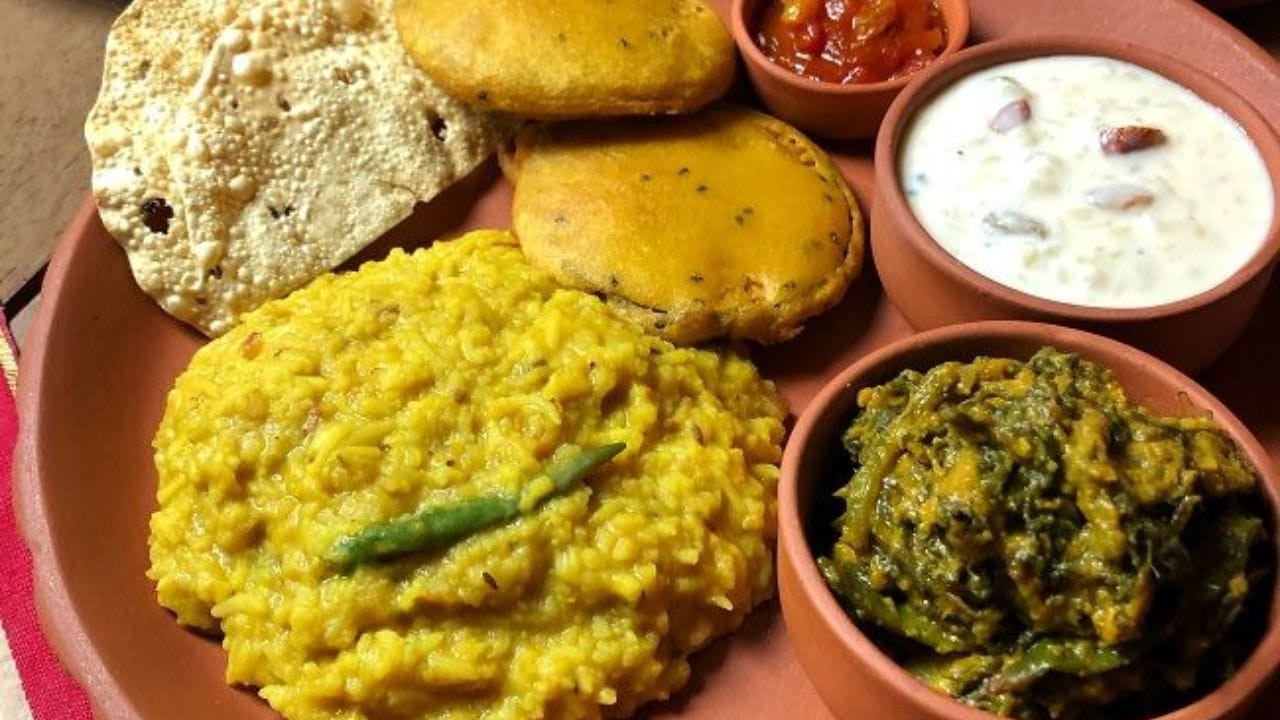
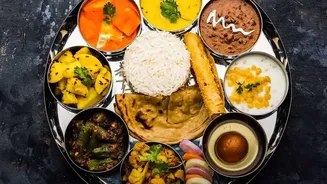
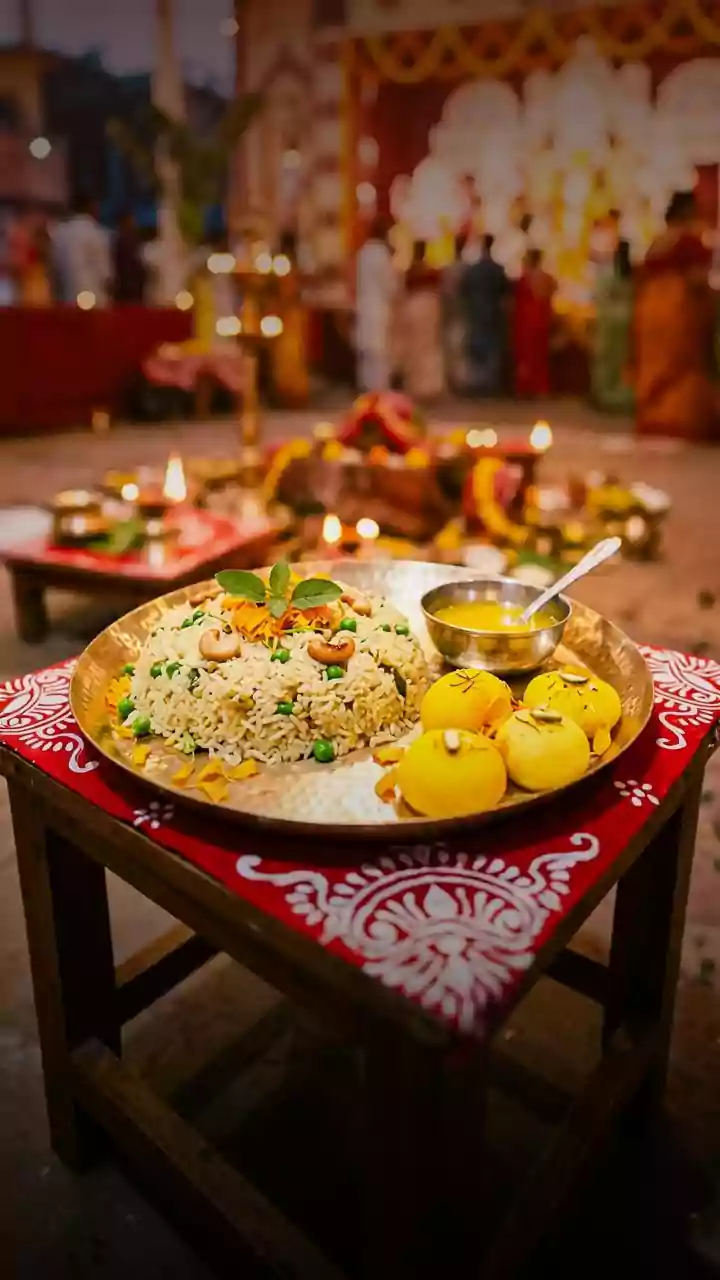
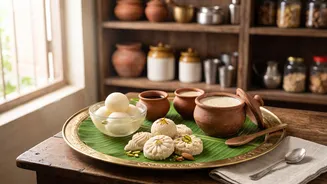
At the heart of every Durga Puja bhog is the humble yet magnificent khichuri. This isn't just any rice and lentil dish; it's a sublime, aromatic preparation that is both an offering to the Goddess and a comfort to the soul. Traditionally made with fragrant
Gobindobhog rice and roasted moong dal, this 'niramish' or vegetarian preparation is cooked without onion or garlic. The magic lies in its simplicity and the blend of aromatic spices like cinnamon, cardamom, and cloves, tempered in ghee or mustard oil. Vegetables like potatoes, cauliflower, and green peas are often added, making it a wholesome one-pot meal that captures the essence of divine prasad.
Recipe: Wholesome Bhoger Khichuri
To prepare this divine dish, start by dry roasting sona moong dal until it turns golden brown and releases a nutty aroma. Set it aside. In a heavy-bottomed pan, heat mustard oil or ghee and lightly fry cubes of potato and cauliflower florets until they are golden; then set them aside. In the same oil, temper with bay leaves, dried red chillies, cumin seeds, cinnamon, cardamom, and cloves. Add ginger paste and sauté before adding rinsed Gobindobhog rice (or a short-grain alternative). Stir for a minute, then add the roasted dal, fried vegetables, green peas, and tomatoes. Pour in hot water, add turmeric, salt, and a touch of sugar to balance the flavours. Cover and cook on low heat until the rice and dal are soft and have reached a porridge-like consistency. A final dollop of ghee before serving enhances its rich flavour.
The Perfect Accompaniment: Labra
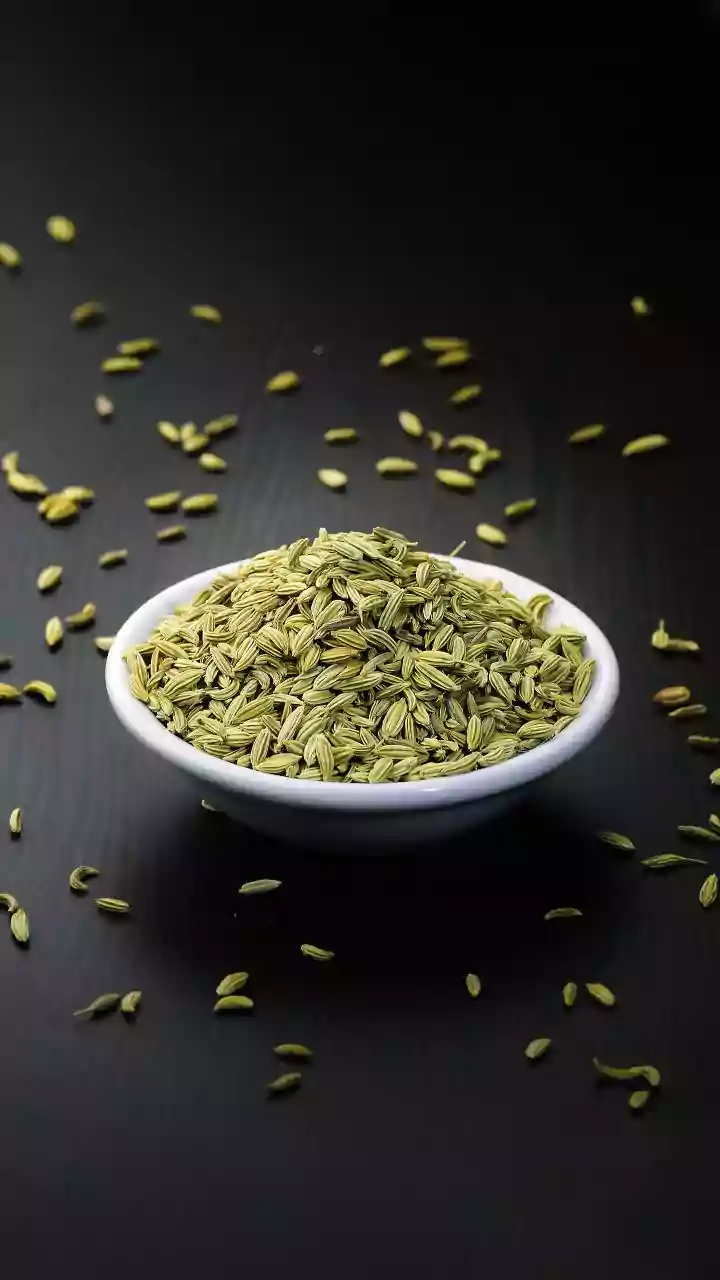
No bhoger khichuri is complete without its steadfast companion, labra. This traditional Bengali mixed vegetable dish is a beautiful medley of seasonal produce, where each vegetable contributes its unique texture and flavour, yet melds into a harmonious whole. Like the khichuri, labra is a 'niramish' preparation, foregoing onion and garlic. Its signature flavour comes from 'panch phoron', a Bengali five-spice blend of mustard, fennel, cumin, nigella, and fenugreek seeds, which is tempered in hot mustard oil. The mix typically includes pumpkin, potatoes, brinjal, sweet potato, and radish, all cooked down until they are soft and almost inseparable.
Recipe: Hearty and Rustic Labra
To make labra, begin by chopping a variety of vegetables like pumpkin, potato, sweet potato, brinjal, and beans into bite-sized pieces. Heat mustard oil in a kadai and temper with panch phoron, bay leaves, and dried red chillies. Add the heartier vegetables like potatoes and pumpkin first, followed by the others. Sauté them for a few minutes before adding a paste of ginger and green chillies, along with powdered spices like turmeric, cumin, and a pinch of red chilli powder. Add salt and a little sugar to enhance the natural sweetness of the vegetables. Cover and cook on a low flame, allowing the vegetables to release their own moisture and soften. The goal is a semi-dry dish where the vegetables are tender but still hold some shape. Finish with a drizzle of ghee and a sprinkle of 'bhaja moshla' (dry roasted spice powder) for an authentic aroma.
A Sweet and Tangy Finish: Tomato Chutney
The final flourish to the bhog platter is a sweet, tangy, and glistening chutney. The most popular choice is the Tomato Amsotto Khejur Chutney, a delectable concoction of tomatoes, dried mango leather (aamsotto), and dates (khejur). This chutney serves to cleanse the palate and provide a delightful contrast to the savoury khichuri and labra. Cooked down with sugar until it reaches a jam-like consistency, it’s often studded with raisins and cashews for added texture and richness. The tempering is similar to labra, often using panch phoron or just mustard seeds and a dry red chilli, which imparts a subtle, lingering warmth.