





The Challenge of Lunar Life Support
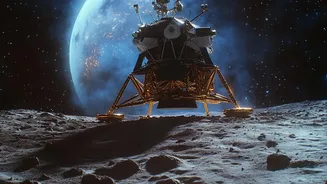
For humanity to return to the Moon and stay, astronauts will need a steady supply of essentials. Water, food, and, most critically, oxygen must be readily available. The Apollo missions of the past were short-term visits, where all necessary oxygen could
be packed and brought along. However, for the long-duration stays envisioned by the Artemis program, hauling massive quantities of oxygen from Earth is prohibitively expensive and complex. Every kilogram launched into space costs a fortune, and a sustainable lunar outpost will require tonnes of oxygen not just for breathing, but also as a key component of rocket propellant for return trips or further voyages. This reliance on Earth-based supply chains is the single biggest barrier to a true, long-term lunar settlement. The solution, according to NASA and its partners, is to live off the land, a concept known as in-situ resource utilization, or ISRU.
Mining the Moon for Air
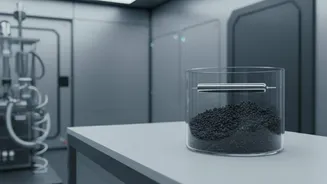
It may seem barren, but the Moon's surface is surprisingly rich in the one element astronauts need most. The lunar soil, a fine-grained material called regolith, is approximately 45% oxygen by weight. This oxygen isn't free-floating in an atmosphere, but is chemically bound within oxide minerals, such as silica, aluminum, and iron oxides. For decades, scientists have known this reservoir existed. The challenge has been developing a practical and efficient way to unlock it in the harsh lunar environment, which is characterized by a high vacuum and extreme temperatures. Recent breakthroughs in technology are now turning this theoretical possibility into a tangible engineering project, promising a future where astronauts can literally generate air from moon rocks.
How to 'Cook' Oxygen from Dust
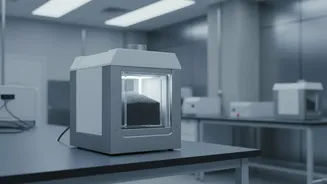
One of the most promising methods NASA is developing is called carbothermal reduction. The agency's Carbothermal Reduction Demonstration (CaRD) project has shown remarkable progress in this area. The process works by heating lunar regolith to extremely high temperatures—over 1,700 degrees Celsius—inside a specialized reactor. At these temperatures, the material melts. A reducing agent is introduced, which bonds with the oxygen in the minerals, releasing it as a gas like carbon monoxide (CO). Recent tests successfully confirmed the production of carbon monoxide using simulated lunar soil and concentrated solar energy to power the reactor. This CO gas is a crucial intermediate step; subsequent technology can easily split it to yield pure, breathable oxygen and carbon, which can be reused in the process. This solar-powered approach is key, as it relies on another abundant lunar resource: sunlight.
A Multi-Agency, Multi-Company Effort
The development of this groundbreaking technology is a collaborative effort. NASA's Johnson Space Center is managing the CaRD project, with crucial components developed across other centers and by commercial partners. Sierra Space developed the sophisticated carbothermal reactor that can autonomously handle the regolith. NASA's Glenn Research Center designed the deployable solar concentrator, and the Kennedy Space Center contributed the advanced gas analysis system, based on an instrument that has already operated on the Moon. This collaboration between government agencies and private industry highlights a broader strategy: building the foundational infrastructure for a true lunar economy. Other entities, like Blue Origin and the European Space Agency, are also developing similar technologies, such as molten regolith electrolysis, underscoring the global importance of solving the lunar oxygen problem.
More Than Just Breathing Room
Extracting oxygen from regolith offers benefits that extend far beyond life support. The largest consumer of oxygen on the Moon won't be astronauts, but their rockets. Liquid oxygen is a primary component of rocket propellant, and producing it on-site would revolutionize space travel. A lunar base could become a refueling station for missions venturing deeper into the solar system, including to Mars. Furthermore, the carbothermal reduction process leaves behind a valuable byproduct: a mixture of metal alloys. These leftover metals could potentially be used in 3D printing and construction, helping to build the very habitats, landing pads, and other structures future lunar inhabitants will need. This single process could therefore provide air to breathe, fuel for transport, and materials for building, forming the bedrock of a self-sustaining off-world settlement.