





A Trip Down Memory Lane
There was a time when space was the ultimate frontier, a source of universal awe. During the Cold War, the space race between the United States and the Soviet Union captivated the world. Every rocket launch was a global event, astronauts were international
heroes, and the 1969 Apollo 11 moon landing represented a pinnacle of human achievement. For a generation, science and engineering were aspirational, driven by the dream of reaching the stars. But after the moon was conquered and the political urgency faded, so did the public's intense fascination. The Space Shuttle era, while technologically impressive, became more about routine work in low-Earth orbit than bold exploration. Space, for many, became less about wonder and more about expensive, incremental science.
India Reaches for the Moon
The recent resurgence of interest has many sources, but for India, a major catalyst was the triumphant landing of Chandrayaan-3 on the lunar south pole in August 2023. It wasn’t just a scientific achievement; it was a moment of immense national pride. Watched by millions, the mission proved India’s prowess in developing cutting-edge technology on a remarkably frugal budget. ISRO transformed from a respected government agency into a household name, and its scientists became national icons. This success, following the Mars Orbiter Mission (Mangalyaan), democratised the dream of space. It showed that space exploration wasn't just a game for superpowers with colossal budgets. It made science cool for a new generation of Indians, sparking interest in STEM fields and proving that the sky is no longer the limit.
The New Space Race: Billionaires and Rockets
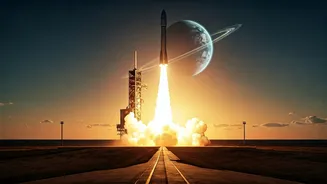
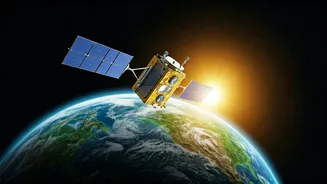
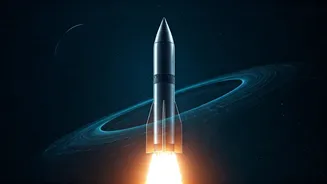
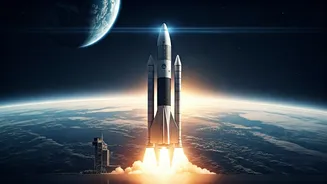
Another powerful force behind this revival is the entry of private enterprise. Visionary, and often eccentric, billionaires like Elon Musk (SpaceX) and Jeff Bezos (Blue Origin) have injected a dose of Silicon Valley disruption into the traditionally state-run aerospace industry. SpaceX, in particular, has revolutionised the economics of spaceflight with its reusable rockets, drastically lowering the cost of sending satellites, and now humans, into orbit. Musk’s audacious goal of colonising Mars has captured the public’s imagination in a way NASA hasn't since the Apollo program. This new “billionaire space race” is flashy, ambitious, and media-savvy, turning rocket launches into must-see live-streamed events and re-infusing the sector with a sense of rockstar glamour and boundless possibility.
Hollywood's Final Frontier
You can’t discount the power of pop culture. In recent years, Hollywood has produced a string of critically and commercially successful films that portray space exploration with stunning realism and emotional depth. Movies like *The Martian*, *Interstellar*, and *Gravity* moved beyond fantasy aliens to explore the human drama, scientific ingenuity, and sheer terror of space travel. These films, grounded in plausible science, have made the cosmos visually breathtaking for a new generation. They’ve allowed audiences to experience the awe of discovering new worlds and the solitude of the void, reinforcing the idea that space is not just a place for satellites, but the next great stage for the human story.
A New Era of Discovery Awaits
Beyond the headlines and the blockbusters, we are also in a golden age of actual scientific discovery. The James Webb Space Telescope is sending back mind-bending images from the dawn of time, fundamentally changing our understanding of the universe. NASA's Artemis program aims not just to return humans to the moon, but to establish a sustainable presence there as a stepping stone to Mars. The search for exoplanets—worlds orbiting other stars—has become a major field of study, with thousands of potential candidates identified. This confluence of factors—national pride, commercial innovation, cultural resonance, and profound scientific progress—has created a perfect storm, making space science not just important, but undeniably cool again.