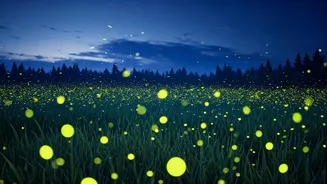










The Glow We Forgot
Remember the feeling? A sticky monsoon evening, the scent of wet earth in the air, and then, the first flicker. A tiny, pulsating star in the garden. Then another, and another. Chasing fireflies, or ‘jugnu’ as we fondly call them, was a rite of passage
for so many of us. It was a simple, spontaneous joy that required nothing but a bit of patience and a sense of wonder. Today, that memory feels like a relic from a different era. The gardens have shrunk, the nights are brighter with artificial light, and our attention is held captive by a different kind of glow—the one emanating from our palms. This isn’t just about nostalgia for a simpler time; it’s about recognising a fundamental shift in how we experience the world around us.
The Cost of Constant Connection
Our screens promise us the world: connection, entertainment, information, all on demand. But this endless stream comes at a cost. Study after study links excessive screen time to a host of modern ailments: disrupted sleep cycles from blue light exposure, heightened anxiety from the pressure of social media, and a pervasive sense of mental fatigue. We live in a state of ‘continuous partial attention,’ where we are always half-present, our minds flitting between a notification, an email, and the person right in front of us. Our brains, not designed for this relentless digital barrage, are tired. We scroll for relaxation but often end up more drained, mistaking digital distraction for genuine rest.
The Underrated Power of Awe
The antidote isn't necessarily a full-blown digital detox, but a conscious dose of 'awe.' Psychologists define awe as the feeling we get in the presence of something vast that challenges our understanding of the world. It could be a star-filled sky, a sprawling mountain range, or something as small and magical as a swarm of fireflies. Experiencing awe has been shown to decrease stress, increase feelings of generosity, and make us feel more connected to humanity and nature. Chasing fireflies isn't just a childish game; it's an exercise in finding awe in our own backyards. It forces us to be present, to observe silently, and to connect with a natural rhythm that is far older and more profound than any social media feed.
Embracing Unstructured Joy
Perhaps the greatest trick screens have pulled on us is the elimination of boredom. We have forgotten how to simply ‘be’. Any moment of quiet is immediately filled by pulling out a phone. Yet, it is in these unstructured, seemingly 'unproductive' moments that our minds wander, make new connections, and truly recharge. Creativity thrives in boredom. Chasing fireflies is the perfect unstructured activity. There is no goal, no score, no ‘win’ condition. The purpose is the act itself—the quiet pursuit, the shared wonder, the simple delight of being outdoors on a pleasant evening. It's about reclaiming time that isn't optimised for productivity or consumption, but is dedicated purely to joy.
Finding Your Fireflies
You might argue that there are no fireflies where you live, and you may be right. Their populations are declining due to habitat loss and light pollution. But ‘chasing fireflies’ is a metaphor. It’s about consciously choosing a simple, real-world experience over a digital one. It could be taking a walk on the terrace after dinner without your phone. It might be finding a nearby park and just watching the sunset. It could be sitting by a window during a downpour, listening to the rain instead of a podcast. The first step is small: designate one hour each evening as screen-free time. Leave your phone in another room and see where your mind takes you. You might be surprised by the magic you find when you’re not looking for it on a screen.