



The Engine Room: Your Back's Key Muscles
Before diving into the stroke mechanics, it helps to know the major players. When we talk about the back, we're mainly referring to several key muscle groups. The latissimus dorsi, or 'lats', are the large, wing-shaped muscles that are the primary drivers
for any pulling motion. The trapezius ('traps') and rhomboids, situated in the upper and mid-back, help control your shoulder blades and maintain posture. Finally, the erector spinae are the muscles running along your spine that are vital for stabilization and posture. All of these work in concert, but kayaking and paddleboarding call on them in distinctly different ways.
Kayaking: A Rotational Powerhouse
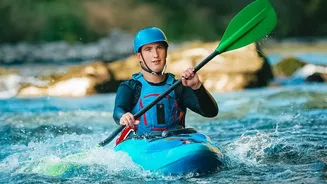
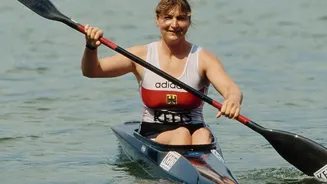
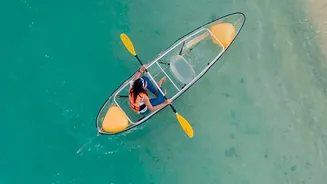
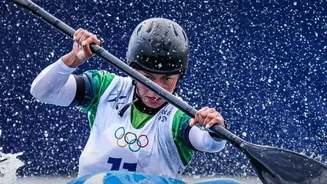
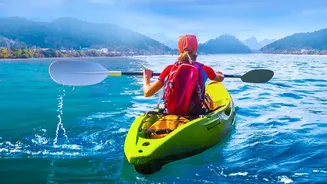
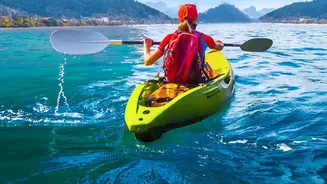
A proper kayaking stroke is a masterclass in rotation. The power doesn't come from pulling with your arms, but from twisting your torso. The stroke begins with the 'catch', where you plant the paddle blade in the water. During the 'power' phase, you unwind your torso, using your obliques and back muscles to pull the blade through the water. The latissimus dorsi on the pulling side are heavily engaged here, acting as the primary force generator that connects your core's rotation to the paddle. Your rhomboids and traps also activate to keep your shoulder blades stable and prevent your shoulders from slumping forward. This rotational movement means kayaking provides an intense workout for the lats and the muscles that support torso rotation, including the erector spinae and obliques.
Paddleboarding: A Full-Body Balancing Act
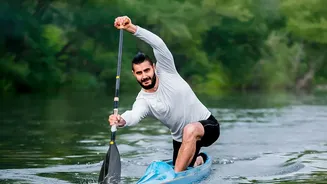
Stand-up paddleboarding (SUP) presents a different challenge. The fundamental demand of SUP is balance, which requires constant, subtle activation of your entire core, including your lower back. The SUP stroke is more of a vertical pull than a horizontal rotation. From a standing position, you reach forward, hinge at the hips, and pull the paddle down and through the water. This motion still heavily relies on the lats to power the stroke. However, the erector spinae muscles play a much larger and more constant role in stabilization. They work tirelessly to keep your spine straight and support your posture as you balance on an unstable surface and resist the force of the paddle pulling through the water. While kayaking emphasizes rotational power, SUP demands constant stabilization from the deep muscles of the back.
The Key Differences Summarized
So, what's the verdict? Kayaking provides a more focused and intense workout for the large pulling muscles of the back, particularly the lats, driven by powerful torso rotation. It is an excellent activity for building rotational strength. Stand-up paddleboarding, on the other hand, provides a more holistic core workout where the back muscles, especially the erector spinae, are constantly engaged to maintain balance and posture. While the lats are still the primary movers in the stroke, the biggest challenge in SUP is stabilization. Think of it this way: kayaking builds powerful rotational back strength, while paddleboarding builds incredible back stability and endurance.
Training for a Stronger, Safer Back
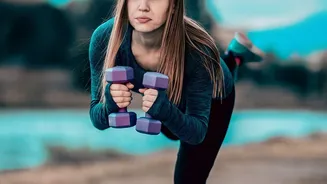
Understanding these differences can help you train smarter and prevent injury. For avid kayakers, incorporating exercises that build rotational core strength, like Russian twists and wood chops, can translate directly to a more powerful stroke. Strengthening the lats with rows and pull-downs is also crucial. For paddleboarders, the focus should be on stability and anti-rotation exercises. Planks, bird-dog poses, and single-leg deadlifts can all improve the endurance of the erector spinae and other stabilizing muscles. For both sports, maintaining good posture and initiating movement from the core, not just the arms, is the single most important factor in protecting your lower back and getting the most out of your time on the water.