



A New Polygon in the Solar System
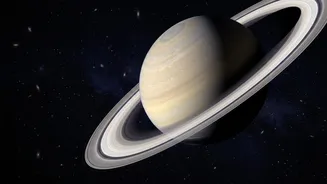
For decades, astronomers have been fascinated by a massive, perfectly-shaped hexagon encircling Saturn's north pole. This six-sided jet stream has been a stable fixture for over 40 years, a unique and lonely wonder of the solar system. Until now. Recent
observations have uncovered a southern sibling: a giant, 10-sided wave, or decagon, taking shape in the planet's southern hemisphere. This marks the first time scientists have ever observed such a large, regular-sided atmospheric pattern in Saturn's south. The discovery, published in the journal Science Advances, suggests the northern hexagon may not be as unique as once believed.
A Fleeting Glimpse of Creation
Unlike the steadfast northern hexagon, this new southern decagon appears to be a work in progress. It seems to have formed recently and is still evolving, giving scientists an unprecedented opportunity to watch a colossal planetary weather system develop in real time. According to Amy Simon, a principal investigator for Hubble's outer planet observation program, the northern hexagon has been present every time they've looked, but this southern feature is different and appears to be strengthening. Researchers believe the wave likely formed sometime after 2017, when NASA's Cassini mission ended, and before 2023, when the first faint hints of it appeared in Hubble data. The planet's south pole was tilted away from Earth for much of the intervening period, hiding the feature from our view.
The Vigilant Eye of Hubble
This discovery was made possible by the Hubble Space Telescope's Outer Planet Atmospheres Legacy (OPAL) program. For more than a decade, OPAL has been creating a consistent, long-term record of the outer planets, allowing astronomers to track seasonal changes and dynamic weather events. While sifting through this treasure trove of data, scientists found faint signs of the decagon in images from 2023. The find was bolstered by a network of amateur astronomers who, in 2024, spotted a subtle wavy band near the south pole in ground-based images. Hubble's sharp vision from space, free from the blurring effects of Earth's atmosphere, was then able to confirm and resolve the 10-sided structure with stunning clarity.
More Than Just Cloud-Deep
This isn't just a pattern painted on the cloud tops. Observations show the decagonal wave is a deep, vertically-extended structure that reaches thousands of kilometres down into Saturn's atmosphere. It's embedded within one of the planet's powerful jet streams, where high-speed winds are bent into a polygonal shape by planetary waves. While all planets with atmospheres have such waves, only Saturn seems to produce these striking geometric forms. This new discovery challenges scientists to understand the underlying physics. Is it a temporary storm, or will it lock into a stable shape like its northern counterpart? A single year on Saturn lasts nearly 30 Earth years, so long-term monitoring is key.