





The Genome's Secret Architecture
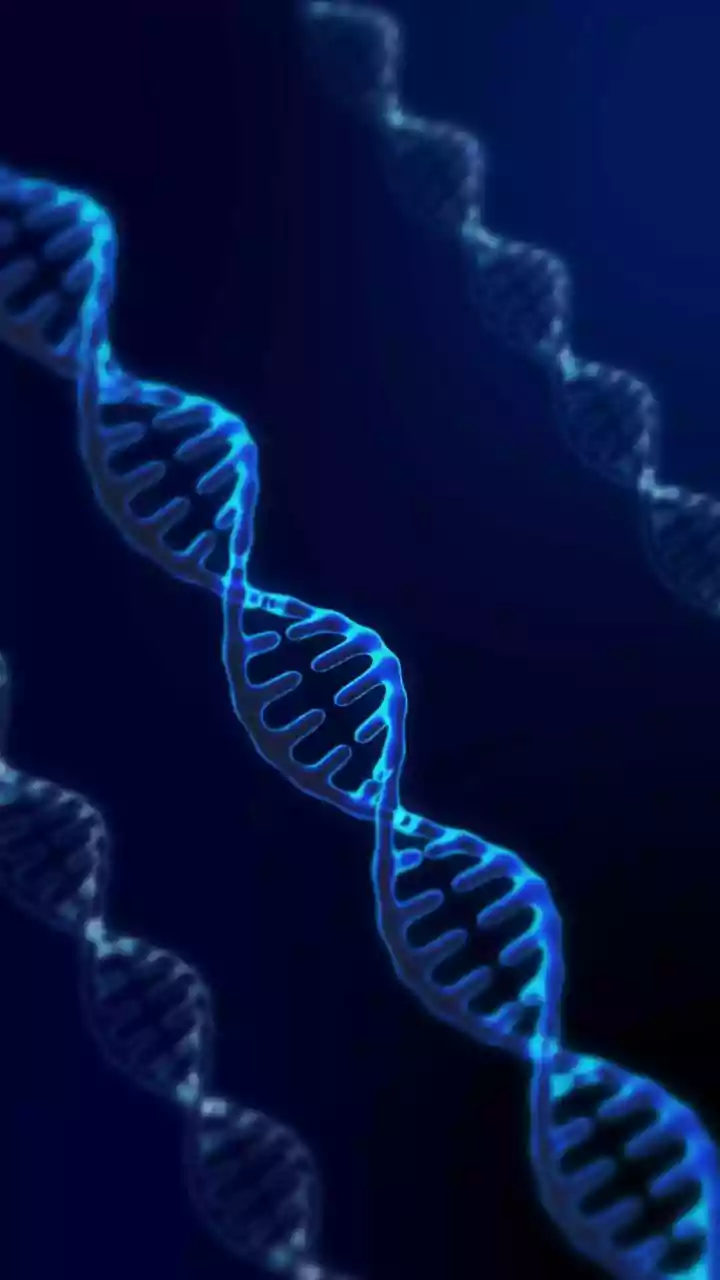
Imagine trying to fit a 40-kilometre-long thread into a tiny ball. This is the challenge your body faces every day. Inside each of your cells, a strand of DNA about two metres long is intricately folded to fit into the nucleus, which is just a few micrometres
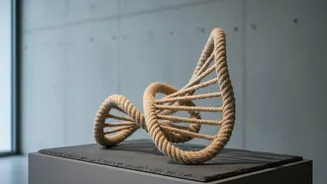
wide. To achieve this, DNA doesn't just bunch up randomly; it organises itself into a complex, highly regulated structure of loops and folds. Think of it like a perfectly tied shoelace, with thousands of 'bunny ear' loops creating distinct 'genetic neighbourhoods'. These loops are not just for storage. They are functional, bringing distant parts of the DNA strand into close contact. This allows a gene in one location to be controlled by a genetic 'switch', known as an enhancer, that might be hundreds of thousands of base pairs away. This 3D organisation is fundamental for normal cell function, controlling which genes are turned on or off.
When Good Loops Go Bad
Cancer, scientists are now discovering, can arise when this elegant architecture is disrupted. Recent studies show that in many types of cancer, these carefully separated genetic neighbourhoods can merge or break. Imagine the walls between two neighbourhoods crumbling, causing chaos. For instance, in certain brain tumours, a mutation can cause two DNA loops to fuse. This can place a powerful, constantly-on switch from one loop next to a growth-promoting gene (an oncogene) from another. The result is that the gene, which should be quiet, is switched on permanently, driving uncontrolled cell division and tumour growth. This structural rewiring explains how some genetic mutations, located in what was once called 'junk DNA', can have a profound impact on cancer risk by influencing genes far away on the DNA strand.
A New Dimension in Cancer Research
This focus on the 3D genome is a significant shift in cancer biology. For a long time, research centred on the linear sequence of DNA, searching for mutations within genes themselves. Now, using advanced technologies like 3D genome mapping, scientists can see how the entire structure is rewired in cancer cells. A study published in Genome Biology highlighted how enhancers, the genetic switches, work in cooperative 3D networks. In prostate cancer cells, they found that certain 'hub' enhancers become active and control a vast network of cancer-linked genes. This disruption isn't just about turning cancer genes on; it can also involve silencing the genes that are supposed to protect us. Some studies have shown that the loss of proteins that maintain these loops can cause the connections to tumour-suppressor genes to disappear, leaving cells vulnerable to becoming malignant.
From Architecture to Therapy
Understanding this faulty architecture opens up a new frontier for treatment. If a fused loop turns on a cancer gene, could we find a drug to restore the boundary? Early research suggests this might be possible. In one study on brain tumour cells, a chemotherapy drug was able to disrupt the chemical changes that caused the loops to merge, effectively restoring the normal genetic neighbourhoods and switching off the cancer-driving gene. This concept of 'architectural tumour suppression' is guiding the search for new therapeutic targets. Instead of just targeting a faulty protein, researchers are looking for ways to correct the 3D structure itself. While still in early stages, this approach could lead to novel therapies for some of the most aggressive and hard-to-treat cancers, including specific types of breast, brain, and prostate cancers.