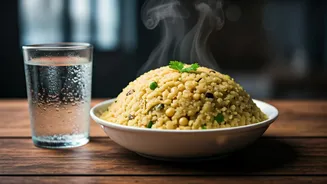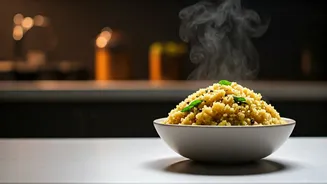








A Hug in a Bowl
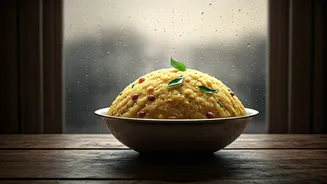
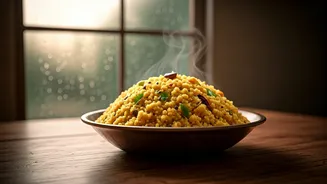
When the monsoon arrives, our cravings shift. The desire for cold, crisp salads and light meals recedes, replaced by a yearning for warmth, comfort, and nostalgia. This is where upma truly shines. It is more than just a quick breakfast; it’s a culinary
hug. Its soft, fluffy texture and gentle heat provide an immediate sense of well-being, cutting through the damp chill of a rainy morning. While other breakfasts might be flashier, upma offers a dependable, grounding start to a day that might otherwise feel gloomy. It’s the food equivalent of pulling a warm blanket around your shoulders.
The Magic Is in the Simplicity
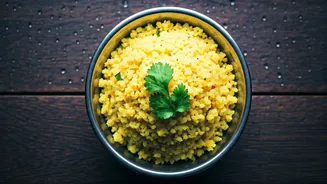
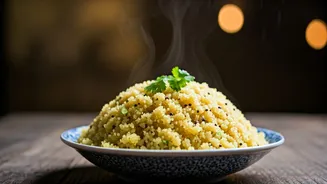
Upma’s genius lies in its simplicity. At its heart, it is roasted semolina (rava or sooji) cooked with water, but this humble base is a canvas for a symphony of flavours. The process begins with roasting the rava, a crucial step that imparts a nutty aroma and prevents the final dish from becoming sticky. It’s a dish born from pantry staples, making it accessible and easy to whip up without a trip to the store—an essential quality when the rain is pouring down. This simplicity is not a weakness; it’s the source of its universal appeal. It doesn’t demand fancy ingredients or complicated techniques, just a little bit of care.
The Aroma of the Tadka
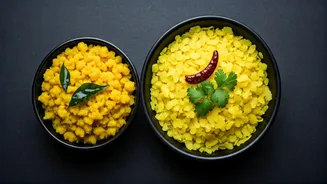
No discussion of upma is complete without paying homage to the tadka, or tempering. This is the soul of the dish. The sound of mustard seeds sputtering in hot oil, followed by the fragrant addition of curry leaves, urad dal, and perhaps a pinch of asafoetida (hing), is an iconic morning sound in countless Indian homes. This aromatic infusion is what elevates upma from mere porridge to a flavour-packed meal. On a damp monsoon day, the sharp, earthy scent of the tadka cuts through the humidity, filling the kitchen and announcing that something wonderful is on its way. It’s a sensory experience that primes the appetite and soothes the soul.
Endlessly Customisable Comfort
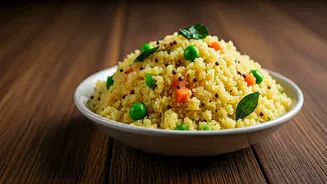
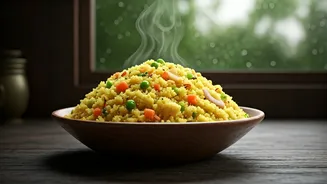
While the classic upma is a masterpiece in itself, its true strength lies in its adaptability. It’s a dish that invites personalisation. Some families add finely chopped onions, tomatoes, and green chillies for a savoury kick. Others toss in peas, carrots, and beans, turning it into a wholesome vegetable upma. A sprinkle of roasted cashews or peanuts adds a delightful crunch, while a generous dollop of ghee at the end lends a rich, luxurious finish. In the south, you might find it served with a side of coconut chutney or a scoop of pickle. This versatility means that upma is never boring; it can be tailored to fit any mood or preference, making it a breakfast that feels both familiar and new every time.
More Than a Meal, It's a Memory
Ultimately, the reason upma wins on rainy mornings is because it is steeped in memory. For many, it’s the taste of childhood—a breakfast made by a mother or grandmother on a school day. It’s the reliable offering at train station canteens on long journeys. It’s the quick, no-fuss meal that brings the family together at the breakfast table. Each spoonful carries with it the weight of these comforting associations. It connects us to our roots, to our families, and to a shared cultural experience of finding joy in simple, wholesome food, especially when the world outside is grey and wet.