




India’s Unblinking Eye on the Sun
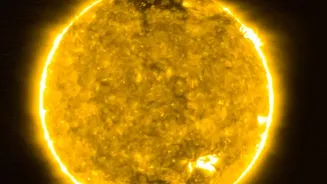
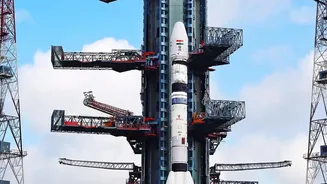
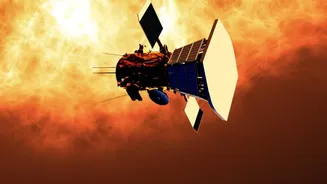
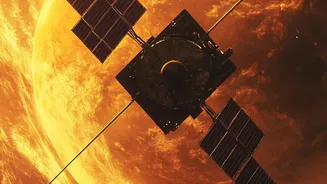
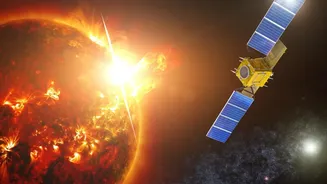
Launched in 2023, the Aditya-L1 spacecraft is a marvel of Indian engineering, positioned 1.5 million kilometres from Earth at a unique spot called Lagrange Point 1 (L1). From this vantage point, it can stare at the Sun continuously, without any interruption
from eclipses or the Earth's day-night cycle. This constant stream of observation is crucial for studying the Sun's dynamic and often violent behaviour. The mission's primary goal is to understand the physics of the solar corona, solar flares, and Coronal Mass Ejections (CMEs), which are the primary drivers of space weather that can impact our planet.
Solving the Great Solar Mystery
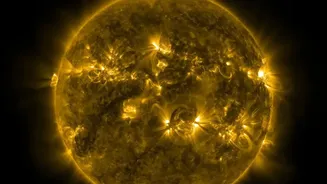
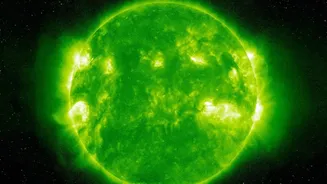
One of the longest-standing puzzles in astrophysics is the coronal heating problem: why is the Sun's outer atmosphere, the corona, millions of degrees hotter than its surface? The surface, or photosphere, is about 5,500°C, but the corona above it sizzles at a staggering 2 million°C or more. Recent data from Aditya-L1's main instrument, the Visible Emission Line Coronagraph (VELC), has provided compelling evidence to help solve this mystery. A study published in the Astrophysical Journal Letters suggests that the primary source of this immense heat is not waves bubbling up from the surface, as one theory proposed. Instead, the data points to a different, more powerful mechanism.
The Power of Magnetic Reconnection
According to research led by scientists at the Indian Institute of Astrophysics (IIA), the corona's extreme temperature is maintained by the constant snapping and reconfiguring of the Sun's magnetic field lines. By analysing a powerful CME from August 2024, scientists calculated that this process, known as magnetic reconnection, accounts for a remarkable 93% of the energy needed to keep the corona so hot. In contrast, waves from the Sun's surface contribute only about 7%. When the Sun loses massive amounts of energy during a CME, this magnetic reconnection process effectively replenishes it, allowing the corona to maintain its incredible temperature.
A Closer Look at Solar Storms
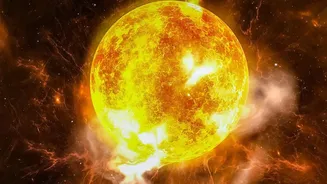
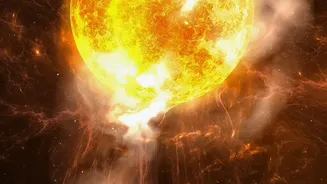
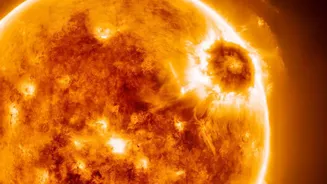
Coronal Mass Ejections are powerful eruptions of plasma and magnetic fields from the Sun. Aditya-L1's VELC instrument allows scientists to observe these events closer to the solar surface than ever before. Analysis of CMEs has revealed fascinating details, such as a phenomenon called 'coronal dimming', where the area of the eruption becomes significantly dimmer as material is violently ejected. By studying the temperature, speed, and density of this ejected material, researchers can build more accurate models of how these storms travel through space. Earlier data from the mission in late 2024 already showed how the turbulent parts of a solar storm can severely compress Earth's magnetic field, putting satellites in geostationary orbit at risk.
Better Forecasts for Space Weather
All this data serves a very practical purpose: improving our ability to predict space weather. Solar storms directed at Earth can trigger geomagnetic storms that have the potential to disrupt and damage critical infrastructure. This includes our satellite networks, which are essential for communication, navigation systems like NavIC, and television broadcasting. It can also threaten power grids on the ground. By understanding the origin and evolution of CMEs in greater detail, scientists can provide more timely and accurate warnings. This allows satellite operators and grid managers to take protective measures, safeguarding the technology we rely on every day.