





The Paradox of a Full Plate
Hidden hunger, or micronutrient deficiency, affects a vast portion of the Indian population, with women and children being particularly vulnerable. Unlike starvation, which is a lack of calories, hidden hunger is a lack of quality. When diets are dominated
by a few staple crops like rice and wheat, people may get enough energy but miss out on critical nutrients like iron, zinc, and Vitamin A. This deficiency can lead to serious health issues, including weakened immunity, impaired cognitive development in children, and increased risk of chronic diseases. It is a widespread issue that silently undermines public health and the nation's productivity.
The Legacy of the Green Revolution
India’s journey to food self-sufficiency, propelled by the Green Revolution, was a monumental success. Policies rightly focused on increasing the production of staple food grains like wheat and rice to feed a growing population. This was achieved through high-yielding seed varieties, irrigation, and subsidies, transforming India from a food-deficient nation to a surplus producer. However, this intensive focus on a few crops had an unintended consequence: it led to monoculture cropping patterns, particularly in states like Punjab and Haryana. Agricultural policies, including the Minimum Support Price (MSP) and the Public Distribution System (PDS), became heavily skewed towards procuring and distributing these staples, making them the most economically secure choice for farmers.
Crop Diversity as the Solution
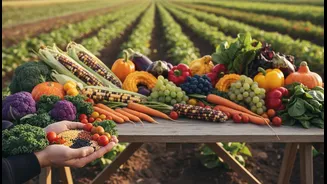
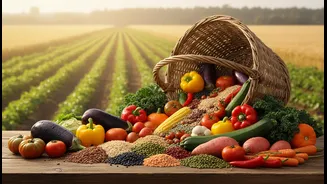
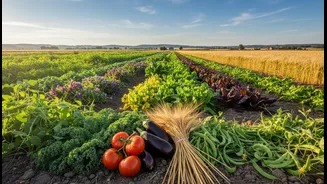
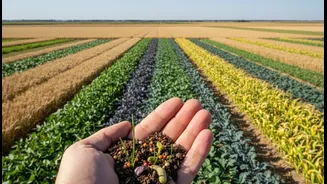
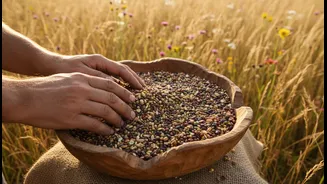
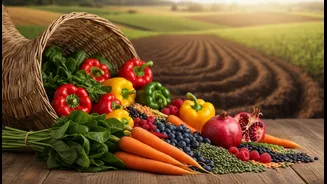
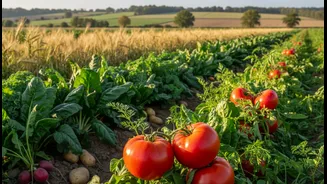
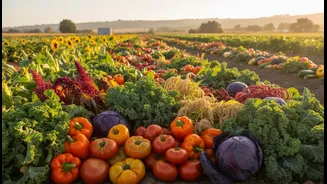
The answer to hidden hunger lies on our farms and in diversifying what we grow. Crop diversity refers to cultivating a wider variety of plants beyond just staples. This includes nutrient-dense millets, pulses, oilseeds, fruits, and vegetables. These crops are often powerhouses of the very micronutrients missing from staple-heavy diets. For example, millets like bajra and ragi are rich in iron, calcium, and fibre, while pulses are a key source of protein. Integrating these crops back into our farming systems and onto our plates is a direct and sustainable way to improve nutrition. A diverse farm leads to a diverse diet, which is fundamental for tackling micronutrient deficiencies.
Reshaping Agricultural Policy
To make this shift, agricultural policy must evolve. The current system, which heavily incentivizes rice and wheat, creates a structural barrier to diversification. A key change would be to reform the MSP and procurement system to create a level playing field for other nutritious crops like pulses and millets. Expanding the PDS to include millets is another powerful step that can create demand and make these grains more accessible. Initiatives like the National Mission on Sustainable Agriculture and the government's renewed focus on millets are steps in the right direction, but they require robust implementation. The goal is to move from a framework focused solely on caloric security to one that prioritises nutritional security.
Challenges on the Path to Diversity
The transition is not without its hurdles. Farmers are often hesitant to switch from the safety of guaranteed procurement for wheat and rice to crops with more volatile market prices. There are significant gaps in infrastructure, such as a lack of adequate storage, cold chains, and processing facilities for more perishable, high-value crops. Furthermore, decades of monocropping have led to environmental issues like groundwater depletion and soil degradation, which can make it harder to cultivate different crops. Overcoming these challenges requires not just policy changes but also investment in rural infrastructure, strengthening farmer producer organisations (FPOs), and improving extension services to provide farmers with the knowledge and support they need.