








The Allure of the 'Smart' Bag
In the world of urban and business travel, the rise of tech-integrated luggage makes perfect sense. These rolling suitcases, often featuring hard shells, built-in scales, and the ever-popular USB charging port, are designed for the predictable environment
of airports, hotels, and taxis. The promise is simple: stay connected, stay organised, and move smoothly from one climate-controlled space to another. For a weekend city break or a business conference, where power outlets are plentiful and pathways are paved, these features can feel like a genuine upgrade. The ability to top up your phone while waiting at a departure gate is undeniably convenient. But the trail is not a terminal, and a mountain is not a mall.
Weight: The Trekker's True Currency
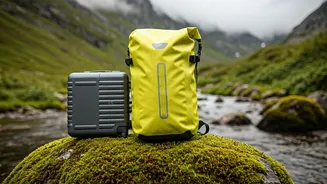
On a trek, every single gram matters. The most significant advantage of a dedicated trekking backpack over any form of hard-shell luggage is its weight. A quality lightweight 50-litre trekking pack can weigh as little as 1 kg. In contrast, a 'smart' cabin-sized suitcase often starts at 3-4 kg before you've even packed a single pair of socks. This extra 2-3 kg is called 'dead weight'—it serves no purpose other than to contain your gear. When you're ascending a steep Himalayan pass or navigating a rocky trail in the Western Ghats, this additional load translates directly into fatigue, slower pace, and a higher risk of strain or injury. Trekkers obsess over their 'base weight' (the weight of their pack minus consumables like food and water) for a reason: lighter is always better.
The USB Port: A Gimmick on the Trail
The star feature of smart luggage—the USB port—loses its shine the moment you leave civilisation behind. These ports don't generate power; they are simply pass-throughs connected to a removable power bank stored inside the bag. You still need to carry and charge that power bank. On a multi-day trek where access to electricity is rare or non-existent, the built-in port is just added weight and a potential point of failure. A far more practical solution for any trekker is a standalone, high-capacity, and durable power bank. It's more versatile (you can keep it in your pocket or daypack), often lighter than the ones bundled with luggage, and doesn't tie your charging needs to your main pack. On the trail, simplicity and reliability trump integration.
Durability and True Weatherproofing
Trekking exposes your gear to unpredictable weather, from sudden monsoonal downpours to persistent drizzle. This is where waterproof backpacks prove their superiority. Constructed from materials like Dyneema, X-Pac, or nylon/polyester fabrics coated with polyurethane (PU), these packs are designed to keep their contents bone-dry. Many feature roll-top closures, similar to dry bags, which are far more effective at sealing out water than a standard zipper. Hard-shell luggage, while often marketed as 'water-resistant', relies on zippers that are notorious weak points for water ingress. Furthermore, the rigid materials of suitcases can crack under impact on a rocky trail, while the flexible, tough fabrics of trekking packs are designed to abrade against rock and vegetation without failing.
Ergonomics and All-Day Comfort
Luggage is designed to be rolled. A trekking backpack is designed to be worn for 8-10 hours a day, for multiple days in a row. This difference in design philosophy is critical. Trekking packs feature sophisticated suspension systems with adjustable harnesses, load-lifter straps, padded hip belts, and sternum straps. This system works to transfer the majority of the pack's weight from your shoulders to your stronger hip and leg muscles. It allows the pack to move with your body, maintaining balance on uneven terrain. A suitcase, even one with backpack straps, lacks this ergonomic engineering. Carrying a rigid, boxy piece of luggage on your back for even a few hours is uncomfortable and puts immense strain on your shoulders and spine. It’s simply the wrong tool for the job.