



Understanding a Solar Storm
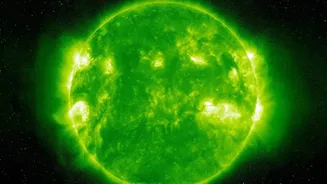
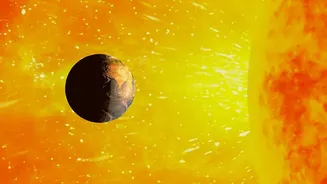
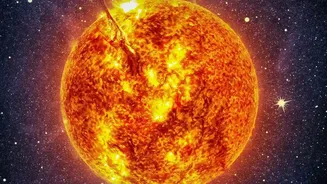
First, let's clarify what a solar storm is. It isn't a storm in the earthly sense with wind and rain. Instead, it's a massive burst of energy and charged particles from the sun. These events, called solar flares and coronal mass ejections (CMEs), hurl
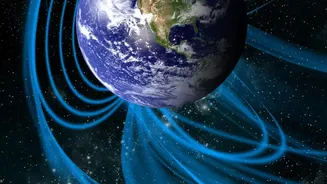
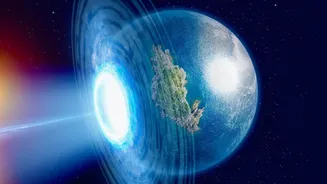
vast amounts of radiation and magnetized plasma into space. While Earth's magnetic field protects us from most of this, a particularly strong, Earth-directed storm can cause significant disturbances. These disturbances create what are known as geomagnetic storms, which can have profound effects on the technological infrastructure we depend on.
Satellites and GPS in the Firing Line
Satellites orbiting outside Earth's protective atmosphere are the most vulnerable. The high-energy particles from a solar storm can damage sensitive electronics, degrade solar panels, and even cause 'phantom commands', leading to operational errors. This directly threatens the services we take for granted. GPS navigation, which relies on precise timing signals from satellites, can be severely affected. The charged particles distort the layer of the atmosphere called the ionosphere, delaying or scrambling GPS signals. This can lead to accuracy errors of several meters or complete signal loss, impacting aviation, shipping, and even precision agriculture. A solar storm in 2022 famously knocked dozens of newly launched internet satellites out of orbit by increasing atmospheric drag.
Radio Silence and Ground Communications
Many forms of communication rely on radio waves, which are also highly susceptible to solar activity. Geomagnetic storms can cause the ionosphere to become unstable, absorbing or reflecting radio signals unpredictably. This primarily affects high-frequency (HF) radio, used for long-distance communication by aircraft on polar routes and maritime shipping. During a severe event, these crucial communication channels can experience blackouts, forcing planes to be rerouted. While your personal mobile phone is too small to be directly damaged by induced currents, the networks they rely on are another story.
The Power Grid: The Biggest Vulnerability
Perhaps the most significant threat from a solar storm is to our power grids. Geomagnetic storms induce powerful, low-frequency electrical currents in long conductors on the ground, like high-voltage transmission lines. These geomagnetically induced currents (GICs) can flow into power transformers, causing them to overheat and, in extreme cases, suffer permanent damage. This could trigger widespread blackouts, as famously happened in Quebec, Canada, in 1989, when a solar storm collapsed the grid in just 90 seconds, leaving millions without power for hours. A major power outage would have a catastrophic cascading effect, taking down all other forms of communication that rely on electricity, from internet servers to mobile phone towers and home Wi-Fi routers.
Will the Internet Go Down?
The question of an 'internet apocalypse' is complex. While individual computers and smartphones aren't directly at risk, the global network's backbone is. The vast majority of international data travels through undersea fibre-optic cables. While the fibre itself is immune, these cables have electrically powered repeaters every 50-100 kilometers to boost the signal. These repeaters are vulnerable to the same induced currents that threaten power grids. A severe storm could potentially damage numerous repeaters simultaneously, leading to outages on international links that could take weeks or months to repair. However, research from companies like Google suggests that many modern cables are built with enough resilience to withstand even very large storms.
How India Is Preparing
Global space agencies are constantly monitoring the sun to provide advance warning of CMEs, which can take from 12 hours to a few days to reach Earth. In India, the Indian Space Research Organisation (ISRO) is playing a key role. With its Aditya-L1 solar observatory, ISRO is monitoring solar activity from a prime location in space. This data, combined with ground-based networks like the Indian Network for Space Weather Impact Monitoring (INSWIM), helps scientists understand and predict the impact of these events on our region. This knowledge is crucial for developing strategies to protect India's growing satellite constellations and digital economy from the effects of space weather. This proactive monitoring allows grid operators and satellite companies to take preventative measures, like powering down sensitive equipment to ride out the storm.