





From Afterthought to Asset
For decades, travelling families were an overlooked group in airport design, often left to juggle strollers, luggage, and tired children in spaces built for speed, not comfort. Amenities for children, if they existed at all, were often sad, forgotten
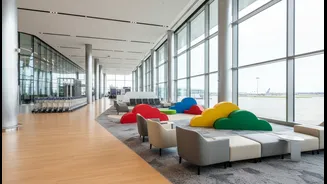
corners. Today, that is changing dramatically as airports recognise that families represent a significant market. A happy family is more likely to spend time and money in airport shops and restaurants. This shift in thinking is turning family needs from an afterthought into a primary design consideration, driven by both a desire for better service and a sound economic strategy.
The Rise of Play and Calm
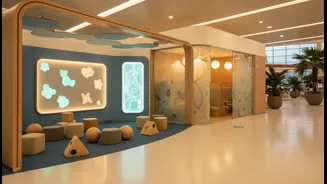
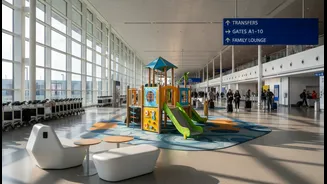
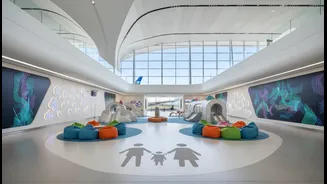
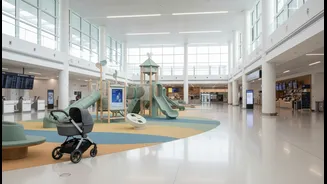
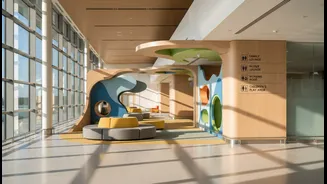
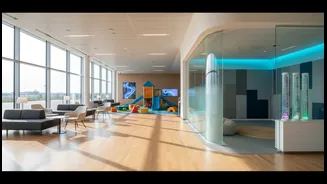
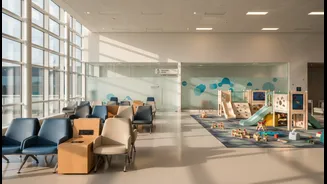
The new generation of family-friendly amenities goes far beyond a simple plastic slide. Airports are now creating engaging, educational, and energy-burning experiences. San Francisco International (SFO) offers multiple interactive 'Kids Spots', while Boston Logan (BOS) features 'Kidports' designed by the Children's Museum. Phoenix Sky Harbor (PHX) has its 'Play-viation Park', and Seattle-Tacoma International Airport provides a themed play area developed by NASA. Furthermore, recognising the needs of neurodivergent individuals and those with sensory sensitivities, many airports are adding sensory rooms. These havens provide a calm, quiet space away from the terminal's hustle, with features like dim lighting, bubble tubes, and tactile toys. Airports like Atlanta (ATL), Pittsburgh (PIT), and LaGuardia (LGA) are among those now offering these essential quiet spaces.
Practical Comforts for Modern Parents
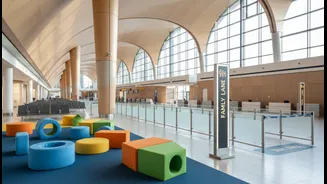
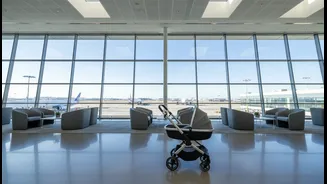
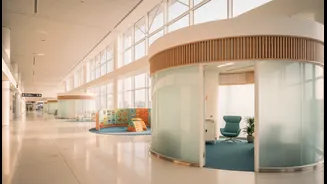
The redesign also focuses on practical needs. For parents with infants, dedicated nursing rooms and Mamava lactation pods are becoming widespread, offering private, comfortable spaces with seating, sinks, and changing stations. Airports in Philadelphia (PHL) and Phoenix are among the many now providing these. Family restrooms are also being upgraded and becoming more common, some featuring smaller-sized toilets and sinks or step-stools to make them more accessible for children. To ease one of the most stressful parts of the journey, some airports are introducing dedicated family security lanes to allow parents to get through screening without feeling rushed.
Indian Airports Join the Global Trend
This global trend is very much alive in India. In a 2026 ranking, Hyderabad's Rajiv Gandhi International Airport (RGIA) and Bengaluru's Kempegowda International Airport (KIA) were named among the world's top five most family-friendly airports. Hyderabad was praised for its play areas, complimentary strollers, and family rooms, while Bengaluru was recognised for its baby care facilities and children's play zones. Delhi's Indira Gandhi International Airport recently launched its 'Family@DEL' initiative, providing dedicated check-in counters, priority boarding, and 'Family Assistance Buddies' to guide families through the airport. These developments show a clear commitment by Indian airports to improve the travel experience for their youngest passengers and their parents.
The Future of Family Travel
The focus on family-friendly design is not just a passing trend; it's being accelerated by significant investment. In May 2026, the U.S. Transportation Secretary announced nearly $1 billion in grants for airport projects that include play areas, nursing facilities, and sensory rooms, signalling a strong governmental push. This indicates a future where airports are designed with a more holistic and humane approach, considering the emotional and practical needs of all travellers. As these facilities become more common, the stress and anxiety once associated with family air travel may soon become a thing of the past, replaced by a smoother, more enjoyable start to the journey.