
A New Window on the Cosmos
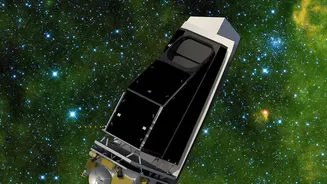
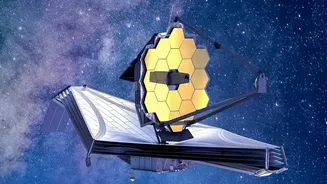
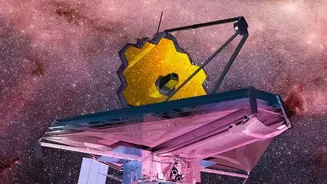
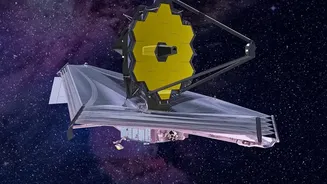
Before the James Webb Space Telescope (JWST), our view of star birth was often obscured. Stellar nurseries are, by their nature, incredibly dusty, and visible light telescopes couldn't penetrate the smog to see the delicate processes within. JWST changes
the game with its powerful infrared instruments. Think of it as wearing a pair of high-tech night-vision goggles. Infrared light can pass through clouds of gas and dust that would otherwise appear opaque, allowing astronomers to finally see the youngest, most deeply embedded stars that were previously hidden from view. This capability isn't just about taking clearer pictures; it's about gathering data from a previously invisible realm of the universe, offering a ringside seat to creation itself.
Seeing the Earliest Stirrings of Stars
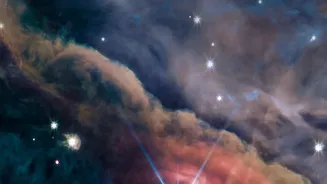
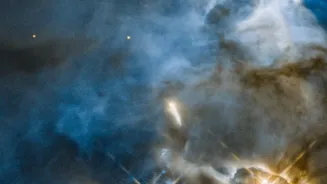
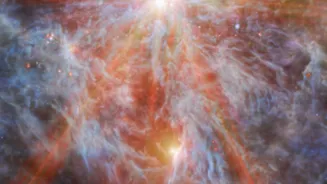
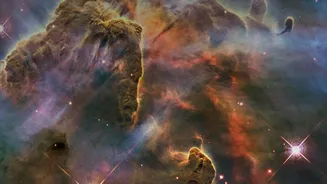
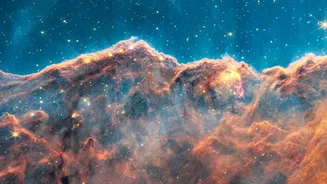
One of the most profound insights from Webb is its ability to detect protostars in their earliest phases. These are stellar embryos, still gathering mass from the surrounding cloud before they become hot and dense enough to ignite nuclear fusion. By observing regions like the Carina Nebula and Sagittarius B2, scientists have uncovered a hotbed of extremely young stars that are so deeply shrouded in their natal cocoons they were previously undetectable. Webb's sensitivity has revealed these infant stars interacting with their environment, pulling in material while simultaneously blasting out powerful jets. These observations are crucial because they provide a direct look at the initial conditions of star formation, helping to refine models that, until now, relied more on theory than direct evidence.
The Surprising Power of Stellar Jets
As a young star grows, it doesn't just passively accumulate gas; it actively ejects powerful, narrow beams of material known as protostellar jets. Webb's high-resolution images have captured these jets in unprecedented detail, revealing them to be far larger and more complex than imagined. In one case, a jet from a massive protostar was observed stretching across eight light-years—roughly twice the distance from our Sun to its nearest stellar neighbor. These outflows are like a star's birth announcement, carving out cavities in the surrounding cloud and influencing subsequent star formation. The incredible symmetry and scale of these jets suggest that even the most massive stars may form in a more orderly fashion than previously thought, challenging theories that predicted a more chaotic and messy birth process for stellar giants.
Rewriting the Cosmic Textbooks
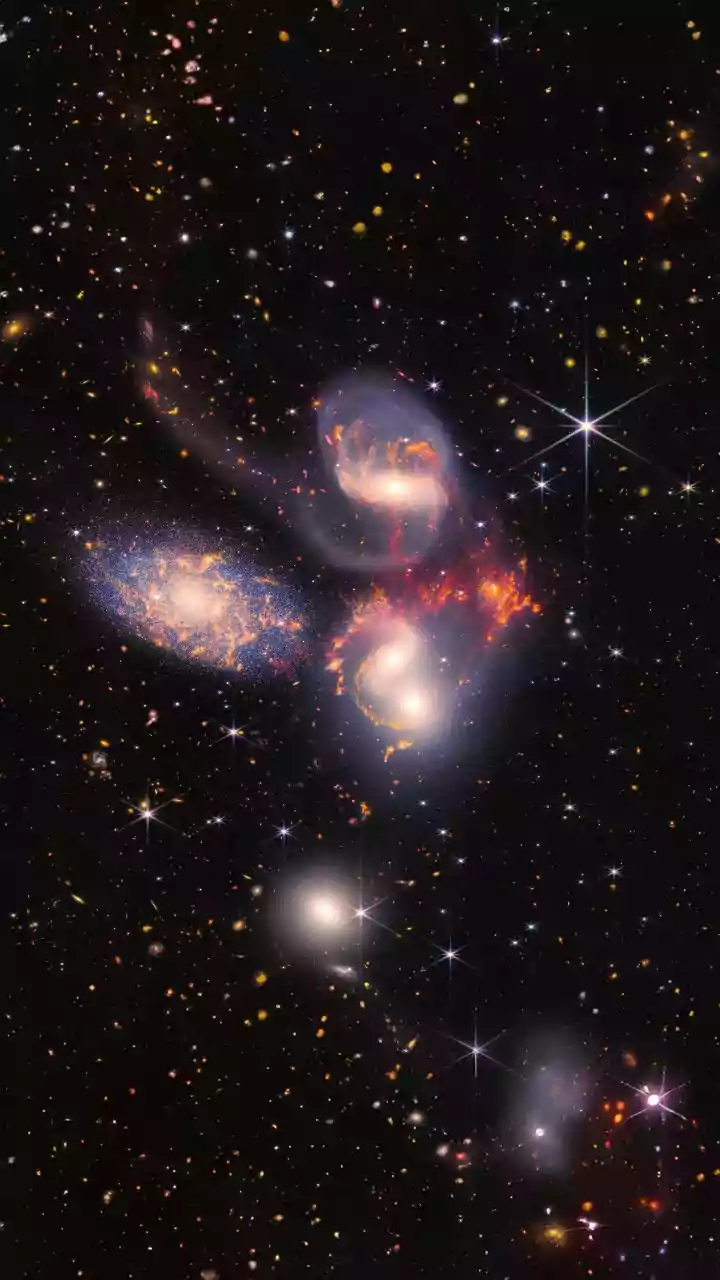
The data streaming back from JWST is doing more than just filling in gaps; it's forcing a reassessment of long-held theories. For example, observations of multiple star-forming regions show that outflows from young stars are sometimes curiously aligned, suggesting they may be forming along the same magnetic field lines like beads on a string. In other studies, the telescope's ability to count fainter, smaller stars in ancient galaxies has revealed that these early cosmic cities were much more massive than we knew. Each new image and spectrum adds another piece to the puzzle. Scientists are finding that massive star clusters can clear away their birth clouds faster than smaller ones, which has major implications for how galaxies evolve and fill with light. These findings demonstrate that star formation isn't a uniform process, but a dynamic and varied one that Webb is only just beginning to unravel.