
The Heart of Devotion: North India’s Grand Offerings
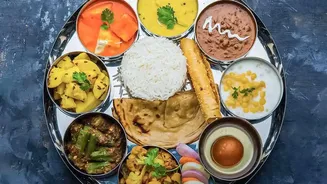
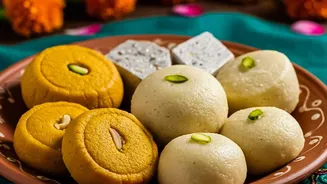
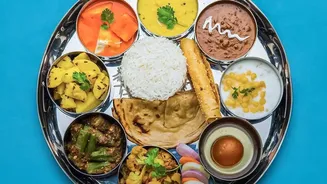
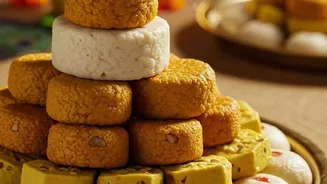
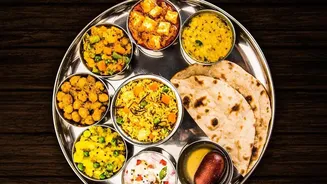
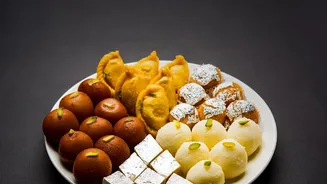
In the heartland of Krishna’s narrative, particularly Mathura and Vrindavan, Janmashtami celebrations are synonymous with the spectacular ‘Chappan Bhog’. This grand offering consists of 56 distinct food items, a tradition rooted in a story of divine protection.
Legend says that Krishna held the Govardhan Hill aloft for seven days to shelter his villagers from torrential rains, missing his usual eight meals a day. In gratitude, the villagers presented him with 56 dishes—a feast for the seven days he went without food. This platter typically includes an array of sweets, savouries, grains, and dairy products. Central to this tradition are items like Makhan Mishri (fresh butter with rock sugar), reflecting Krishna's childhood love for butter, and Dhaniya Panjiri, a unique prasad made from roasted coriander powder, ghee, and nuts, often prepared in households that avoid grains during the fast.
Maharashtra’s Communal Spirit: Gopalkala and Dahi Handi
Travel west to Maharashtra, and the flavour of Janmashtami shifts. Here, the festival is famously marked by the Dahi Handi ritual, where groups of 'Govindas' form human pyramids to break a pot of curd hung high above. But what's inside the pot is just as significant. It’s not just curd, but a special dish called Gopalkala. This no-cook recipe is a humble yet profound mixture of flattened rice (poha), curd, milk, cucumber, and fruits. The name itself signifies its essence: 'Gopal' for Krishna the cowherd and 'kala' for mixture. Traditionally, it was prepared potluck-style, with Krishna and his cowherd friends pooling whatever food they had. This spirit of togetherness and equality remains central to the tradition today, symbolizing that every offering, big or small, is valued.
Regional Flavours from the East and South
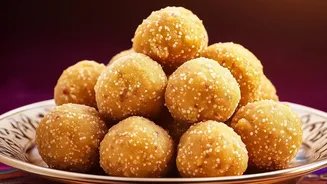
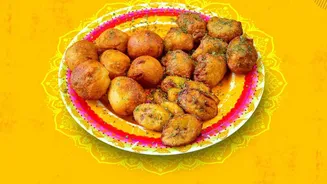
The culinary map of Janmashtami extends across the country, adapting to local palates and ingredients. In West Bengal, the festival often features sweets like Taler Bora, which are sweet fritters made from the pulp of sugar palm fruit. You might also find other Bengali classics like Kheer Kadam and Mishti Doi making an appearance. In South India, particularly in Tamil Nadu and Karnataka, the focus is on savoury, crispy snacks and distinct sweets. Homes are decorated with tiny flour footprints, symbolizing Krishna's entry. The offerings, or 'neivedyam', include delights like Vella Seedai (sweet rice flour balls with jaggery), Uppu Seedai (savoury rice flour balls), and various types of Murukku (also called Chakli). These rice-flour based snacks are a staple, showcasing the region's culinary staples.
The Modern Evolution of Festive Food
While the core of these traditions remains strong, Janmashtami food is not immune to the currents of modern life. The evolution is visible in several ways. In urban kitchens, convenience often plays a larger role. Elaborate, time-consuming preparations are sometimes replaced with simpler versions or store-bought sweets. There's also a growing trend towards health-consciousness, with home cooks experimenting with baked versions of traditionally fried snacks or using healthier sweeteners. Fusion recipes are also emerging, blending traditional flavours with contemporary culinary ideas. The tradition of offering a wide variety of foods has adapted, with many households focusing on a smaller, curated selection of dishes rather than attempting the full 56-item Bhog. This adaptation ensures that the spirit of the festival can thrive even within the constraints of a modern, fast-paced lifestyle.
Preserving Tradition in a Changing World
The evolution of Janmashtami's food traditions is not a sign of dilution but of a living, breathing culture. It reflects how communities adapt, innovate, and carry their heritage forward. For the Indian diaspora, these food traditions become an even more powerful link to their roots, even if recipes are slightly modified based on the availability of ingredients. Online tutorials and food bloggers now play a significant role in preserving and disseminating these recipes, ensuring that the knowledge is passed down to younger generations who may not have learned them in a traditional family setting. The dishes may be presented differently, and some ingredients might be substituted, but the underlying emotion of love and devotion remains the constant, central ingredient.