



The Great Atmospheric Filter
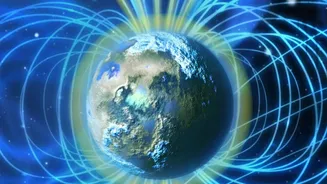
Before we can ask if an exoplanet has life, we have to ask a more fundamental question: does it have an atmosphere? An atmosphere is a non-negotiable requirement for habitability as we know it, providing pressure for liquid water to exist, shielding from
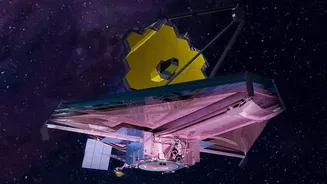
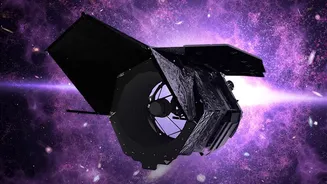
harsh radiation, and regulating temperature. However, many planets aren't lucky enough to keep one. This is especially true for rocky planets orbiting close to their stars. Intense stellar winds and radiation can blast away a planet's gaseous envelope over millions of years, a process known as atmospheric stripping. This is a particular concern for planets around M-dwarf stars, the most common type of star in our galaxy. These stars are smaller and cooler than our sun, meaning their habitable zones are much closer, but they are also notoriously volatile and active, making it tough for nearby planets to hold onto their air. This is where the James Webb Space Telescope (JWST) has become an indispensable tool. It can determine with unprecedented accuracy whether a planet is a promising candidate with a thick atmosphere or a barren, airless rock.
Webb's Verdict on 'Habitable' Worlds
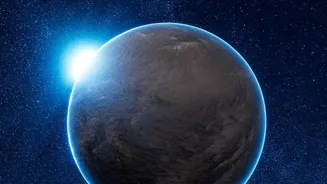
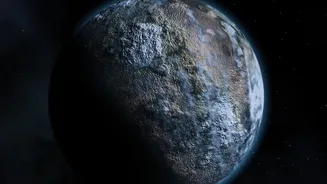
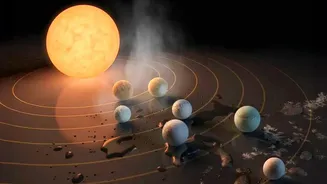
One of the most anticipated targets for JWST has been the TRAPPIST-1 system, located about 40 light-years away. It features seven Earth-sized rocky planets, several of which orbit within the star's habitable zone. On paper, they seemed like perfect candidates to search for life. However, applying the atmospheric filter has yielded sobering results. JWST's observations of the innermost planets, including TRAPPIST-1b and TRAPPIST-1c, have found no evidence of a substantial atmosphere. Further investigation of TRAPPIST-1d, which lies on the edge of the habitable zone, also came up empty, suggesting it is either a bare rock or has an extremely thin atmosphere like Mars. While disappointing for alien-hunters, these findings are incredibly valuable. They demonstrate that proximity to a star in the so-called 'habitable zone' is not enough. By efficiently ruling out worlds that have lost their atmospheres, JWST allows astronomers to focus their precious observation time on more viable targets. Knowing where not to look is a huge step forward.
A Surprise from the Lava Worlds
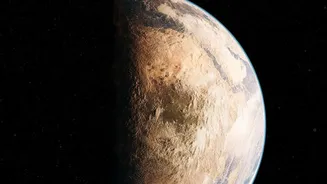
While JWST has been busy identifying airless rocks, it has also delivered some major surprises. Scientists have long assumed that planets orbiting extremely close to their stars, often called 'lava worlds' due to their molten surfaces, would be stripped bare of any atmosphere. Yet, JWST has found compelling evidence for atmospheres around planets like 55 Cancri e and TOI-561 b. These worlds are far too hot for life, with surface temperatures high enough to melt rock. So how do they have atmospheres? The leading theory is that they are not primordial atmospheres from when the planets first formed, but 'secondary' atmospheres that are constantly being replenished. Researchers believe that gases are bubbling out of the planets' vast magma oceans, feeding a dynamic atmosphere likely rich in carbon monoxide, carbon dioxide, and even vaporized rock. This discovery challenges previous models of planetary evolution and shows that atmospheres can exist in even the most extreme environments.
How Absence and Presence Guide the Search
The twin discoveries—the absence of air on some worlds and the unexpected presence of it on others—are fundamentally reshaping the search for habitable planets. The findings from the TRAPPIST-1 system provide a stark reality check, highlighting that the intense radiation from M-dwarf stars can be devastating to planetary atmospheres. This helps scientists refine the criteria for what makes a star system truly friendly to life. On the other hand, the lava worlds show that planets are not simple, static balls of rock. They are active geological systems where the interior can directly influence the atmosphere. Studying how these secondary atmospheres on planets like 55 Cancri e are sustained gives scientists vital clues about the conditions required for any planet to maintain a gassy envelope over billions of years. This knowledge is crucial for identifying exoplanets that not only formed with an atmosphere but were able to hold onto it long enough for life to potentially emerge.