






The Corporate Green Rush
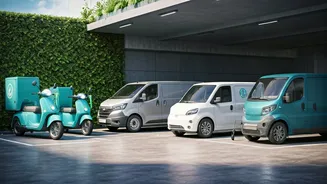
Major delivery platforms, including Zomato, Swiggy, and Amazon, have committed to electrifying their fleets, aiming for a complete transition by 2030. [6, 15] This push is driven by strong economic and environmental incentives. With volatile petrol prices,
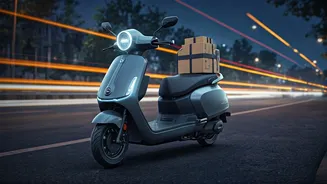
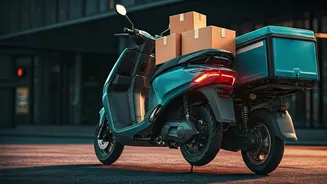
the lower running cost of an electric vehicle—estimated at just ₹0.25–₹0.40 per kilometre compared to ₹2.5-₹3 for petrol—presents a massive saving. [9, 20] For companies, this translates to cheaper operations, especially with fuel costs being a primary expense for riders covering 80-120 km daily. [11] Furthermore, corporate ESG (Environmental, Social, and Governance) goals and government policies encouraging EV adoption add to the pressure to switch. [4, 11] However, while the transition looks good on paper, its execution has been slow. As of early 2026, EV penetration among the largest platforms remains low, with roughly only one in ten delivery partners using an electric vehicle. [6]
The Charging Conundrum
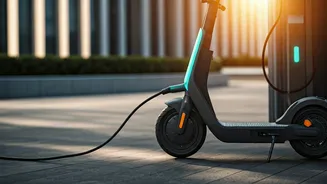
The single biggest hurdle for delivery partners is the inadequate charging infrastructure. [3] A 2023 survey found that 40.6% of delivery workers cited difficulty in finding charging spots as their main challenge. [3] Public charging stations are not only insufficient in number but also unreliably distributed, with a heavy concentration in metro areas leaving tier-2, tier-3 cities, and highways underserved. [19, 29, 30] As of March 2026, data showed that 18% of installed public chargers nationally were not even operational. [5] This leads to significant 'range anxiety' and lost income, as workers spend valuable time searching for a functioning charger or waiting for their vehicle to power up—a process that can take hours compared to minutes for refuelling a petrol scooter. [3] The power grid itself presents another challenge, with instability and peak load issues affecting charger availability and performance. [5]
More Than Just a Plug: The Need for 'Care'
The 'care' aspect of the headline points to the human and financial toll on workers. While EVs promise lower running costs, the upfront purchase price can be 1.5 to 1.9 times higher than their petrol counterparts, a major barrier for gig workers who often have limited access to credit. [23, 24] Even with lower daily expenses, the potential cost of battery replacement after 3-5 years—ranging from ₹18,000 to ₹40,000—is a significant financial burden. [9, 18, 20] The EV-as-a-Service (EVaaS) or rental model has emerged to address this, offering vehicles on a subscription basis that includes maintenance and battery services. [4] However, with gig worker unions reporting a sharp decline in per-order earnings, even the cost of renting an EV can be a strain for many. [6] Workers are often squeezed from all sides, facing the pressure to adopt new technology without the financial stability or support systems to do so smoothly. [23]
Is Battery Swapping the Answer?
Battery swapping has emerged as a key solution to the downtime caused by charging. Instead of plugging in, a rider can exchange a depleted battery for a fully charged one in under five minutes, a process faster than refuelling. [4, 13] This model, offered by companies like Battery Smart and Zypp Electric, drastically increases a rider's potential uptime and number of deliveries. [13, 14] Partnerships between these networks and delivery giants like Zepto are accelerating this trend, with plans to deploy thousands of new EVs using swappable batteries. [14] The Battery-as-a-Service (BaaS) model also lowers the vehicle's initial cost, as the battery is rented, not owned. [13] But this solution is not a silver bullet. The network of swapping stations is still largely concentrated in major urban centres, limiting its reach. [13, 15] For swapping to be truly effective at scale, it also requires standardisation of battery sizes and connectors across different vehicle manufacturers, a challenge the industry is still working to overcome. [13]
The Road Ahead: A Just Transition
For the green logistics revolution to be successful and equitable, a multi-pronged approach is necessary. The government's role is critical in creating a truly robust and reliable national charging network, moving beyond simply funding hardware to ensuring uptime and accessibility in all regions. [5, 7] As of early 2026, India still lagged significantly, with only around 26,000 public charging stations against a requirement of over 100,000 by 2030. [29] Companies have a responsibility to provide better care for their delivery partners. This means not just encouraging the EV switch but actively supporting it through fair rental models, transparent earnings structures, and partnerships that make charging or swapping genuinely convenient. [4, 23] Finally, the ecosystem needs better integration—from skilling mechanics to handle EV repairs to creating unified platforms for finding and paying for charging. [7, 30] The transition to electric delivery is inevitable, but its success will be measured not just in carbon saved, but in the livelihoods it supports and sustains.