


A Revolution in Material
For decades, the language of high fashion was spoken through a specific vocabulary of textiles: chiffon, organza, satin, and tweed. These fabrics were the foundation upon which houses like Chanel and Dior built their legacies. Yet, the Fall/Winter 2026
couture season signaled a significant shift. Designers are increasingly looking beyond the traditional fabric roll, turning to materials more commonly associated with sculpture, architecture, and even science labs. This isn't just about novelty; it's a fundamental questioning of what makes a garment luxurious. The new frontier of couture is material intelligence, where the substance of a dress is as important as its silhouette.
The New Alchemists of Fashion
This trend is spearheaded by a mix of avant-garde pioneers and established houses. Iris van Herpen, long known for her work with unconventional materials, continues to push boundaries, using technology to create dresses from plasma, glass, and iron filings manipulated by magnets. At Schiaparelli, designer Daniel Roseberry has incorporated silicone, latex, and textures inspired by marine ecosystems, such as fish-scale patterns, moving away from conventional construction. Even legacy houses are exploring this new territory. Balenciaga has presented dresses with overlapping petals that mimic flowers and architectural volumes made from high-tech taffeta. This movement has historical roots in designers like Paco Rabanne, who shocked the fashion world in the 1960s with his “unwearable” dresses made of metal discs and chainmail. Today, that futuristic vision is becoming a reality on the runway.
Technology Meets the Atelier
What’s driving this shift? A major factor is the fusion of technology with traditional craftsmanship, a trend some are calling “handmade futurism.” 3D printing allows for the creation of intricate structures that would be impossible to craft by hand alone, like the petal dress by Zac Posen that featured 21 individually printed petals. Designers are using body scanning and computer-aided design to engineer garments with unprecedented precision. Yet, these high-tech tools are not replacing the human element. Instead, they are expanding the couturier's toolkit. The most impactful pieces are those where technology is guided by the sensitivity of the human hand, resulting in garments that are both innovative and emotionally resonant.
A Deeper Story to Tell
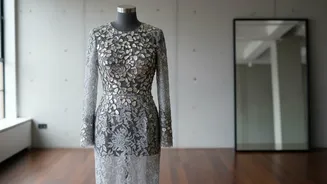
The choice of material is also becoming a powerful form of storytelling. Using mother-of-pearl, as designers like Tarun Tahiliani have, can evoke a sense of natural, iridescent beauty and quiet luxury. Steel, whether used in rigid corsetry or as fine, hair-thin wire woven into fabric, can speak of strength, armour, and a dialogue between power and grace. Lace, a traditional fabric, is being reinterpreted with modern techniques, layered and structured to feel less romantic and more architectural. In an age of sustainability, some designers are turning to upcycled materials, treating deadstock fabric not as leftovers but as a limited-edition canvas with its own history. By choosing these unconventional materials, designers are embedding their creations with deeper meaning, turning a dress into a statement on technology, nature, or cultural history.