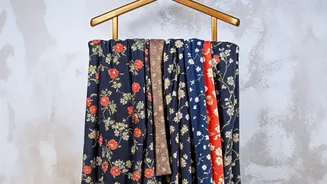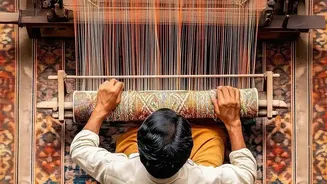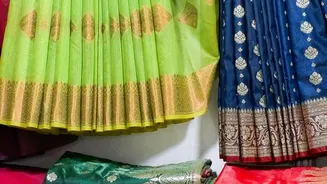


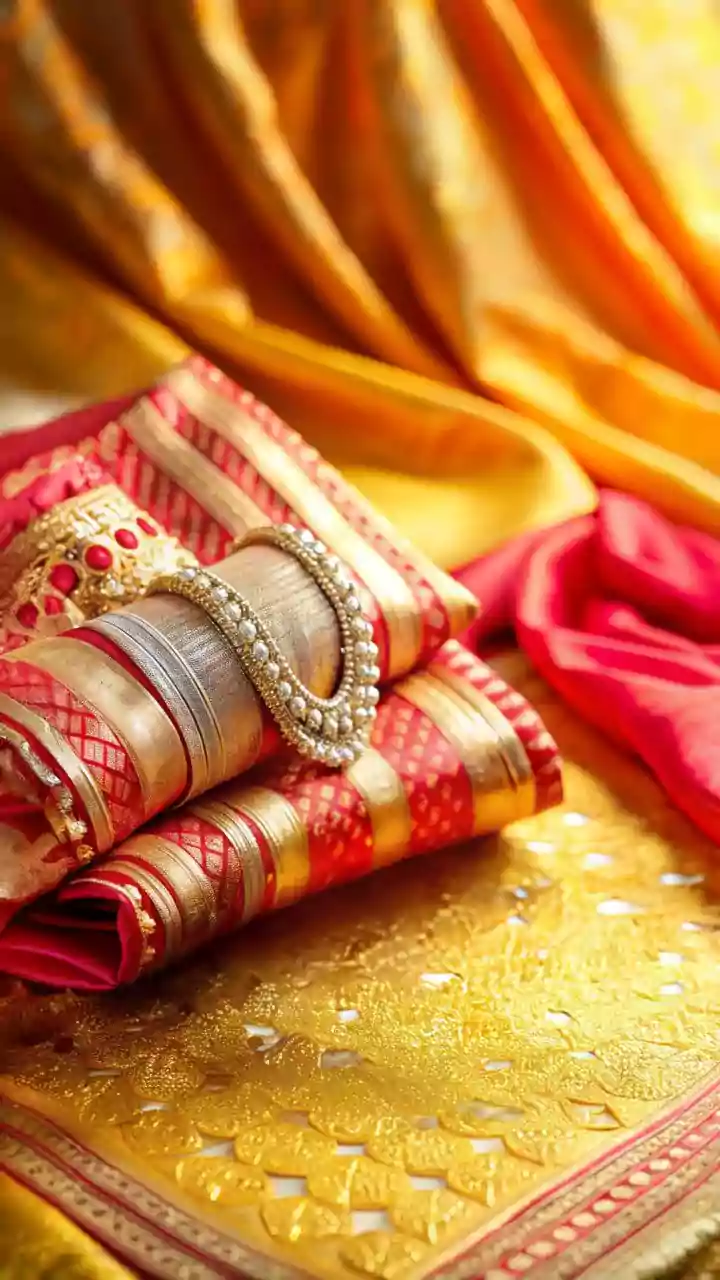

In countless Indian homes lies a treasure: a stack of old saris, too worn to be draped but too precious to be thrown away. These fabrics, imbued with memories, are given a beautiful second life through traditional textile crafts.
More Than Just Cloth
A sari is never just six
yards of fabric; it's a repository of memories, a marker of milestones, and a symbol of cultural identity. The soft cottons worn daily and the rich silks from weddings each tell a story. This deep emotional connection is why the tradition of upcycling is so ingrained in Indian culture. Instead of discarding these garments, generations of women have found ingenious ways to repurpose them, ensuring that the stories and sentiments woven into the fabric continue to be a part of the family's life. This practice is not just about frugality; it's a form of honouring the past and carrying affection forward into a new, functional form.
The Running Stitch of Kantha
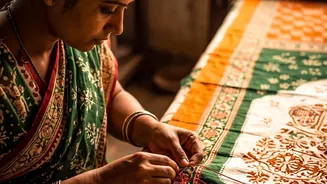
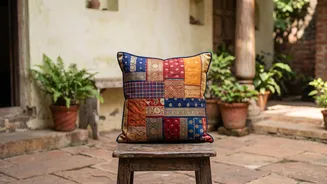
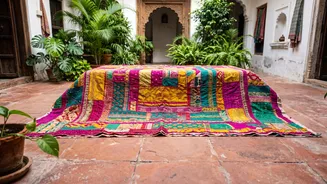
Perhaps the most famous of these revival crafts is Kantha, originating from West Bengal and Bangladesh. The process involves layering several old cotton saris—typically three to six—and stitching them together with a simple running stitch, known as the 'kantha' stitch. The threads for this were traditionally pulled from the borders of the old saris themselves. This painstaking, hand-sewn process creates a soft, lightly rippled texture, transforming the old fabrics into a single, durable quilt. While the outer layers are chosen for their appealing colours and patterns, the inner layers add weight and warmth. Each quilt can take an artisan weeks to complete, making every piece a unique labour of love.
The Layered Comfort of Godhadi
In Maharashtra and surrounding regions, a similar tradition thrives under the name Godhadi or Gudri. These quilts are also made by layering old saris, dupattas, and other pieces of cloth. The process is often a communal activity, where women gather in the afternoons to stitch and share stories. Depending on the region, a Godhadi can be a simple, functional blanket or an intricately patched trousseau item. Unlike some quilts, Godhadis are purely for personal and functional use, serving as a testament to a woman's care for her family. This age-old practice, found in various forms across India under names like 'Bontha' in Telugu and 'Khaudi' in North Karnataka, embodies a spirit of resourcefulness.
From Scraps to Rugs: The Art of Chindi
But what about the smallest scraps, the pieces too tiny for a quilt? This is where the art of Chindi comes in. The word 'chindi' literally means 'torn cloth' or 'scrap' in Hindi. This craft involves braiding or weaving together these leftover fabric strips—often the by-products of other textile processes—into vibrant, colourful rugs. Traditionally a way for households to ensure nothing went to waste, Chindi-making has also become a source of income for many rural artisans. The result is a durable, textured rug where every colour and pattern tells a story of its previous life, creating a beautiful mosaic of repurposed materials.
A Sustainable Legacy
In an era dominated by fast fashion and its environmental costs, these traditional Indian crafts offer a powerful and beautiful alternative. They are a living example of a circular economy, where waste is transformed into worth. This upcycling movement not only preserves precious memories and heritage skills but also provides livelihoods for millions, particularly women in marginalised communities. By choosing a Kantha quilt or a Chindi rug, consumers are not just acquiring a unique home furnishing; they are participating in a legacy of sustainability, creativity, and resourcefulness that has been perfected over centuries.