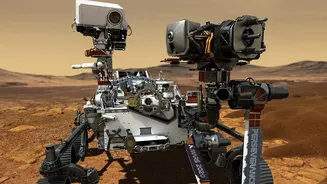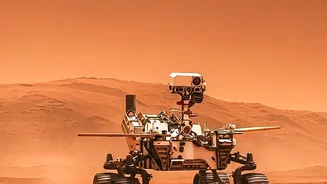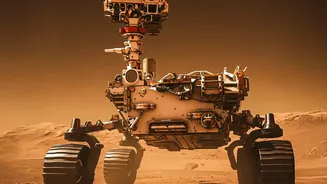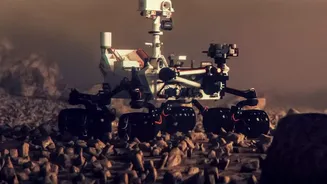







For years, the Perseverance rover has been dutifully collecting precious rock samples on Mars. Now, bringing them home is getting a major rethink, as NASA unveils a new blueprint to solve one of the most complex logistical challenges in space history.
A Mission Facing Headwinds
The Mars Sample Return (MSR) mission, a joint effort with the European Space Agency (ESA), has long been a top priority. The goal is monumental: bring back the samples collected by Perseverance for study in Earth's most advanced labs, potentially unlocking secrets about Mars' past and the possibility of ancient life. However, the original plan became a victim of its own ambition. Independent reviews flagged a ballooning budget, estimated at up to $11 billion, and a timeline stretching to 2040. NASA itself deemed this 'too costly' and the timeline unacceptable, prompting a major reset for the troubled but critical program.
Introducing the PSRA Blueprint
In response to these challenges, NASA has launched a new initiative called the Perseverance Sample Retrieval Architecture, or PSRA. Announced on November 9, 2026, by NASA's Mars Exploration Program Director, Tiffany Morgan, the PSRA is tasked with developing a fresh, impartial strategy for getting the Martian samples home. This isn't just about tweaking the old plan; it's a fundamental reassessment. The PSRA team will review mission requirements, evaluate new technologies, and learn from past challenges to forge a more realistic and achievable path forward.
What Does the Overhaul Involve?
The PSRA's core purpose is to deliver recommendations for a feasible mission architecture. The previous multi-spacecraft plan was incredibly complex, involving a lander to retrieve the samples, a rocket to launch them off Mars (the Mars Ascent Vehicle), and an orbiter to catch the sample container and fly it back to Earth. The complexity drove up both cost and risk. While the final PSRA plan is still in development, the focus is expected to be on simplification and efficiency. This could mean a single, larger lander instead of multiple vehicles, or leveraging new commercial capabilities to streamline the process. The goal is to find a balance between the ambitious science and the practical realities of budget and engineering.
A New Timeline and Renewed Urgency
The PSRA strategy team is set to kick off its work in January 2027, with a final report expected in the winter of 2027-2028. This revised timeline reflects a sense of urgency. There's an external pressure, too: China's own Mars sample return mission, Tianwen-3, is aggressively targeting a 2028 launch with the aim of returning samples by 2031. This has been described by some as a potential 'Sputnik moment', adding a layer of geopolitical competition to the scientific race. NASA's ability to develop a workable, affordable plan is not just about exploration, but also about maintaining its leadership role in deep space.
The Ultimate Prize
Despite the logistical headaches, the scientific community remains adamant that returning these samples is one of the most important goals in planetary science. The Perseverance rover has been collecting a geologically diverse set of samples from Jezero Crater, an ancient lakebed that may hold clues to whether life ever existed on Mars. Analyzing these rocks and soil with instruments on Earth—equipment far too large and complex to send to Mars—could revolutionize our understanding of the solar system. It could help us date key events in Martian history, understand its past climate, and finally address the profound question of whether we are alone in the universe.