



Finding Needles in a Cosmic Haystack
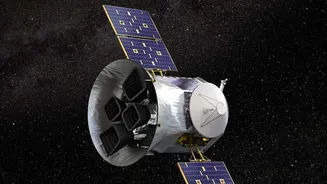
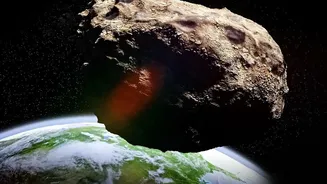
Before you can track an asteroid's velocity, you first have to find it. This is the job of wide-field survey telescopes, which repeatedly scan large portions of the night sky. Systems like the NASA-funded Asteroid Terrestrial-impact Last Alert System (ATLAS)
are designed to scan the entire dark sky every 24 hours. They take sequences of images minutes or hours apart. When these images are compared, stars and galaxies remain stationary, but asteroids and comets betray themselves as points of light that have moved against the background. This initial detection is crucial, triggering a global network of astronomers who perform follow-up observations to confirm the object and begin charting its path.
The Power of Optical Telescopes
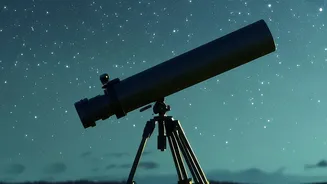
Once an object is spotted, optical telescopes play a critical role in refining its orbit. By taking multiple pictures over time, astronomers can measure the asteroid's angular movement across the sky. When combined with an estimate of its distance, this angular velocity can be converted into a linear speed in kilometers per hour. This process is becoming more powerful with next-generation observatories. The Vera C. Rubin Observatory, for example, is set to revolutionize this field. Using an enormous digital camera, it can survey the sky with unprecedented sensitivity, allowing it to detect smaller and more distant objects than ever before. In early 2026, data from its optimization surveys helped identify over 11,000 new asteroids, including 33 near-Earth objects. This firehose of data allows for rapid and precise orbit calculations, giving us a much clearer picture of what's out there.
Radar: The Ultimate Speed Gun
While optical telescopes are great for discovery, radar is the MVP for precision tracking. Instead of passively collecting light, radar astronomy is an active process. Giant dishes, like those at the Goldstone Solar System Radar in California, transmit a radio signal toward an asteroid and analyze the echo that bounces back. The time it takes for the signal to return gives an incredibly precise measurement of the asteroid's distance, or range. The change in the radio wave's frequency, known as the Doppler shift, directly reveals the asteroid's velocity relative to Earth. This combination of delay-Doppler measurements is invaluable, shrinking the uncertainty of an asteroid's predicted path from thousands of kilometers to just a few meters. It can turn a vague warning that an object will pass 'near' Earth into a definitive prediction of whether it will hit or miss.
Next-Generation Sentinels
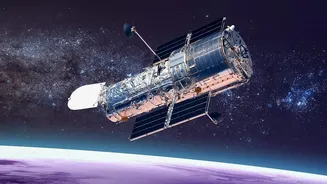
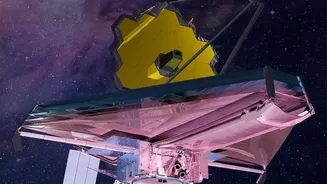
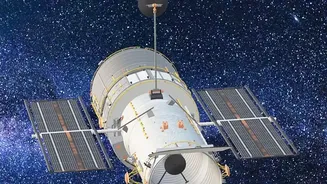
The future of asteroid tracking lies in space-based infrared telescopes. Missions like NASA's Near-Earth Object (NEO) Surveyor, planned for launch no earlier than September 2027, will be game-changers. Positioned at a stable point between the Earth and the Sun, NEO Surveyor will use its heat-sensing infrared detectors to spot asteroids. Dark asteroids that reflect little visible light are hard for ground-based telescopes to see, but they glow in infrared as they are warmed by the Sun. This allows NEO Surveyor to not only find these elusive objects but also get a much better estimate of their size. Crucially, it will be able to find asteroids approaching from the direction of the Sun, a notorious blind spot for observatories on Earth. The mission's goal is to find over 90 percent of potentially hazardous objects larger than 140 meters, the size that could cause significant regional damage.
From Tracking to Prevention
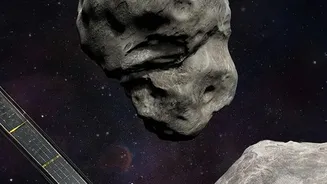
All this data on velocity and trajectory is not just for academic interest; it's the foundation of planetary defense. Knowing an asteroid's precise path years or even decades in advance is what makes prevention possible. This was demonstrated by NASA's Double Asteroid Redirection Test (DART) mission, which successfully altered the orbit of a small asteroid in 2022. The success of such a mission is entirely dependent on having accurate tracking data long before a potential impact. The ongoing improvements in telescope technology, from all-sky surveys like ATLAS to high-precision radar and future space-based observatories like NEO Surveyor, are building a robust, multi-layered system designed to find and track potential threats, giving humanity the time it needs to act.