





Why Recruiters Spot AI a Mile Away
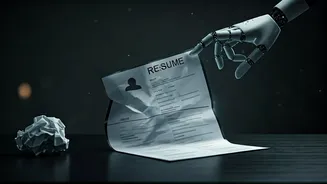
Hiring managers are becoming adept at identifying the telltale signs of an AI-generated application. Experts note that these resumes and cover letters often sound robotic, use repetitive sentence structures, and are filled with generic buzzwords that lack
the context of real experience. When every application uses the same polished but lifeless phrases, they fail to stand out. One recruiter from Zapier estimated that nearly a quarter of the resumes she sees are clearly written by AI. The result is an application that feels impersonal and suggests the candidate may be taking shortcuts, which can lead to it being dismissed.
The Risk of Inaccuracy and Exaggeration
One of the most significant dangers of leaning too heavily on AI is its tendency to get things wrong or overstate qualifications. AI tools can “hallucinate,” inventing skills, responsibilities, or timelines that are factually incorrect. This can create a polished resume that exaggerates a candidate's abilities, which can quickly be exposed during an interview. Career experts stress that you must be able to speak confidently about every single point on your resume. If an AI has embellished your experience, it not only damages your credibility but can also create awkward interview situations and harm your professional reputation.
Losing Your Unique Professional Story
Your career journey, motivations, and personality are what make you a unique candidate, and these are qualities AI cannot replicate. Over-reliance on AI strips away the personal touches that help you connect with a hiring manager. Recruiters are looking for the person behind the paper, and an AI-generated application often lacks the authentic voice and specific, personal anecdotes that make a candidate memorable. While AI is great at structure and grammar, it fails to capture the subtle interpersonal skills and cultural fit that are critical in hiring decisions. Without your personal story, your application becomes just another document in a large pile.
How to Use AI the Smart Way
Instead of letting AI take the wheel, experts advise using it as a smart assistant or a collaborator. AI can be an excellent starting point to overcome writer's block, generate a first draft, or brainstorm keywords to get past automated screening systems (ATS). Use it to turn your responsibilities into achievement-based bullet points or to get ideas for structuring your cover letter. You can also use AI tools to run mock interviews to practice your answers and build confidence. The key is to always treat the AI's output as a draft. Your job is to then edit, personalize, and fact-check everything to ensure it accurately reflects your voice and experience.