



A Glimpse into a Cosmic Construction Site
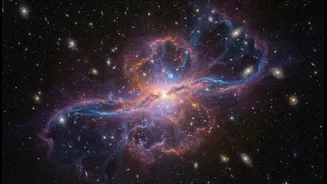
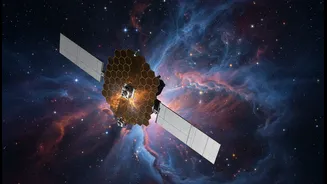
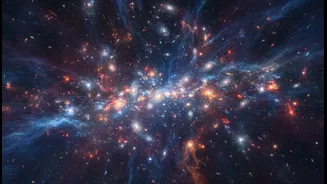
Imagine peering across 12 billion years of cosmic history to see not a single, finished galaxy, but a chaotic, sprawling construction zone. That is precisely what the James Webb Space Telescope (JWST) has recently uncovered. Astronomers pointed the powerful
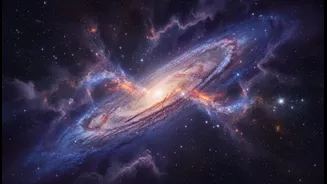
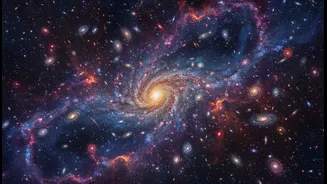
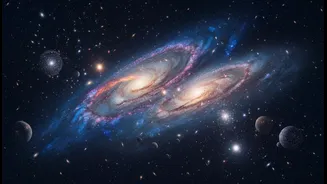
infrared telescope towards a region tipped off by radio observations and found something astounding: a protocluster, an ancient gathering of at least six galaxies all tumbling into one another. This is not a slow, gentle process; it is a galactic demolition derby. Because the light from this event took billions of years to reach us, we are seeing the universe as it was just 1.8 billion years after the Big Bang. It is a snapshot of a massive galaxy in the intense and messy process of being born, confirming that the grand structures we see today were assembled piece by piece.
The Engine of Creation
When galaxies merge, it is one of the most creative and destructive events in the cosmos. Pulled together by gravity, vast clouds of gas and dust from each galaxy collide and compress, igniting a furious burst of star formation at a rate that can be more than twenty times that of our own Milky Way. This frenzy, known as a starburst, lights up the merging system, creating generations of new stars. At the same time, this cosmic pile-up provides an abundant feast for the supermassive black hole lurking at the centre. As material falls into the black hole, it grows in mass, and the process releases enormous jets of energy that can shape the entire developing galaxy. This recent discovery shows both processes happening in tandem, allowing scientists to watch a giant galaxy and its central black hole grow up together for the first time.
A Portrait of the Aftermath
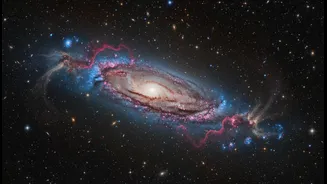
While watching a galaxy form in the early universe is incredible, Webb can also show us what the aftermath of such a collision looks like closer to home. To celebrate its fourth year of operations in July 2026, NASA released a stunning new image of Centaurus A, a galaxy just 11 million light-years away. Centaurus A is the product of a major galactic merger that happened roughly two billion years ago. Today, it bears the scars of that dramatic past. Its strange, distorted shape, and the unusual glowing parallelogram of dust at its core, are direct consequences of that ancient collision. Webb’s ability to pierce through the thick dust that once obscured our view reveals millions of individual stars and shows how the galaxy is still being shaped by the active black hole at its heart. It is a living record of a past assembly, proving these events have consequences that last for billions of years.
Rewriting the Rules of the Cosmos
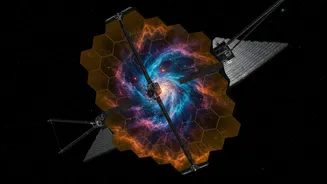
This discovery is not an isolated one. Since it began sending back images, the JWST has consistently challenged our neat and tidy models of the early universe. It has found galaxies that appear too bright, too massive, and too mature for their age, and black holes that seem impossibly large. At first, these findings were puzzling, leading some to question our fundamental understanding of cosmology. Now, a clearer picture is emerging: the early universe was likely a far more diverse and dynamic place than we imagined. Rather than a slow and steady process, galaxy formation in some regions was rapid and chaotic, with matter gathering quickly to build complex systems. The universe, it seems, was in a hurry to get things built, and Webb is finally showing us the blueprints.