







The Building Blocks of Muscle
Before diving into specific milks, let's talk about protein's building blocks: amino acids. Our bodies use 20 different amino acids to build muscle, repair tissue, and perform countless other functions. Nine of these are 'essential,' meaning our bodies can't
make them, so we must get them from food. For anyone focused on fitness, these are non-negotiable. After a workout, your muscles have tiny tears that need repairing to grow stronger. Amino acids are the repair crew. A 'complete protein' source contains all nine essential amino acids in sufficient amounts, making it highly effective for muscle protein synthesis—the process of rebuilding muscle. This is why athletes meticulously plan their protein intake.
Pea Milk's Protein Punch
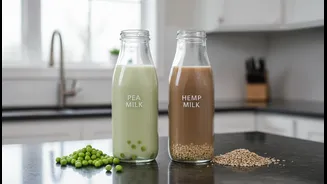
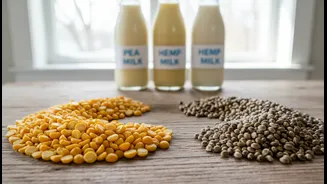
Pea milk, derived from yellow split peas, has become a powerhouse in the plant-based world for good reason. Its protein is not only abundant but also rich in branched-chain amino acids (BCAAs)—leucine, isoleucine, and valine. Leucine, in particular, is hailed as the primary trigger for muscle protein synthesis. Research shows that pea protein contains a significant amount of leucine, rivaling the levels found in dairy-based whey protein, the long-time gold standard for athletes. Studies comparing pea protein to whey have often found similar improvements in muscle thickness, strength, and body composition in people undergoing resistance training. While pea protein is slightly lower in one essential amino acid, methionine, it still provides a robust profile that effectively supports muscle growth and recovery, making it a favourite for post-workout shakes.
Hemp Milk's Complete Profile
Hemp milk offers a different but equally compelling set of benefits. Made from the seeds of the Cannabis sativa plant (without the psychoactive components), hemp is one of the few plant sources considered a 'complete protein,' containing all nine essential amino acids. While its total protein per serving might be slightly less than pea or soy milk, its completeness is a major draw. Beyond protein, hemp milk is packed with healthy fats, including an ideal ratio of omega-6 to omega-3 fatty acids, which are known to help reduce inflammation—a key aspect of workout recovery. It’s also a good source of minerals like magnesium and iron, which are vital for energy production and muscle function. For the fitness enthusiast, hemp milk provides not just muscle-building blocks but also nutrients that support overall recovery and health.
The Edge Over Other Options
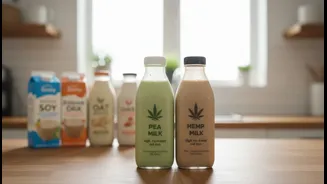
So why are urban fitness enthusiasts choosing pea and hemp over more traditional options like dairy or even other plant milks like soy and almond? For many, it's about maximising benefits while minimising potential downsides. Dairy milk is a potent source of protein but can cause digestive issues for the large portion of the population with lactose intolerance. Soy milk, while a complete protein, sometimes faces skepticism regarding phytoestrogens, even though modern research has largely assuaged these concerns. Almond milk, though popular, is often very low in protein unless fortified. Pea and hemp milks offer a clean, effective, and hypoallergenic alternative. They provide high-quality, easily digestible protein without the common allergens like lactose, soy, or nuts, fitting seamlessly into a performance-oriented diet.
More Than Just Muscle
The appeal for the urban fitness enthusiast goes beyond the nutritional panel. Choosing pea or hemp milk is also a lifestyle statement. These options are often perceived as more sustainable than dairy, aligning with a growing eco-consciousness. The choice can also be about embracing new trends and innovations in food science. In a dense urban environment where trends spread quickly through cafes, gyms, and social media, being an early adopter of a scientifically-backed health product has its own appeal. It signals a sophisticated, informed approach to health and wellness that prioritises not just personal performance but also broader values.