




A Tale of Two Moons
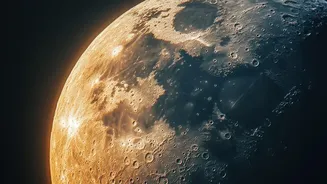
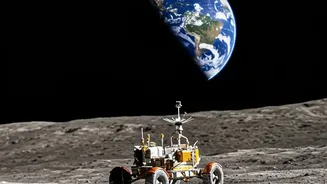
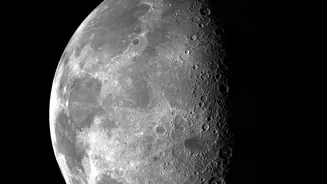
Anyone who has looked up at the night sky is familiar with the 'Man in the Moon'—a collection of vast, dark volcanic plains, or 'maria', that define the face of the lunar near side. For decades, scientists have known that the far side, permanently hidden
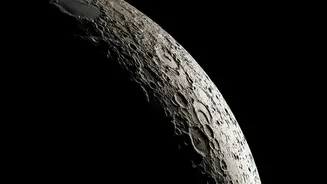
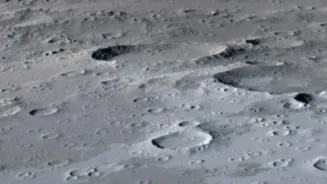
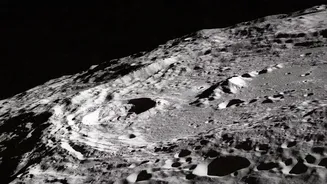
from Earth, is dramatically different. It is a world of rugged, heavily cratered highlands with a much thicker crust and very few maria. This stark contrast, known as the lunar asymmetry, has been one of the most enduring mysteries in planetary science. Why would one celestial body have two such different faces? Proposed theories have ranged from the collision of a second, smaller moon to uneven radioactive heating, but none have been definitively proven. The missing piece of the puzzle has always been physical evidence from the far side itself.
Historic Samples, New Clues
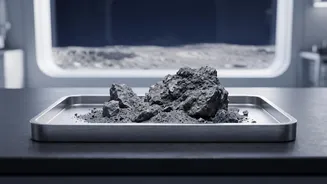
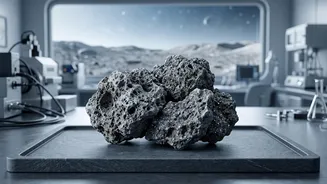
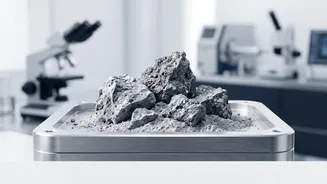
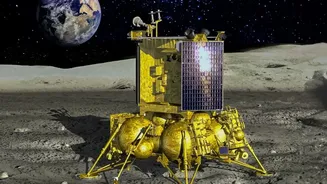
In 2024, China's Chang'e-6 mission made history by successfully collecting and returning the first-ever rock and soil samples from the Moon's far side. The lander touched down in the South Pole-Aitken (SPA) basin, the oldest and largest impact crater on the Moon, making its haul of nearly two kilograms of material incredibly valuable. Initial analysis of these precious samples by teams of international scientists has begun to reveal surprising details. One study found that the far side was exposed to higher-energy particles from the solar wind, likely because the near side is partially shielded by Earth's magnetosphere. Other research discovered minerals like hematite, suggesting that large asteroid impacts could create localised, temporary oxidising conditions on the otherwise reduced lunar surface. But the most significant findings relate directly to the asymmetry mystery.
A New Theory: Magma on the Move
The latest research, based on the Chang'e-6 samples, proposes a compelling new explanation for the Moon's two faces. Scientists now suggest the asymmetry was not born from a different mantle composition, but from massive, heat-driven movement within the Moon's ancient magma ocean billions of years ago. A key finding from the new samples is that rocks originating deep in the mantle are surprisingly similar on both sides of the Moon. This suggests the difference isn't what the Moon is made of at its core, but how that material was distributed. The new theory posits that after the Moon became tidally locked with Earth, our planet's immense gravity caused uneven tidal heating. This created a temperature difference that drove a massive, horizontal circulation of molten rock.
How the Far Side Got Its Thick Crust
According to this new model, the intense tidal heating on the near side caused hotter, less dense magma to flow toward the cooler far side. This colossal internal flow carried along with it early-formed, magnesium-rich crustal materials. Over millions of years, this process essentially piled up crust on the far side, making it significantly thicker and more magnesium-rich, which is consistent with what the Chang'e-6 samples show. At the same time, the remaining molten material, rich in elements that promote volcanism (known as KREEP), was preferentially pushed toward the near side. This concentrated the ingredients for the vast lava flows that would later form the dark maria we see today, while the far side's thick crust made it much harder for magma to erupt, preserving its ancient, cratered terrain.
Solving One Mystery, Opening New Doors
This heat-driven circulation model provides a powerful, self-consistent explanation for how a chemically similar mantle could produce two vastly different surfaces. By connecting the new sample data to the Moon's early thermal history, it elegantly solves several puzzles at once: the thicker far-side crust, the different chemical compositions, and the concentration of volcanic plains on the near side. While this is a major breakthrough, scientists note that more research is needed to confirm the theory. The Chang'e-6 samples represent just one location on the vast far side. Future missions and further analysis of these historic samples will continue to refine our understanding of how the Earth's closest celestial neighbour came to be, offering insights that could help explain the evolution of other planets in our solar system and beyond.