




The Soul of the Serpent Boat
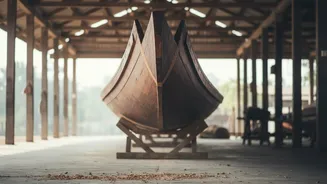
The Chundan Vallam, or snake boat, is more than just a vessel; it is the pride of a village and a living icon of Kerala's culture. Stretching over 100 feet in length, these majestic wooden boats were originally designed as naval warships in the 14th century,
built for speed and surprise attacks along the region's intricate network of waterways. Their distinctive design, with a high, curving stern resembling a snake with its hood raised, is a feat of ancient naval architecture. Today, their purpose has shifted from war to sport, becoming the centrepiece of the world-famous Vallam Kali, or boat races. Each boat is considered a deity by its village, touched only by men who must be barefoot as a sign of respect. The craft of building and maintaining them is a hereditary skill, passed down through generations of master carpenters, or 'Moothasharis'.
An Ancient Recipe for Speed and Protection
Long before modern varnishes and sealants, Keralan artisans perfected an organic recipe to make their boats swift and durable. This closely guarded tradition is at the heart of the annual preparations. The primary goal is to make the wooden hull waterproof and slippery to reduce friction in the water. The boat's surface is methodically coated with a unique, all-natural mixture. Key ingredients include fish oil (often sardine oil), which penetrates the wood, and a black resin extracted from boiled cashew nut shells or other wood resins like 'chenchilyam'. This is often mixed with charcoal powder or the ash of coconut shells and even eggs to create a formidable, water-repellent paste. This coating not only keeps the 'Anjili' wood from absorbing water and becoming heavy but also protects it from rot and decay, ensuring the boat can last for decades.
The Artisan's Meticulous Touch
The application of this traditional coating is a laborious and almost ceremonial process. It is a community affair, led by skilled craftsmen who understand the precise consistency and application technique required. After any necessary repairs are made to the wooden planks, which are bound by coir ropes and nails, the preparation begins. Artisans apply several layers of the organic paste by hand, rubbing it deep into the grain of the wood. The boat is then left to dry, allowing the oils and resins to cure and form a tough, slick shell. This process is not just about maintenance; it is a ritual that connects the current generation of villagers and rowers to their ancestors. The knowledge, passed down orally, specifies not just the materials but the method, ensuring that each boat is as formidable as the last.
Gearing Up for the Grand Spectacle
These preparations signal the imminent arrival of Kerala's most electrifying season. The efforts culminate in events like the Nehru Trophy Boat Race, scheduled for August 22, 2026, on Punnamada Lake in Alappuzha. This race, often called the 'Olympics on Water', is the state's premier sporting and cultural event, drawing hundreds of thousands of spectators. The freshly coated snake boats, gleaming under the monsoon sun, become the stars of the show. Manned by over 100 oarsmen rowing in perfect synchrony to the rhythm of the Vanchipattu (boatman's song), these vessels transform from revered objects into pure kinetic energy. The sight of dozens of snake boats surging through the water is a powerful testament to the teamwork, strength, and enduring cultural pride that these preparations make possible.