


Sixteen Sunrises a Day
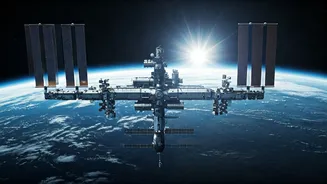
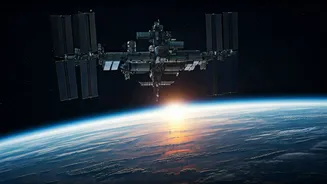
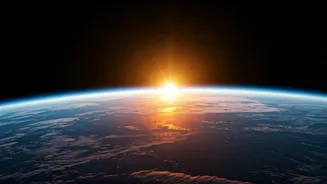
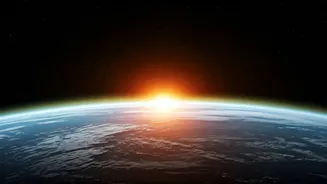
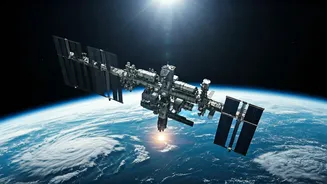
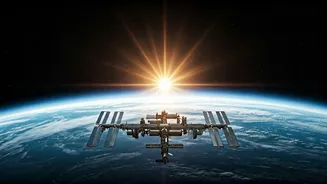
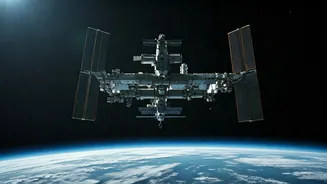
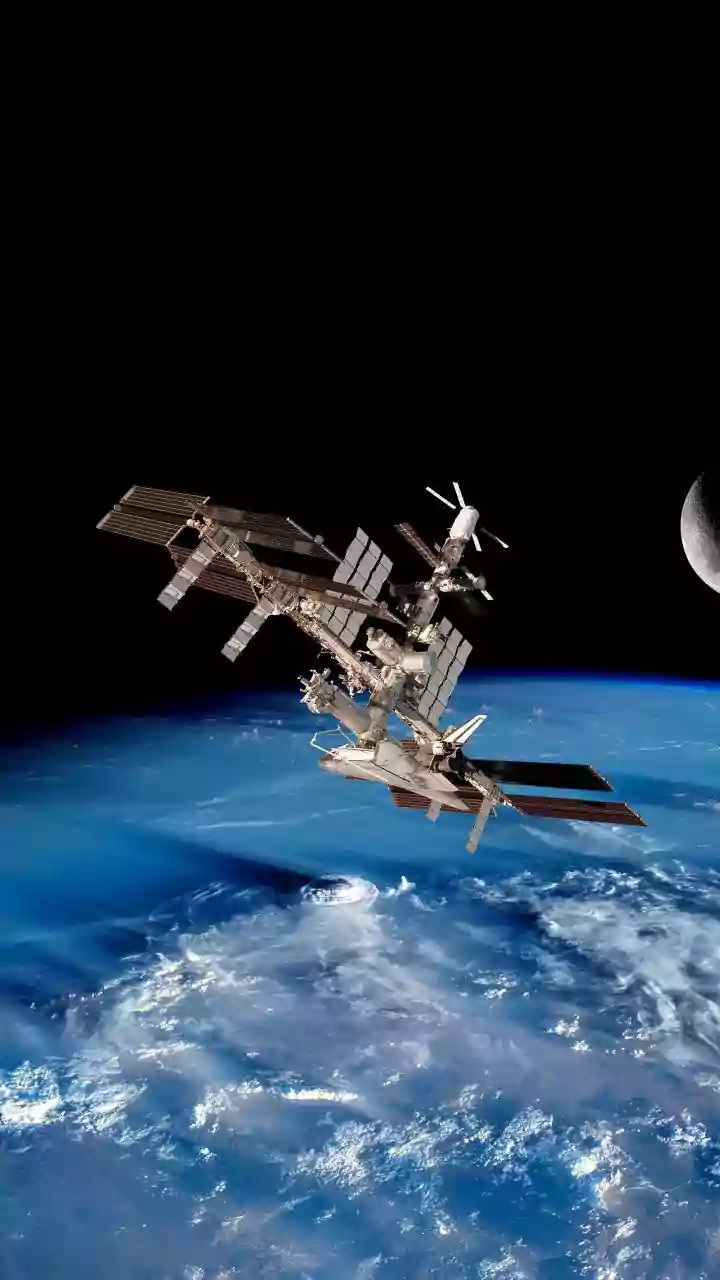
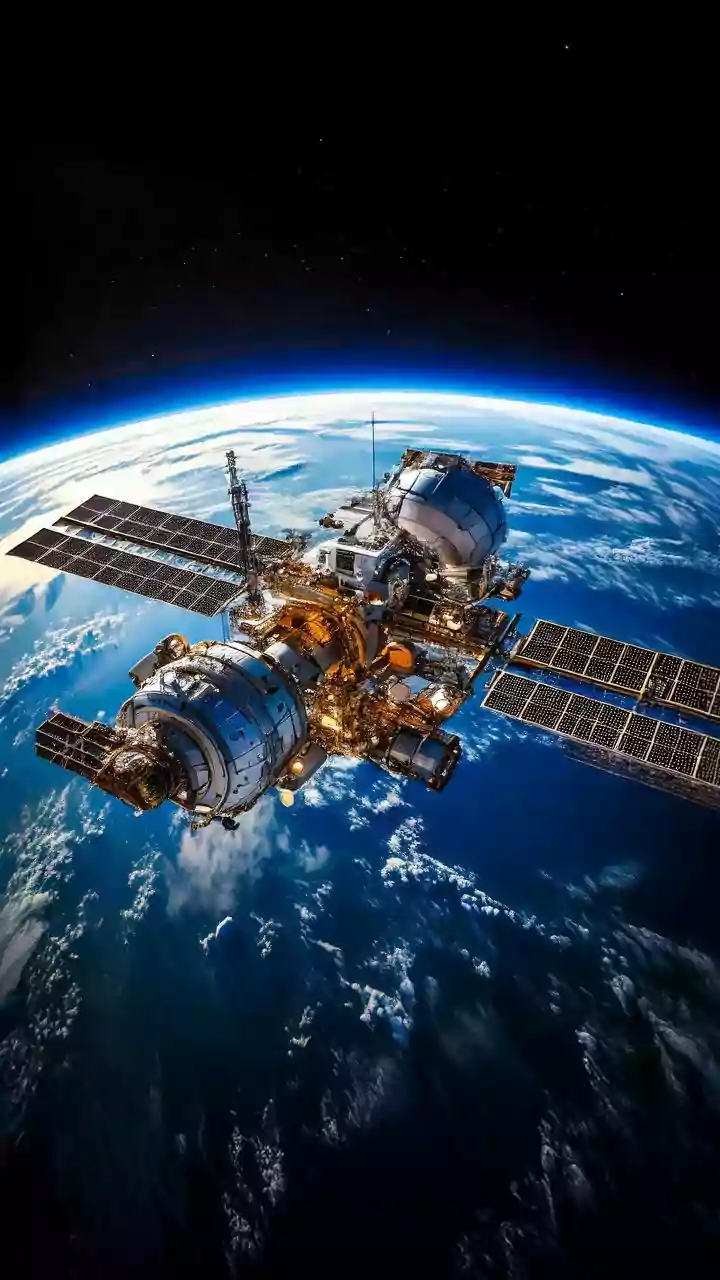
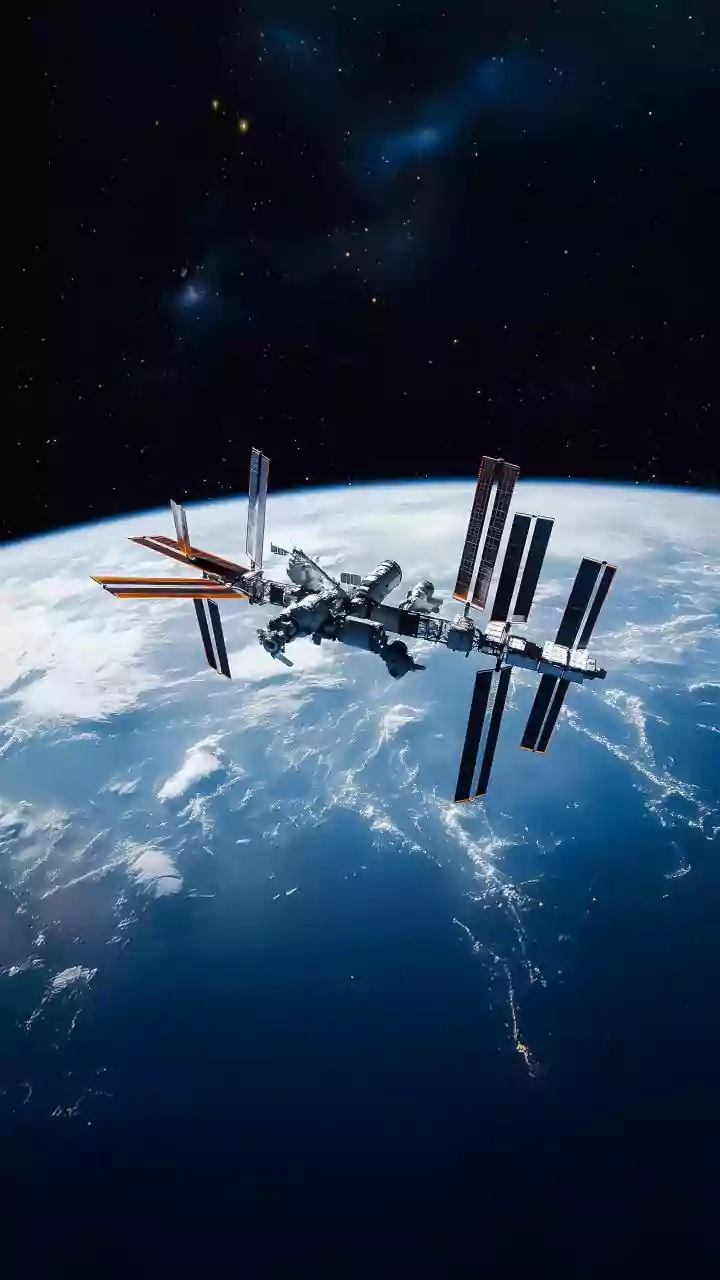
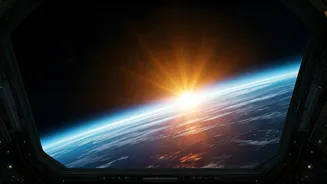
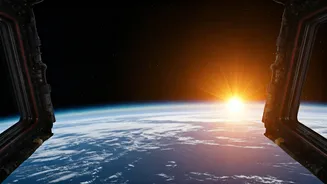
Imagine watching the sun rise and set 16 times in a single 24-hour period. That’s the reality for astronauts on the ISS. The station travels at a staggering 28,000 kilometres per hour, completing a full orbit of Earth roughly every 90 minutes. This means
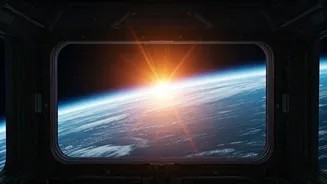
that every 45 minutes, the crew is either plunged into darkness or greeted by a spectacular dawn. Astronauts describe the sunrises and sunsets as a rapid, vibrant display of colours streaking across the horizon as the sun’s rays scatter through the planet’s thin atmosphere. This constant, high-speed cycle of day and night is one of the first and most disorienting indicators that you are no longer on Earth.
A Planet of Light and Weather
During their 45 minutes of daylight each orbit, astronauts get a view of our planet that is both grand and intimate. From the famous seven-windowed Cupola module, they can see entire continents drift by. They witness massive weather systems swirling over oceans, the intricate patterns of river deltas, and the patchwork quilt of agricultural fields. A particularly powerful sight is watching thunderstorms rage below. Astronauts can see vast fields of clouds lit from within by lightning, a silent, flickering light show that underscores the atmosphere's dynamic energy. From this height, the planet feels like a living, breathing entity.
The World's Cities at Night
As the station passes into Earth's shadow, a different kind of beauty emerges. The planet below transforms into a web of glowing cities. From orbit, these grids and clusters of light clearly delineate coastlines and trace the paths of major highways. Densely populated areas like Europe, the Nile Delta, and eastern North America shine brilliantly against the blackness of the land and sea. Astronauts often spend their free time trying to identify different cities from their unique patterns of light. This perspective reveals humanity's footprint in a way that is both beautiful and thought-provoking, showcasing a global, interconnected civilization.
A Front-Row Seat to Auroras
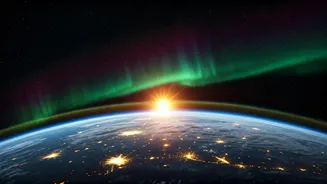
While people on the ground look up to see the northern and southern lights, ISS astronauts get to look down on them. The station's orbit often takes it directly over or even through the upper reaches of auroral displays. Instead of seeing curtains of light high in the sky, astronauts witness vast, shimmering rings of green, red, and purple light dancing across the polar regions. They describe the auroras as crawling, amoeba-like shapes of colour that stretch for hundreds of kilometres, a perspective that reveals the true scale and majesty of this electromagnetic phenomenon.
The Universe Unfiltered
Looking away from Earth, the view is just as spectacular. Without the distortion and light pollution of the atmosphere, the cosmos reveals itself in stunning clarity. The Milky Way isn't a faint, milky band; it's a brilliant, dense river of stars. Countless stars, too dim to be seen from the ground, are visible from the ISS. Astronauts can even see faint cosmic rays—high-energy particles from deep space—as tiny flashes of light inside their own eyes, even when they are closed. This constant, unfiltered connection to the universe provides a stark and beautiful reminder of humanity's place in the vastness of space.
The 'Overview Effect'
Perhaps the most profound aspect of the view from the ISS isn't visual, but psychological. Many astronauts report experiencing a cognitive shift known as the 'Overview Effect'. Seeing Earth suspended in the blackness of space—a vibrant, beautiful, and fragile whole—can be a transformative experience. National borders vanish, and the planet is perceived as a single, shared home. Astronauts often return to Earth with a heightened sense of connection to humanity and a powerful desire to protect our planet. This feeling, a state of awe and self-transcendence, might be the single most important part of the view.