



Why Indoor Enrichment Matters
When the skies open up, our pets' worlds can shrink dramatically. Daily walks and outdoor explorations are replaced by long hours indoors, which can lead to boredom, anxiety, and even destructive behaviours like chewing furniture or excessive barking.
This is where enrichment comes in. Enrichment is the act of creating a stimulating environment that allows pets to engage in their natural behaviours. It isn't a luxury; it's a necessity for their mental health. Challenging their minds with games and activities can be just as tiring as physical exercise, leading to a calmer, happier, and more well-behaved companion. Structured play also helps maintain a healthy weight and strengthens the bond between you and your pet.
Harness the Power of Scent
A dog's primary sense is smell, and engaging their nose is one of the best ways to tire them out mentally. Scent work is a fantastic indoor activity. Start simple with a game of 'find the treat'. Have your pet wait in another room while you hide small, high-value treats around your living space. Then, let them loose and encourage them to sniff out the rewards. You can also create a 'snuffle mat' by tying fleece strips onto a rubber mat and hiding kibble within the fabric. For a simple DIY option, place treats in a few cups of a muffin tin and cover all the cups with tennis balls, forcing your dog to figure out which ones hide the prize.
Create an Indoor Agility Course
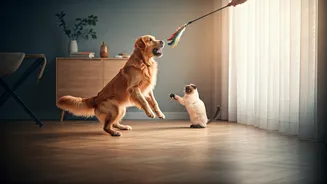
You don't need professional equipment to create a fun agility course at home. Use household items to build a playground in your living room. Drape a blanket over two chairs to create a tunnel, lay a broomstick across a pair of low stools for a jump, and use pillows as weaving poles. Lure your pet through the course with a favourite toy or treat, praising them as they complete each obstacle. This not only burns physical energy but also builds your pet's confidence and problem-solving skills. Remember to keep it safe and tailored to your pet's size and ability, ensuring the surfaces aren't slippery.
Make Mealtime a Mind Game
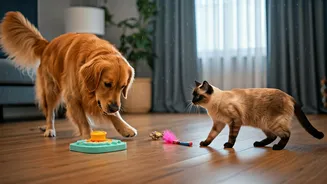
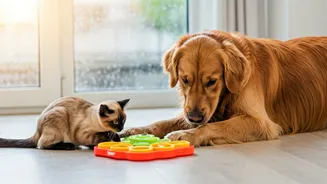
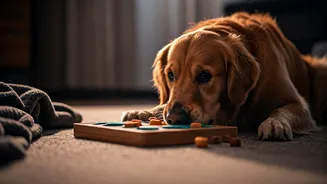
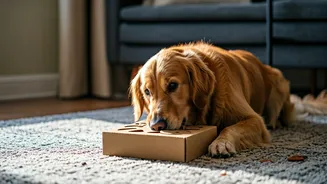
Instead of just pouring food into a bowl, turn feeding into an engaging puzzle. Puzzle feeders and treat-dispensing toys require your pet to work for their food, mimicking their natural foraging instincts. This slows down fast eaters, promotes better digestion, and provides crucial mental stimulation. You can buy a variety of puzzle toys or make your own. A simple DIY option is to cut holes in an empty plastic bottle, fill it with kibble, and let your dog figure out how to roll it to get the food out. For cats, placing food in different sections of an egg carton can provide a simple but effective challenge.
Short and Sweet Training Sessions
Rainy days are the perfect opportunity to brush up on old commands or teach your pet a new trick. Short, positive training sessions of about 5-10 minutes are highly stimulating for your pet's brain. You can work on basics like 'sit', 'stay', and 'come', or try something more complex like 'roll over' or teaching them the names of their toys. This not only sharpens their mind but also reinforces your communication and strengthens your bond. Remember to use plenty of positive reinforcement like praise and treats to keep it fun and rewarding.
Don't Forget the Downtime
While active play is important, the monsoon is also a great time for calm bonding activities. Gentle grooming sessions are essential, as high humidity can lead to skin issues. Daily brushing helps remove dirt and prevents matting, especially for long-haired breeds. Always ensure your pet is completely dry after any exposure to rain to prevent fungal infections. This is also a perfect time for a 'pet spa day' with a gentle massage, which can help calm anxious pets who are frightened by thunder. Sometimes, simply cuddling on the sofa while listening to the rain can be the most rewarding activity of all.