


The Billion-Dollar Packing Problem
Establishing a long-term presence on the Moon, a core goal of NASA's Artemis program and other international space efforts, comes with a colossal logistical challenge. Every kilogram of material launched from Earth to the lunar surface costs a fortune,
with some estimates running as high as $1 million per kilogram. Shipping traditional construction materials like steel beams and concrete is simply not economically viable for building habitats, landing pads, and roads. This immense cost has forced space agencies and a growing number of private companies to think outside the box, or more accurately, to use what's already inside the lunar environment. This strategy is known as in-situ resource utilization (ISRU), and it’s at the heart of making humanity a multi-planetary species.
From Moon Dust to Moon Bricks
The most abundant resource on the Moon's surface is regolith, a thick layer of fine dust, rock fragments, and glassy particles pulverized by billions of years of meteorite impacts. It's abrasive, statically charged, and a nuisance for equipment, but it's also rich in useful minerals like iron, aluminum, and titanium. The revolutionary idea now gaining traction is to use this regolith as the primary feedstock for construction. Scientists and engineers are developing several methods to turn this loose soil into solid, durable building material. These techniques include sintering, which uses high heat from lasers or microwaves to fuse the regolith particles together without fully melting them, and creating novel forms of 'lunar concrete' by mixing the soil with binders like sulfur or polymers derived from astronaut waste.
The Robotic Construction Crew
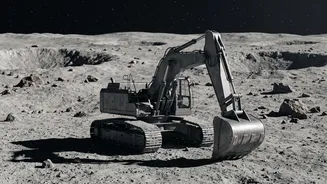
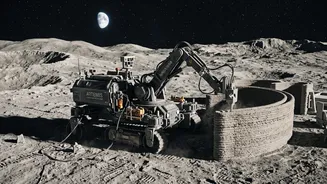
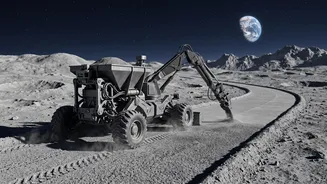
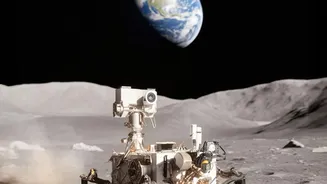
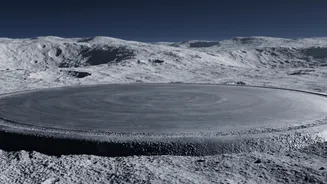
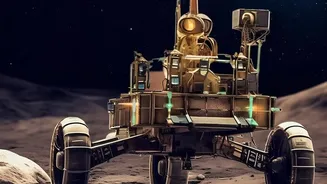
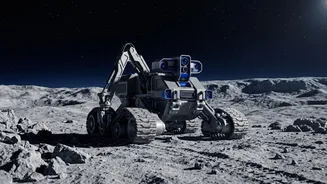
Building a lunar base is a dangerous and demanding job, making it ideal for autonomous robots. Companies like Texas-based ICON, which has extensive experience 3D-printing homes on Earth, are at the forefront of this technological push. Under a significant contract from NASA called Project Olympus, ICON is developing a robotic construction system designed to work in the reduced gravity and harsh environment of the Moon. The concept involves robotic vehicles that can excavate regolith, feed it into a large-scale 3D printer, and then layer by layer, print entire structures like habitats and landing pads. These systems would ideally be deployed before astronauts arrive, allowing essential infrastructure to be built and ready for the first human crews, increasing safety and mission efficiency.
Challenges on the Lunar Frontier
Despite the promise, building with moon dust is not without its difficulties. Lunar regolith is not uniform; its composition and melting point can vary widely from one scoop to the next, which poses a challenge for 3D printers that rely on consistent material properties. The extreme temperature swings on the Moon, from scorching hot to freezing cold, can stress materials and cause them to fail. Furthermore, the lack of a substantial atmosphere means any structure must provide protection from constant radiation and the threat of micrometeorite impacts. Engineers must also design lightweight excavation robots that can still dig effectively in the Moon's low gravity, a significant departure from heavy Earth-moving equipment that relies on its own weight to function.