




The Hidden Cost of Sitting
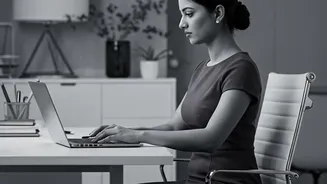
Our bodies are designed for movement, but modern work often confines us to a chair for eight or more hours a day. This prolonged sitting takes a silent toll. When you sit for extended periods, your hip flexor muscles shorten and tighten, while your glute
muscles can weaken from inactivity. This creates an imbalance that pulls your pelvis out of alignment. To compensate, your upper back rounds forward, and your head juts out, leading to the classic 'desk slouch'. This poor posture isn't just about appearance; it puts significant strain on your spinal discs, neck, and shoulder muscles, which can lead to chronic pain, stiffness, and even headaches. Over time, this can contribute to more serious musculoskeletal issues.
Stretching as a Simple Solution
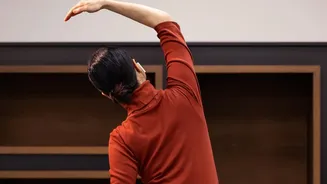
The most effective way to counteract the effects of sitting is to introduce movement back into your day. Simple stretches performed right in your chair work by targeting the specific muscles that become tight and weak. Stretching helps to lengthen those shortened hip flexors and chest muscles, while activating the underused muscles in your upper back and glutes. This process helps to 'reset' your posture throughout the day. Furthermore, stretching increases blood flow to your muscles, delivering vital oxygen and nutrients that reduce stiffness and prevent fatigue. Think of it as a mini-break for your body that not only eases tension but can also boost your mental focus and productivity.
Seated Cat-Cow
This gentle stretch mobilises the spine and relieves tension in the back. Sit at the edge of your chair with both feet flat on the floor. Place your hands on your knees. On an inhale, arch your back, push your chest forward, and look up towards the ceiling (Cow pose). On an exhale, round your spine, tuck your chin to your chest, and let your shoulders curve forward (Cat pose). Move slowly between these two positions, repeating the cycle 5 to 6 times to gently awaken your spine.
Chest Opener
To counteract the forward hunch from typing, this stretch opens up the chest and shoulders. Sit tall at the edge of your chair. Clasp your hands behind your back. If you can, straighten your arms and gently lift them away from your body while pulling your shoulder blades together. Push your chest forward and feel the stretch across the front of your shoulders. Hold for 15 to 20 seconds, breathe deeply, and then release. Repeat this stretch three times to promote a more upright posture.
Seated Spinal Twist
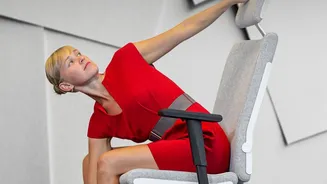
Twists are excellent for improving spinal mobility and relieving lower back stiffness. Sit upright with your feet flat on the floor. Gently twist your torso to the right, placing your left hand on your right knee and your right hand on the back or side of your chair for support. Keep your hips facing forward as you deepen the stretch. Hold for about 15 seconds, breathing into the rotation, then slowly return to the center and repeat on the left side. Do this three to five times on each side.
Neck and Shoulder Release
We hold a lot of tension in our necks, especially when staring at screens. To release it, sit up straight and gently tilt your head toward your right shoulder, trying to bring your ear down without lifting your shoulder up. You should feel a gentle stretch along the left side of your neck. For a deeper stretch, you can sit on your left hand. Hold for 20 seconds, then slowly return to the center and repeat on the other side. Follow this with a few simple shoulder shrugs, lifting your shoulders to your ears, holding for a moment, and then releasing them down.
Making It a Daily Habit
The key to seeing real benefits from these stretches is consistency. Aim to take a short break to stretch at least once every hour. A simple way to remember is to link the habit to an existing part of your routine—for example, do a quick stretch after every long phone call or before you start a new task. You can also set a recurring timer on your phone or computer as a reminder. Even just 30 to 60 seconds of movement every hour can make a significant difference in preventing the buildup of muscle tension and reinforcing better posture throughout your workday.