

A Return to Regional Roots
For years, modern Indian cuisine was often about spectacle—foams, gels, and a nod to global trends. But a significant shift is underway. Chefs and diners alike are embracing a new kind of luxury, one that is hyperlocal, sustainable, and deeply rooted
in India’s vast culinary landscape. This movement goes beyond simply using local produce; it's about celebrating the country's immense biodiversity and reviving ingredients that were once confined to regional home cooking or at risk of being forgotten. This trend is driven by a desire for authenticity, a deeper connection to food origins, and the realisation that ingredients like foraged greens, forest flowers, and indigenous grains offer a palette of flavours that cannot be replicated. It represents a newfound confidence in Indian food, which no longer feels the need to translate itself for a global audience.
The Tangy Punch of Ambadi
Known as Gongura in Andhra Pradesh and Telangana and Roselle in English, Ambadi is a leafy green celebrated for its distinct sour taste. Traditionally the star of dishes like the fiery Gongura pachadi or Maharashtra's wholesome Ambadi chi bhaji, this monsoon favourite is now being explored in more contemporary settings. Its sharp, tangy profile, which comes from the same family as hibiscus, makes it a versatile ingredient. Modern chefs are experimenting with its potential beyond traditional curries and dals. Imagine Ambadi's sourness infused into a bright, refreshing sorbet, used as a base for a tart marinade for grilled meats and seafood, or its extract reduced into a zesty dressing for salads. Its vibrant flavour provides a distinctly Indian acidity that can cut through richness and add a surprising twist to familiar formats.
The Versatile Tartness of Karonda
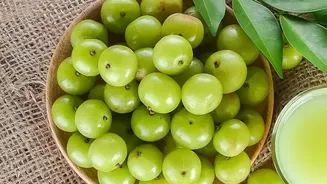
This small, berry-like fruit, also known as Bengal Currant, packs a powerful punch. When unripe and green, it is intensely sour, but as it ripens to a deep red or purple, it develops a subtle sweetness. Traditionally, Karonda's destiny lay in pickles, chutneys, and sweet preserves, where its tartness could be balanced. In the past, candied karondas were even used as a substitute for cherries on cakes. Today, chefs are harnessing its unique flavour profile for more innovative applications. Its firm texture and sour notes make it an excellent substitute for cranberries in sauces and fillings for pies and tarts. The bright red juice extracted from the fruit can be used to create visually stunning and flavourful syrups for cocktails and non-alcoholic beverages, while its acidic bite is being used to create tangy counterpoints in savoury dishes, much like a gourmet relish.
The Floral Sweetness of Mahua
For centuries, the Mahua flower has been a vital source of food and livelihood for tribal communities across central and northern India. Valued for its natural, honey-like sweetness, it was traditionally used to make local brews and rustic sweets like ladoos and halwas. Now, this forest blossom is being recognised for its immense culinary potential in modern kitchens. Food technologists and chefs are transforming Mahua into syrups, jams, and powders that can be incorporated into a wide range of products. Its unique floral aroma is finding its way into artisanal ice creams, granola bars, cakes, and gourmet confectionery. Because its sweetness is nuanced and not overpowering, it is being explored as a natural, healthier alternative to refined sugar, adding both flavour and nutritional value to beverages and desserts.
Rediscovering Forgotten Vegetables
The movement also includes a host of other humble and once-forgotten vegetables. Ingredients that rarely left their native regions are now becoming stars. Chefs are transforming everyday vegetables like lauki (bottle gourd) into delicate 'noodles' and tori (ridge gourd) into the base for vegetarian kebabs. The lichen kalpasi (stone flower), a key aromatic in Chettinad cuisine, is lending its earthy, smoky notes to new dishes. Even kokum, the souring agent from the Konkan coast, is being used for its clean, berry-like acidity in marinades and sorbets. This rediscovery is not just about novelty; it's an effort to preserve culinary heritage and agricultural biodiversity, bringing attention to unique vegetables like the air potato and heirloom varieties of eggplant that have been pushed aside by monoculture farming.