




Your Phone: A Pocket Planetarium
It might seem counterintuitive, but the same device that connects you to the digital world can also connect you to the universe. Modern smartphones are equipped with GPS, accelerometers, and compasses. When paired with a stargazing app, these features
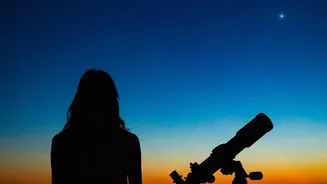
allow your phone to know exactly where it's pointing. By using augmented reality (AR), the app overlays a map of the stars, constellations, and planets onto your screen, showing you precisely what you're looking at in real-time. You don’t need to be an astronomer; you just need to point your phone at the sky. Many apps even allow you to travel forward or backward in time to see the sky on different dates.
Choosing Your Stargazing App
The number of astronomy apps can be overwhelming, but for beginners, a few stand out for their user-friendly design and powerful features. Many are free or offer a free 'lite' version. SkyView Lite is a popular choice that uses your camera to identify celestial objects day or night. Star Walk 2 is praised as a great app for beginners, offering appealing visuals and satellite tracking even in its free version. Another excellent option is Stellarium Mobile, which provides an accurate and minimalistic map of the night sky, making it easy for adults and children to start exploring. Most of these apps function without a WiFi or data signal, making them perfect for any location.
Is It a Star or a Planet?
Before you start identifying specific planets, it helps to know how to distinguish them from stars. The easiest method is the 'twinkle test'. Stars are so distant they appear as single points of light; as this light travels through Earth's turbulent atmosphere, it gets bent and distorted, causing it to twinkle. Planets in our solar system are much closer and appear as tiny discs. Their reflected sunlight is more stable and less affected by the atmosphere, so they shine with a steady, constant light. Planets also tend to be among the brightest objects in the night sky, often outshining even the most brilliant stars because they reflect the intense light of our nearby sun.
The Five Brightest Neighbours
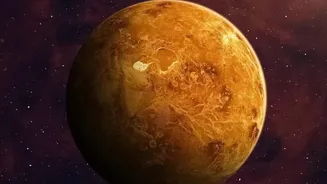
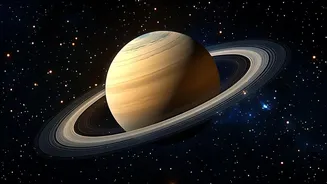
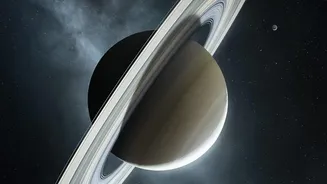
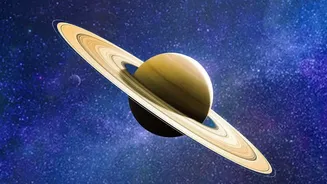
Five planets are regularly visible to the naked eye, even from light-polluted areas: Mercury, Venus, Mars, Jupiter, and Saturn. Venus is by far the brightest and easiest to spot, often appearing as a brilliant 'Evening Star' in the west after sunset or a 'Morning Star' in the east before sunrise. Jupiter is the next brightest, appearing as a commanding, steady white light. Saturn is also a prominent sight, while Mars is recognizable by its distinct reddish hue. Mercury is the most challenging, as it always stays close to the sun's glare, appearing low on the horizon just after sunset or before sunrise during certain times of the year.
Tips for Urban Planet Hunting
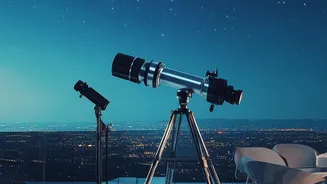
While apps make identification easy, a few simple strategies can significantly improve your viewing experience in the city. First, try to find a location that shields you from the direct glare of streetlights, such as a park, a rooftop, or the shadow of a building. Timing is also crucial. The sky is often darker later at night, after 11 p.m., when many businesses turn off their lights and traffic subsides. Another key is to observe objects when they are high overhead, at their zenith. Looking straight up means you are peering through the least amount of Earth's atmosphere and the associated haze and light pollution, giving you a clearer view.