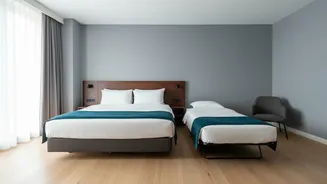







Decoding the 'Sleeps Four' Myth
In the world of travel accommodation, the term ‘sleeps four’ is a measure of capacity, not comfort. For hotels and vacation rental hosts, it’s about maximizing potential occupancy and revenue for a given square footage. A room that can legally and safely
accommodate four people will often be marketed as such, even if the sleeping arrangements are not all equal. The advertised guest count is also crucial for safety regulations, like fire codes, which dictate maximum occupancy. While a hotel room might feature two queen beds, a family room could have one king bed and a sofa. It’s a numbers game, and the primary goal is to fill the space. This often means the third and fourth guests are relegated to less-than-ideal sleeping surfaces.
A Glossary of Not-Quite-Beds
Understanding the terminology is your first line of defense. The word 'bed' can be used loosely, and what you get can vary wildly. A 'sofa bed' or 'pull-out couch' is a sofa with a thin, foldable mattress tucked inside its frame; it’s designed for sitting first and occasional sleeping second. A 'futon' is a low-profile couch that flattens into a mattress, often firm and close to the floor. A 'rollaway bed' is a portable, single-cot-style bed with a thin mattress on a folding frame. Then there's the 'Murphy bed', a real mattress that folds up into a wall or cabinet. While a Murphy bed offers superior comfort, it's less common than the ubiquitous sofa bed. Platforms like Airbnb even differentiate, noting that couches, air mattresses, and floor mattresses do not count towards the official 'bed' count in a listing, though they appear in the sleeping arrangement details.
Your Pre-Booking Checklist
A few minutes of diligence before you click ‘book’ can save your holiday. First, move beyond the headline description. Dig into the full property details and look for a section specifically labelled ‘Sleeping Arrangements’ or 'Where you'll sleep'. Airbnb, for example, requires hosts to specify the number and type of beds in each room. Next, scrutinize the photos. Don’t just glance at the stylish living room; look for clear pictures of all the bedrooms. If a sofa is meant to be a bed, hosts often include a photo of it folded out. If you don't see it, be sceptical. Finally, read recent reviews. Use the search function within reviews to look for keywords like “bed,” “sofa,” or “sleep.” Previous guests are often brutally honest about a terrible night’s sleep and can provide the ground truth you need.
The Power of Direct Communication
When in doubt, ask directly. Never assume. Before you finalize your payment, send a clear and concise message to the vacation rental host or call the hotel's front desk. For a rental, you can message through the platform, creating a written record of the conversation. Ask a specific question: “Hi, we are a group of four adults. Can you please confirm the exact number of real beds and their sizes in the apartment?” For a hotel, call and ask a similar question about the room type you intend to book. This simple step cuts through any ambiguous marketing language. It forces the host or hotel staff to confirm the arrangements explicitly. If they are vague or unwilling to answer clearly, consider that a major red flag and look for another property.
What to Do When You Arrive and It’s Wrong
Despite your best efforts, you might still arrive to a disappointing surprise. If this happens, it is crucial to act immediately. Do not wait until checkout to complain. First, document the situation. Take clear photos of the inadequate sleeping arrangements. Next, contact the hotel's front desk or the rental host right away. Politely and calmly explain the discrepancy between what was advertised and what was provided. Refer back to your booking confirmation and any written communication you have. Ask for a solution. Can they move you to a different room with the correct number of beds? Can they provide an additional rollaway bed? If a satisfactory solution isn’t offered on the spot, you may need to escalate the issue to a manager or through the booking platform's resolution center, using the evidence you’ve collected.