






The Opaque Nature of AI
The primary challenge in verifying military AI is technical. Unlike nuclear or chemical weapons, which have physical components and signatures that can be monitored, AI is fundamentally software. Its decision-making processes can be incredibly complex
and opaque, even to its own creators. This is often called the 'black box' problem. An AI system's behaviour is determined by its code, training data, and the millions or billions of parameters in its neural network. Inspectors cannot simply look at the code and predict with certainty how a system will act in every possible combat scenario. This makes it incredibly difficult to verify if a nation's AI weapon complies with agreed-upon rules, such as those requiring meaningful human control.
Defining the Undefinable
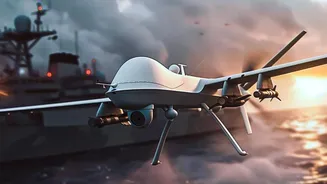
Before you can verify compliance, you must agree on what you are regulating. The international community has struggled for years to establish a concrete definition for a Lethal Autonomous Weapon System (LAWS). Discussions at the UN's Group of Governmental Experts (GGE) have cycled through various characterizations, but consensus remains elusive. Is an advanced missile defence system that automatically fires at incoming threats a LAWS? What about a drone that can independently identify and track a target but requires a human to approve the final strike? Without a clear, technology-neutral definition, any compliance framework would be built on sand, full of loopholes that could be easily exploited.
A Crisis of Geopolitical Trust
Arms control has always depended on a degree of trust and transparency, which is in short supply among major military powers today. Key players in AI development, including the United States, China, and Russia, are locked in a strategic competition. Meaningful verification would likely require intrusive inspections, including access to sensitive source code and proprietary data from defence contractors. It is highly unlikely that these nations would grant potential adversaries such a deep look into their most advanced military technologies. This geopolitical reality means that even if technical hurdles were overcome, the political will for robust verification is weak. Nations are hesitant to accept limitations that their rivals might secretly bypass.
The Dual-Use Dilemma
Another significant complication is the dual-use nature of AI technology. Many of the most powerful AI models and algorithms are developed in the commercial sector for civilian applications but can be easily repurposed for military use. A logistics and supply chain optimization algorithm, for instance, could be adapted for targeting. This makes it nearly impossible to draw a clean line between peaceful and military AI development. A compliance framework would struggle to monitor and regulate foundational AI research without stifling civilian innovation. Verifying intent—whether a particular AI development is for commercial or military ends—is a far more abstract and difficult task than counting warheads or inspecting chemical stockpiles.