



The Sun's Turbulent Weather
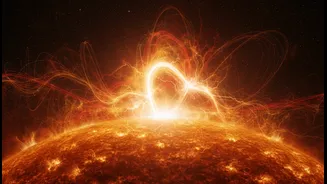
Just like Earth has weather, so does space, and it all starts with the Sun. The main events are solar flares and coronal mass ejections (CMEs). A solar flare is a gigantic explosion on the Sun's surface, releasing intense bursts of radiation. A CME is an even larger
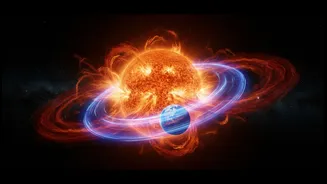
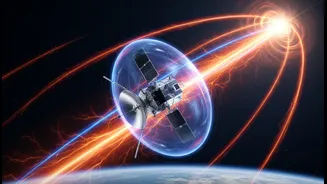
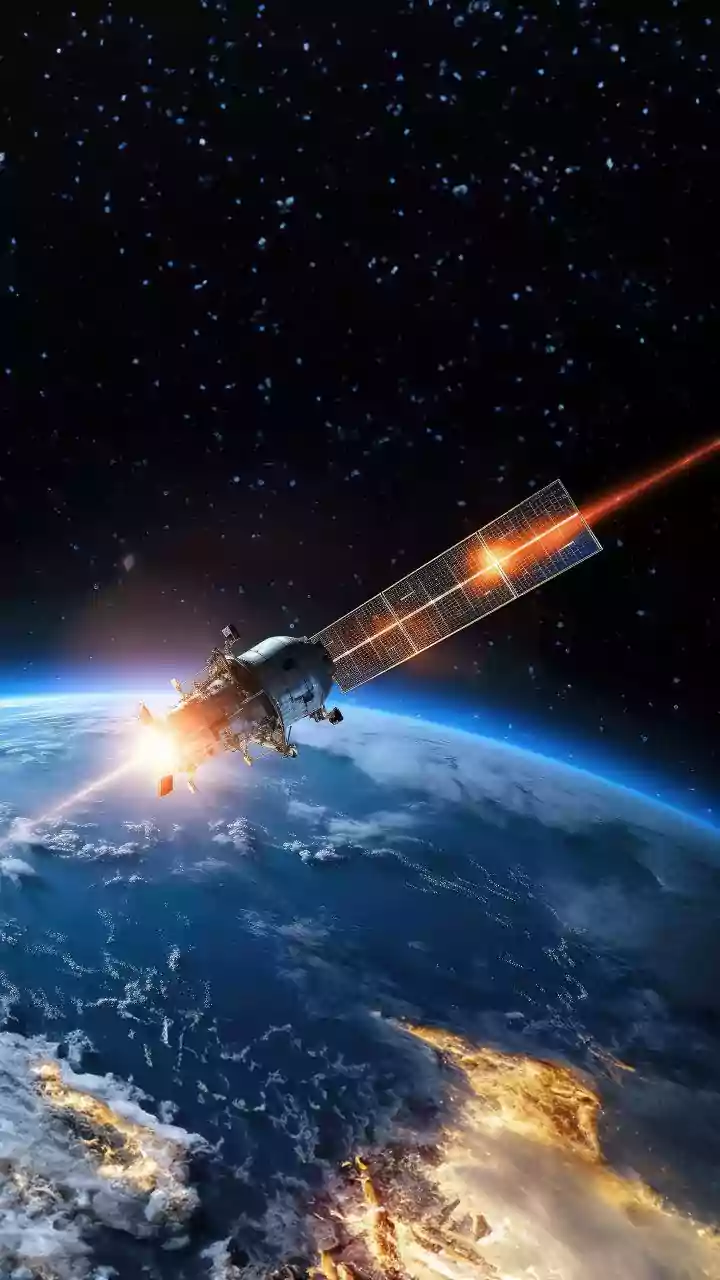
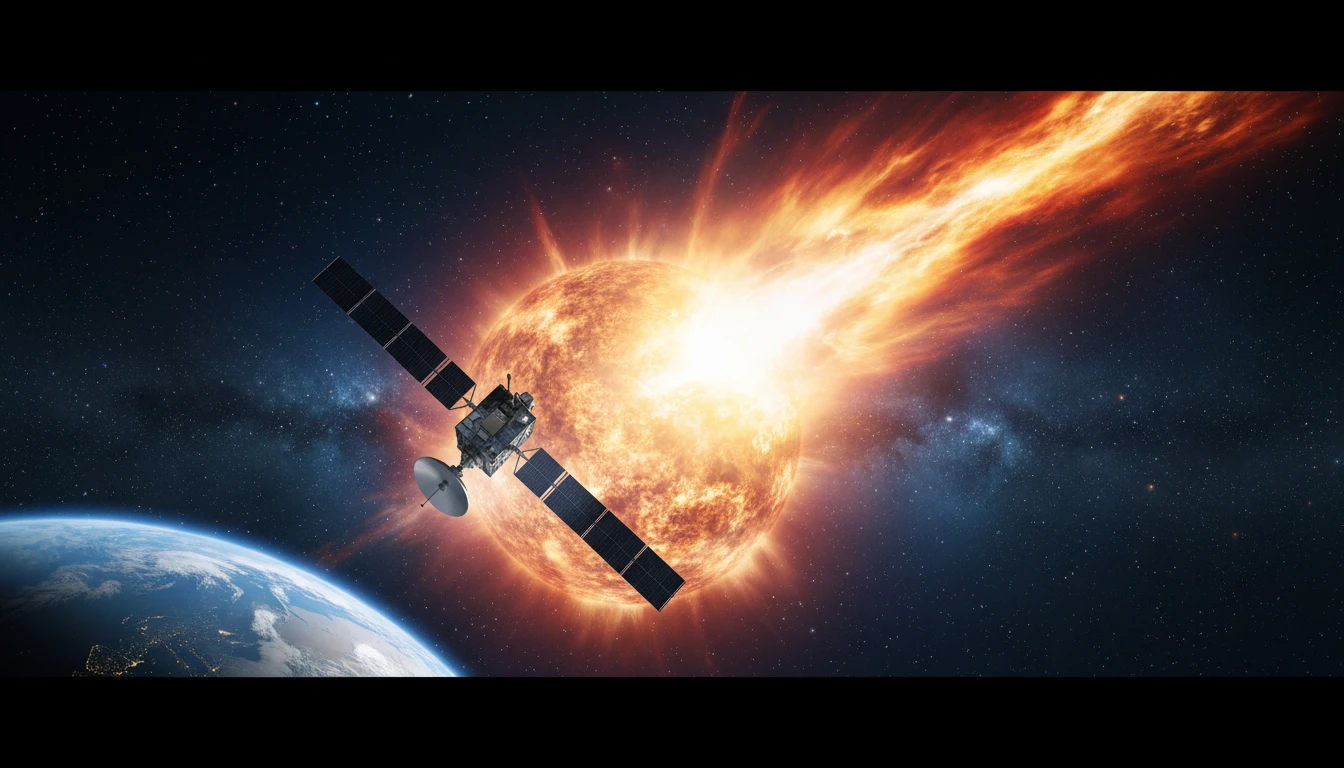
eruption, hurling billions of tons of plasma and magnetic fields into space at millions of kilometres per hour. While Earth’s magnetic field and atmosphere protect us from most of this onslaught, powerful events can overwhelm our defences. These are the space weather threats that scientists track, as they can disrupt radio communications, damage satellites, and even knock out power grids on the ground.
A Fleet of Eyes on the Sun
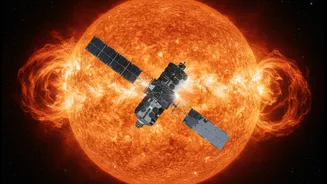
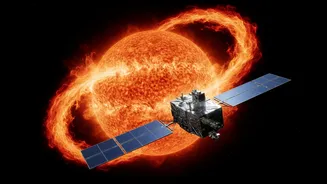
To get a warning, we need to watch the Sun constantly. This is the job of a fleet of solar observatories, both on the ground and in space. Space-based telescopes are crucial because Earth's atmosphere blocks the high-energy X-ray and ultraviolet light that are key signatures of a coming storm. Missions like NASA’s Solar Dynamics Observatory (SDO) and the joint NASA-ESA Solar and Heliospheric Observatory (SOHO) provide a continuous, high-resolution view of the Sun. They can see sunspots—magnetic regions where flares often originate—and watch CMEs as they billow away from the solar surface.
India's Sentinel in Space: Aditya-L1
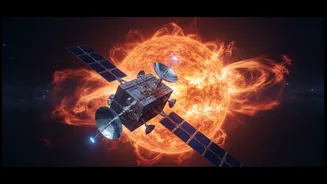
India has its own crucial player in this global network: the Aditya-L1 mission. Launched by ISRO, it orbits at a special spot 1.5 million kilometres from Earth called Lagrange point 1 (L1). From this vantage point, it has an uninterrupted view of the Sun. Aditya-L1 is equipped with seven instruments. Four of them remotely observe the Sun's outer layers—the photosphere, chromosphere, and the incredibly hot corona—to study the origins of solar events. Three other instruments perform in-situ measurements, directly sampling the solar wind particles and magnetic fields that flow past the spacecraft, providing vital data for improving space weather forecasts.
From Solar Data to Earthly Forecasts
The process of forecasting is a journey. First, observatories capture images and data across different wavelengths of light. This reveals the Sun's complex magnetic fields and simmering hot spots. When a flare or CME erupts, light and X-rays reach Earth in about eight minutes, serving as the first alert. The much slower-moving particles of a CME can take one to three days to arrive. Data from all these satellites is beamed to ground stations and fed into complex computer models. Agencies like NOAA’s Space Weather Prediction Center analyze this information to issue watches and warnings, similar to how meteorologists forecast terrestrial weather.
Protecting a Connected Planet
These forecasts are not just academic. They are essential for protecting the technological backbone of our society. A severe geomagnetic storm can induce unwanted electrical currents in power grids, potentially causing widespread blackouts. The radiation can damage the sensitive electronics of the thousands of satellites we rely on for GPS, communications, and financial transactions. Airlines may reroute flights away from polar regions, where the effects of solar radiation are stronger. By providing advance warning, solar observatories give operators time to take protective measures, like putting satellites into a safe mode or preparing utility grids for the impact.