



The Hidden Cost of Current Batteries
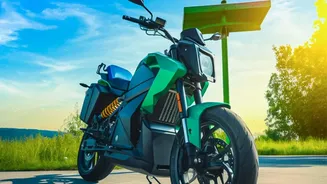
The heart of every e-bike is its lithium-ion battery. While they are a huge leap from fossil fuels, they come with significant environmental baggage. The production process, from mining lithium and cobalt to manufacturing the cells, is incredibly energy-intensive,
often creating a larger carbon footprint than making a conventional car battery. Mining for these materials can lead to land degradation and water contamination. At the end of their life, the problem continues. A vast majority of these batteries end up in landfills, where they can leach toxic heavy metals into the soil and pose a serious fire risk.
Nature’s Answer: Enter Lignin and Cellulose
Scientists and engineers are now looking to an unlikely source for a solution: plants. Two key materials are showing immense promise: lignin and cellulose. Lignin is a natural polymer that gives plants their rigidity and is a major waste product of the paper and pulp industry. Instead of being discarded, it can be transformed into a carbon powder used to make the battery's anode, replacing the mined graphite currently used. Cellulose, the most abundant organic polymer on Earth, is found in wood and plant fibres. Researchers are using it to create paper-thin, flexible, and highly conductive solid electrolytes—a safer alternative to the flammable liquids in today's batteries.
The True Meaning of 'Green' Power
The main advantage of plant-based batteries is their powerful sustainability credentials. They are built from renewable resources that are abundantly available. Using a waste product like lignin adds a circular economy benefit, turning a problem into a resource. This approach dramatically reduces the reliance on environmentally damaging mining for finite resources like cobalt and lithium. Furthermore, these materials are often biodegradable. Imagine a future where a battery, at the end of its life, could safely decompose instead of becoming hazardous electronic waste. This would represent a monumental step towards truly green transportation.
How Do They Perform?
For any new battery to succeed, it must perform. While the technology is still evolving, the initial results are promising. Hard carbon anodes made from lignin have demonstrated competitive specific capacity and excellent stability over hundreds of charging cycles, sometimes even outperforming traditional graphite in cold weather. Meanwhile, cellulose-based electrolytes have shown record-high ion conductivity for polymer-based systems, which is crucial for efficient power delivery and faster charging. However, it's important to be realistic. Achieving the same high energy density as premium lithium-ion batteries—which dictates an e-bike's range—remains a significant research and development goal for many of these new technologies.
From the Lab to the Streets
The transition from a laboratory breakthrough to a commercially available product is a long journey, but progress is being made. European companies like Stora Enso are already at a pre-commercial stage with their lignin-based anode material, Lignode. Other startups are demonstrating functional paper-based batteries for smaller electronics, signaling that the technology is viable. The primary hurdles are now scaling up production to meet the massive demand from the EV and e-bike markets, and bringing the cost down to compete with the established lithium-ion industry. It will take time and investment before you can buy an e-bike in India powered by a lignin battery.
An Opportunity for India's E-Bike Boom
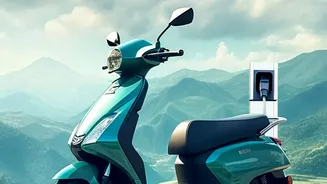
As India's e-bike market continues its explosive growth, this sustainable technology presents a massive opportunity. Developing a domestic capability to produce plant-based battery components could reduce the nation's dependence on imported battery cells and raw materials. It aligns perfectly with national goals for self-reliance ('Aatmanirbhar Bharat') and sustainable development. By embracing such innovations, India could not only clean up its urban transport but also become a leader in the next generation of truly green energy storage, creating a sustainable ecosystem for the millions of electric two-wheelers set to hit its roads in the coming years.