







The Modern Meaning of 'Smart' Luggage
While 'smart luggage' once meant bags with built-in batteries and GPS, a modern and more practical definition is about the intelligence of your packing strategy. Today, it’s less about the bag itself and more about how you organize its contents for maximum
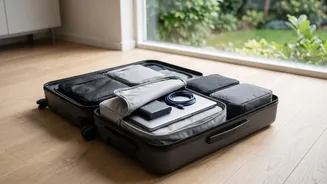
efficiency and compliance. Many airlines have strict rules for luggage with integrated batteries, often requiring them to be removable. If the battery cannot be taken out, the bag may be forbidden entirely. Therefore, the smartest approach is to use a standard carry-on and create your own organized system with dedicated pouches and cubes, ensuring you can quickly access anything needed for security screening.
Taming the Tech Tangle
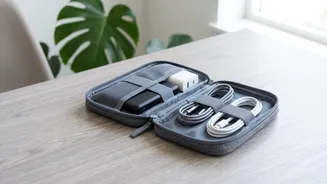
A frequent travel headache is the mess of cables, chargers, and adapters. The key is to consolidate. Start by laying out all the electronics you plan to bring and see if any devices can serve multiple purposes to reduce what you need to pack. Invest in a dedicated electronics organizer or tech pouch. These cases have loops, zippers, and compartments to keep everything from your phone charger to your wireless earbuds neatly separated and easy to find. To avoid mixing up cords, label them with a piece of tape. When packing your carry-on, place this tech pouch in an easily accessible front pocket or right on top, allowing you to remove it quickly for security screening without rummaging through your entire bag.
Power Banks: The Rules You Must Know
Power banks are essential for modern travelers, but they come with strict safety regulations. In India, as in most parts of the world, power banks are considered spare lithium-ion batteries and are strictly prohibited in checked luggage due to fire risk. They must always be carried in your cabin baggage. According to DGCA guidelines, you can carry up to two spare power banks per person. There's a capacity limit, measured in Watt-hours (Wh). Power banks under 100 Wh are generally allowed without issue, while those between 100 Wh and 160 Wh require prior airline approval. Anything over 160 Wh is typically banned. Most standard power banks fall well below the 100 Wh limit. Crucially, recent rules prohibit the use of power banks to charge devices during the flight and advise against storing them in overhead bins.
Mastering the Airport Liquids Rule
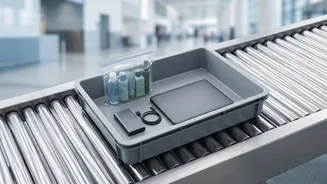
The rule for liquids, aerosols, and gels (LAGs) is a common point of confusion but is simple once you know it. In India, this is aligned with international standards: all liquids must be in containers of 100ml or less. It's the size of the container that matters, not how much liquid is inside; a half-full 150ml bottle will not be allowed. All these small containers must fit into a single, transparent, resealable plastic bag with a capacity of about one litre. Only one such bag is permitted per passenger. For a stress-free security check, place this clear bag at the top of your carry-on for easy removal. To save space and avoid liquid restrictions altogether, consider solid alternatives like shampoo bars, solid perfumes, and toothpaste tablets.
Putting It All Together for a Smooth Screening
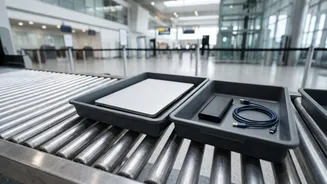
An effortless airport experience comes from smart placement. Your carry-on should be packed in reverse order of need. Items you won't touch until you reach your destination—like clothes and shoes—go at the bottom. Your pre-packed modules, such as your clear toiletry bag and electronics pouch, should be placed right on top. This strategic layering means that when you arrive at the security checkpoint, you can simply open your bag, remove the necessary items for the screening trays, and move through without delay. This organized approach not only saves you time but also reduces the stress of holding up the line, allowing you to start your journey with confidence and calm.