




From Farm Waste to Studio Wall
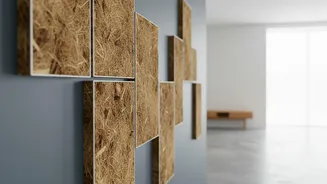
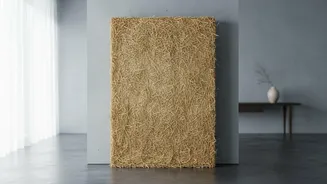
At its core, this innovative material is exactly what it sounds like: insulation panels made from the compressed stalks of grains like wheat, rice, or rye left over after harvest. Instead of being treated as waste, this abundant agricultural byproduct
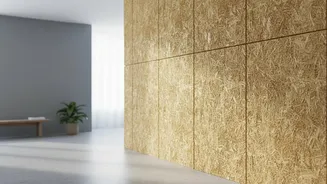
is given a new purpose. The straw is collected, processed, and mechanically compressed under high pressure and heat to form dense, rigid boards or panels. These panels can then be used in place of conventional insulation materials like fibreglass or foam. Some systems come as prefabricated wall sections, ready to be installed quickly on-site, streamlining the construction process. This transforms a low-value agricultural residue into a high-performance building component, embodying the principles of a circular economy.
The Science of Straw and Sound
So, how does a wall made of straw stop sound? The effectiveness of a soundproofing material comes down to its mass, density, and ability to absorb sound waves. Highly compressed straw panels excel in this regard. Their dense, fibrous structure is naturally effective at dampening sound vibrations and preventing noise from passing through. In technical terms, building materials are often rated with a Sound Transmission Class (STC) number — the higher the number, the better it is at blocking airborne sound. While a standard interior wall might have an STC of 33, properly constructed straw bale walls can achieve ratings of 40 dB or higher, significantly reducing the intrusion of external noise and creating a quiet, comforting indoor environment. This means loud speech from outside becomes barely audible, a crucial feature for any recording space.
The Undeniable Eco-Friendly Advantage
Beyond acoustics, the environmental credentials of straw panels are their main draw. Straw is a rapidly renewable resource, grown and harvested annually. During its growth, the grain plant sequesters carbon dioxide from the atmosphere, and that carbon remains stored within the straw panels for the life of the building. This makes them a carbon-negative material, meaning they store more carbon than is emitted during their production and transport. This stands in stark contrast to conventional insulation materials like foam, which are derived from fossil fuels and involve energy-intensive manufacturing processes that can release harmful chemicals. By choosing straw, builders and homeowners can drastically reduce the embodied carbon of their projects and contribute to healthier indoor air quality.
Practicalities: Fire, Pests, and Moisture
Three common concerns immediately spring to mind with straw: fire, pests, and rot. However, modern straw panels are engineered to address these issues. The extreme compression of the straw eliminates most of the oxygen, making it surprisingly fire-resistant — it tends to char slowly rather than burst into flames. Many panel systems have passed rigorous fire-resistance tests, often outperforming conventional construction. As for pests, straw is not a food source like hay, so it doesn't attract rodents or insects. The most critical factor is moisture management. The panels must be kept dry and installed with breathable plasters or barriers that allow any incidental moisture to escape, preventing the risk of mold or decomposition. When installed correctly, these panels create a durable and resilient structure.
Is It Right for Your Project?
Straw insulation panels offer a compelling blend of high-performance acoustics and sustainability. They are particularly well-suited for projects where sound isolation is a priority, such as home recording studios, podcasting booths, or even just creating a quiet home office in a noisy neighbourhood. While the material itself is often low-cost, the overall project price can be comparable to traditional high-performance wall assemblies. The use of prefabricated panels can also reduce on-site labour time and weather-related delays. As with any building material, proper design and installation are key to unlocking its full potential, but for the eco-conscious creator, it represents a powerful way to build a space that is both sonically and environmentally sound.