




What Happened in Spain?
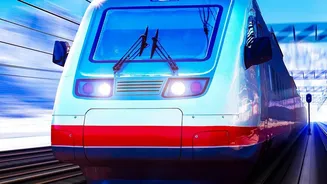
On October 28, 2026, a high-speed train operated by the state-owned company Renfe crashed into a stationary train near the town of Urda, about 130 km south of Madrid. The collision resulted in 69 fatalities and scores of injuries, marking Spain's second
major fatal rail accident of the year. According to preliminary reports, the chain of events began with a failure in the communication system that supports the line's safety apparatus. A control centre manually authorised the Renfe train to proceed, despite another train from the private operator Iryo being stopped on the same track, leading to the catastrophic rear-end collision. The incident has raised serious questions about both human oversight and the underlying safety infrastructure.
The Unseen Guardian: Automatic Train Protection
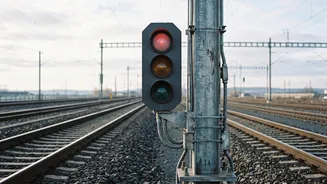
At the heart of modern railway safety is a category of technology called Automatic Train Protection (ATP) systems. In simple terms, ATP systems are designed to prevent accidents by automatically supervising a train's movement. They continually check the train's speed against the limit allowed by the signalling system. If a driver misses a stop signal or exceeds the speed limit, the ATP is designed to first warn the operator and then, if no action is taken, apply the brakes automatically to slow down or halt the train. These systems act as a crucial fail-safe against the risk of human error, which can be amplified by factors like poor weather or a moment of inattention.
Spain's Layered but Inconsistent Systems
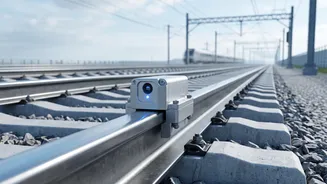
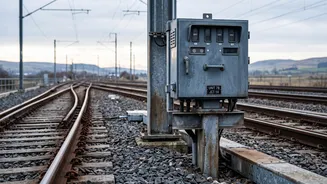
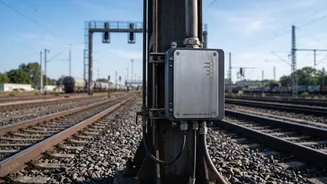
The Spanish rail network, like many in Europe, uses a mix of safety systems. Much of the network relies on a system called ASFA (Anuncio de Señales y Frenado Automático). ASFA is a reliable 'intermittent' system that uses transponders on the track, called balises, to transmit signal information to the train at fixed points. It warns the driver and can trigger braking if a warning is ignored, but it does not continuously monitor the train's position or speed between these points. While effective, it is considered less robust than modern continuous systems. Many of Spain's high-speed lines use the more advanced European Train Control System (ETCS), but the crash highlighted the potential vulnerabilities that exist where different systems interface or when manual overrides occur during a system failure.
ETCS: The European Gold Standard
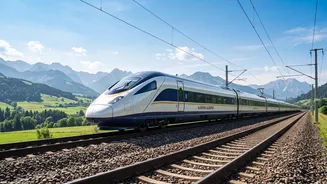
The European Train Control System (ETCS) is the modern, unified standard for railway safety across Europe, designed to replace over 20 incompatible national systems. Unlike intermittent systems like ASFA, ETCS provides continuous supervision. Through a combination of trackside balises and radio communication (GSM-R), the on-board computer always knows the train's exact position, the speed limit, and the distance it is authorised to travel. It continuously calculates a safe braking curve and will intervene automatically if the train risks violating its movement authority. This constant communication and supervision make it significantly harder for human error to lead to a dangerous situation, representing the gold standard in train separation technology.
The Indian Context: Building a 'Kavach'
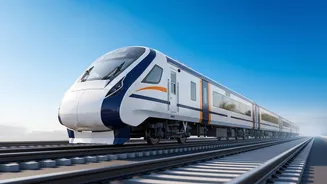
The conversation around train protection is highly relevant in India. Indian Railways is deploying its own indigenous ATP system called 'Kavach', which means 'Armour'. Developed by the Research Design and Standards Organisation (RDSO), Kavach is designed to be a cost_effective, state_of_the_art system tailored for the Indian network. It boasts a Safety Integrity Level 4 (SIL_4) certification, the highest level of safety integrity. Like ETCS, Kavach prevents trains from passing signals at danger, enforces speed limits, and can automatically apply brakes to prevent collisions. As of late 2026, Kavach has been deployed on hundreds of kilometres of track, with ongoing efforts to expand its reach across the country's busiest routes, providing a critical safety shield for one of the world's largest rail networks.